
PR-Marketing-communications-with-direction-purpose-happy-new-year-blog-xpressocommunications-photo-fiorenza-mella
Moving by direction, not by deadlines   Live your life by a compass, not a clock. Erica Jong If there Read more

Seasons-wishes-christams-happy-new-year-time-space-ideas-Xpresso-Communications
    “Time is not a movement in space. Space is a movement in time.” Frederick Lenz  Guided by this Read more

ibc-2025-technology-people-story-xpressocommunications
article covered by SCTE  Journal Is IBC a technology show, or a business show? It’s a question that gets harder Read more

Spam-creativity-repetition-flamenco-dance-xpressocommunications
A reflection on spam, tone, and the illusion of connection    “That which is static and repetitive is boring. That Read more
scte-article-hideen-role-PR-technology-industry
Xpresso Communications on the unseen strategies that transform visibility into influence and influence into opportunityBy Fiorenza Mella and Jess McMurray Read more

IBC-2025-Bridge-technologies-technology-hub-xpresso-communications-tvtech-award-blog
At IBC 2025 the Bridge booth was vibrant! What was once a simple meeting point has now evolved into a Read more

Silence-does-not-sell-communication-before-during-after-tradeshows-xpressocommunications
How to communicate before, during and after tradeshows   At IBC (and other tradeshows), every company wishes to attract potential Read more
amsterdam-IBCshow-entanglement-content-canal-meaning-content-creators
  When Canals Become Currents of Meaning Amsterdam is a city defined by water. Its canals may appear as separate, Read more

introduce-game-changing-solutions-at IBC?
Are you a technology game changer?   If you have created a groundbreaking technology You want game-changing communicators! Before, during, Read more

The-Beat-of Connection-Kamasi- Washington-Trade Shows-NAB-IBC
    What a concert reveals about the enduring value of in-person experiences   From the balcony of Amsterdam’s Paradiso, Read more

dunes-cloud-broadcast-NAB2025-fiorenza-mella
    Embracing the Cloud with a Socratic Perspective As Xpresso Communications prepares for the upcoming NABShow in Las Vegas, Read more
AI-prompting-set-a-nopte-creativity-content-creation-xpresso-communications
The Crucial Role of the 'A Note' in AI Prompting for Content Generation   What is creativity to you? What Read more
2025-new-marketing-world-mark-schaeffer-values-relevant-xpresso-communications
The only certainty is change… The world is changing. And always has been. But in recent years, the rapid rise Read more

Merry-Christmas-2024-samurai-moral-code-xpresso-communications
      As we enter the season of giving, we are reminded of Oseibo, the Japanese tradition of expressing Read more
identity-communications-b2b-technology-business
  Communicate who you are first, and the rest will follow There are 171,146 words in the English language. Why Read more

Chestmut-legacy-modern-marketing-xpressocommunications-photo-fiorenza-mella
  How to Harvest Success in Marketing Communications At Xpresso, we are always fascinated by metaphors to illustrate any concept Read more

Xpresso-Communications-blog-outsourcing-PR-Communications-Marketing-connect
Outsourcing your PR & Marketing Communications   Imagine the following client call: Client: “Hi there, I was wondering if you Read more

generative-ai-content-xpressocommunications-blog
Leveraging its strengths whilst avoiding its pitfalls   The need to go beyond general When you think about human/computer collaborations, Read more

masterclass-pr-writing-distributing-xpressocommunications
How PR Can Support the International Launch of a Technology Startup     PROTON Debuted the World’s Smallest Camera at Read more

Fiorenza-Mella-meet-book-meetingptradeshows
Meet Xpresso Communications at Trade Shows We love technology, write about technology and enjoy any time we can meet industry peers Read more

Looking-for-content that-ages-like-wine- rather-than-milk-Xpresso-communications
Like a good bottle of wine, well-written content has body From wine to words  With Xpresso being the brainchild of Read more

case-studies-content-marketing-xpresso-communications-business-b2b
How does Xpresso Communications help its clients expand their businesses worldwide through tailored, original content creation and marketing strategies? It Read more

how-ti-communicate-unique-technology-xpresso-communications-content-marketing
Are you a technology innovator? Are you looking to develop a unique business proposition? Are you looking to position yourself Read more

  Get your head out of the Clouds Everything is so black and white these days. Binary. And with it, Read more
How is the future looking like for women in Telecommunications in 10 years’ time? Fiorenza Mella, Maria Tyrrell and Dr Read more
Is your brand voice unique?   Part 2/2 An identifiable and unique brand voice is crucial In marketing and business Read more
Human-like content according to ChatGPT   Part 1/2   “Art is an accident and machines produce logic. Machines do not Read more

top-5-successful-marketing-companies-to-watch-2023
A World-class Agency Specializing in broadcast and Technology-driven Markets CIOTIMES interviewed Fiorenza Mella   As a specialist in B2B communications Read more
original-content-innovators-content-marketing-video
AI-generated content would not help you describe a technology solution that is new, unique in its being the sum of Read more
award-media-innovator-xpresso-communications
          Content creation that develops brand loyalty       Leiden, The Netherlands _ 8 December, Read more
blog-content-narketing-technical-writing-original-content-xpresso-communications
Content Creation: a new frontier   ‘Content Creator’ doesn’t have to be a dirty word The way we consume content, Read more
content-marketing-connects-awardwinning-writers-techsavvy
  Let's meet at IBCShow 2022 Well-crafted content serves the purpose of forming the basis of connection. But it’s just Read more

Content and Connection  If you’ve ever seen the popular US version of ‘The Office’, you may well be familiar with Read more
  for its valuable contribution to the Benelux Region in 2022 Press Release Leiden, The Netherlands _ 8 August, 2022 Read more
collaboration-connected-content-creation-awardwinning-bloggers-IBC2022
Connect to become Connected How do you perceive collaboration? For us, collaboration is a mindset – one that recognizes that Read more
content-creation-content-strategy-award-winning-agency
Content Strategies to increase eyeballs We won't say "content is king" but we would rather explain how content strategies are Read more
ten-years-anniversary-xpressocommunications-marketing-communications-innovators-techsavy
Celebrating our Tenth Birthday in Marketing Communications for Innovators We look back at what’s changed within the broadcast industry. And Read more

when-to-make-a-move-to-edge-computing
An Xpresso Communications Technology Deep-Dive Working within the field of technology broadly, one of the greatest challenges that faces us Read more

Jess-filmong-ISE
Why long-form content plays a key role in evergreen B2B Marketing Communications   Written word vs video? All hail the Read more
award-2022-xpresso-communications-marketing-pr-content-creation
multidimensional approach to technology innovation   Amsterdam, The Netherlands _ 24 February, 2022 Xpresso Communications – an international Communications and Read more

enteglement-quantum-content-content-creators
The concept of Enteglement in Communications     A connected future Do you believe in fate? And do you believe Read more

Christamas-2021
Creativity Is A Beacon That Drives Us All Forward   As we look back across the year that has just Read more
Fiorenza-Mella-CEO-Xpresso-Communications-Award-2021-Most-Innovative-Content-creation-Agency-technology
          When focus on innovation inspires content strategies    Press Release Leiden, The Netherlands _ 1st Read more

Openminded-communications-blog-business-strategists-awardwinning-agency-marketing-ghostwriters
Why ‘open-minded’ isn’t just another business buzz word Have you ever heard the saying (generally attributed to Einstein): “Make sure Read more

and its core importance to effective communication The fake world of authenticity The term ‘authentic’ is a term that is Read more

Do B2B Technology Companies Need Brand Love? Should they want it, and how can they get it? Within marketing, the Read more
Trees-technology-communication-content-creation
Trees and Technology: Not as Nutty as You’d Think   A picture paints a thousand words… unless it’s yet another Read more
recruit-women-stem-technology-industry
How to recruit more women in the field of broadcast engineering   The issue of how to attract women to Read more
Digital-Sheep-Blog-creative
Do Digital Sheep Dream of Greener Pastures?   Do you remember the days when the internet felt big?   BLOG Read more
Award-winning-B2B-marketing-PR-International-Technology-content-creators
Reaching New Decision Makers   Based in The Netherlands, Xpresso Communications benefits form having an experienced and knowledgeable expert leading Read more

logo-dark-xpresso-communications

Moving by direction, not by deadlines


Live your life by a compass, not a clock. Erica Jong

If there is one idea that defined our year at Xpresso Communications, it is that progress is rarely about speed alone. It is about direction. About choosing where to focus, why it matters, and what we are willing to learn along the way. In 2025, our work was structured by a clear schedule but shaped by curiosity. Deadlines provided rhythm and reliability, while direction gave meaning to everything in between.

Our work for clients is less about travelling through time than it is about moving through space. Each assignment places us in a specific context. A product launch, a sales narrative, a case study on future-proof broadcast solutions, or an event taking place in Japan or elsewhere in the world. That movement happens through research. By deliberately creating space to explore a topic in depth, to understand its technical, cultural and commercial dimensions, and to translate that understanding into 500 or 1000 words that genuinely add value. In this process, time and space begin to blend. The schedule keeps things grounded, while deadlines act as tangible markers that bring order to an otherwise expansive creative process.

That understanding never comes for free. Research is the quiet constant behind everything we do. Not just technical research, but cultural research on how people communicate and what they value. What feels natural and what feels forced. Precision matters at every level, from terminology to tone, from references to restraint. Technology moves fast, but credibility is built slowly through attention to detail and respect for nuance.

At the same time, we are constantly navigating the paradox of modern communication. Most of our work now takes place online and virtually, yet the need for genuine human connection has never been greater. Authenticity is often spoken about but rarely examined. For us, it is not a stylistic choice or a branding exercise. It is the result of genuinely understanding the people behind a business and finding a voice that reflects who they are, rather than who they think they are supposed to be.

This means building relationships first. Listening before writing. Identifying what truly distinguishes a client, not just in terms of technology or product features, but in how it feels to work with them as people. Of course we communicate engineering excellence, innovation and performance. But just as importantly, we aim to convey humour, vulnerability, openness, transparency and thoughtfulness. These are the qualities that create trust and recognition in a world saturated with polished messaging.

Being authentic is not easy. It requires stepping out from behind familiar masks, especially in B2B environments where professionalism has long been equated with distance. Yet we see, again and again, that decisions are not made by spreadsheets alone. They are shaped by instinct as much as analysis, by emotion as much as logic. That is why we focus on placing content in spaces where people engage as people, not as business automatons.

Throughout the year, our compass kept pointing toward movement. Across countries and continents, across disciplines and industries, and across the evolving landscape of technology itself. With every project, our knowledge grew, shaped by the trust of clients and partners who allow us into their worlds and invite us to help tell their stories. For that trust, we are deeply grateful.

As the year gently comes to an end, we wish you moments where time feels generous again. Periods where schedules ease and space opens up to be fully present with your beloved ones. Those moments are not a pause from progress, but from its quiet foundation.

Looking toward 2026, we hope you keep moving. Not only in the literal sense, but in thought, imagination and curiosity. Creating space to move with your mind and fantasy is what allows new ideas to surface, new connections to form and innovation to take root.

Happy New Year!


About Xpresso Communications

Award-winning Content Marketing Strategies for Technology Innovators

Representing technology firms across the globe, Xpresso Communications have won awards for their provision of integrated marketing communications services for technology innovators in Broadcast, ProAV, IT, AI and Media.  Their original content marketing services dynamically balance both long-form and short-form approaches – including traditional PR, articles and white papers, social media, direct emails, blogs, industry leadership thought pieces, newsletters, brochures and advertising copy. Headquartered in The Netherlands but with an international reach, Xpresso’s focus has always been on communicating technology from the human perspective – focusing on conveying meaningful, tangible business benefits, and fostering connection, trust and authenticity.


Christams-2025-Warm-wishes-Happy-New-year-move-travel-ideas-Xpresso-Communications

“Time is not a movement in space. Space is a movement in time.” Frederick Lenz

 Guided by this idea, we at Xpresso Communications, see conceiving content as a way of working with time and space. As marcom strategists and creators, we constantly shift perspective, expanding moments, crossing contexts, and moving through ideas, cultures and technologies to find clarity and meaning. In that creative process, deadlines are not constraints but tangible markers, bringing order to what might otherwise remain pure chaos.

In this season, we wish you time that feels generous and space that allows you to slow down and be present with those who matter most. As the New Year approaches, may you keep moving, in thought, imagination and curiosity. Because creating space for reflection and fantasy is what allows new ideas to emerge and innovation to take shape.


Warm holiday wishes and a thoughtful, inspiring New Year from all of us at Xpresso Communications.

logo-dark-xpresso-communications

article covered by SCTE  Journal

Is IBC a technology show, or a business show?

It’s a question that gets harder to answer every year. The event floor is lined with innovations that push the limits of broadcast, production, and streaming – but the conversations that take place there rarely stay within the bounds of pure technology. They’re about trust, partnership, understanding, and the shared commitment to shaping what comes next.

This year, Amsterdam didn’t make it easy on the attendees. The weather had a mind of its own: bursts of rain arriving without warning, followed moments later by clear skies and sudden sunlight in the chill air. Typical Dutch weather: unpredictable, dramatic, and somehow charming. As one Xpresso colleague dryly observed, ‘There’s no such thing as bad weather, just bad clothing’.

It turned out to be a fitting metaphor for the show itself. Attendance numbers may have been lower than previous years, but for those who came prepared – not just with technology to showcase, but with stories, relationships, and human insight to share – the halls were full, the stands busy, and the conversations rich.

Those who dressed for the right show – the business show, the human show – felt none of the chill.

Business in the rain

IBC-2025-visitors-rainIf there’s one lesson the industry has learned in recent years, it’s that a live demo is no longer the draw it once was. Not to say that they don’t still hold importance, it’s just that increasingly, moat solutions can be explored remotely: customers can take a virtual tour, stream a product launch, or book an online demo any day of the week. But what you can’t replicate online is the atmosphere of connection – the quiet moments that build trust, spark curiosity, and turn partnerships into collaborations.

That’s the real show.

When visiting Xpresso clients, old and new, and meeting industry peers at their booths, we found that they had no shortage of visitors to their stands, despite the overall dip in foot traffic. Every conversation was an exchange, not just a presentation. Engineers, broadcasters, and technologists came not only to see what was new, but to talk about what mattered – to compare experiences, explore use cases, and share insights face to face. The discussions were practical, nuanced, human.

For Xpresso, that reinforces a truth we’ve long recognised: technology communication isn’t only about specs and features. It’s about how people use those technologies to solve real problems, and how trust and understanding shape every layer of that process. 

A century of television – and of change

This year’s IBC took on an extra layer of reflection, marking ‘100 years of television’. In 1925, John Logie Baird gave his first public demonstration of mechanical TV: an invention so novel that the concept of ‘broadcast’ itself had barely been coined. The show’s celebration of that milestone was a timely reminder of how much the medium – and the industry around it – has evolved.

It also ran as an interesting contrast to the show’s Future Zone and Student Forums: an idea of looking backwards and forwards, not just with nostalgia, but with an understanding of the common thread: that it is curiosity and experimentation which are the real engines of progress.

AI-google-innovation-IBC-2025And yet, walking through IBC’s Innovation Hall, one question lingered in the air: what really counts as ‘innovation’ in 2025? Artificial intelligence featured prominently – its potential, its pitfalls, its integration into nearly every aspect of production. But perhaps, ironically, that’s the point. AI is no longer an outlier. It’s mainstream, both in how we talk about it and in how we implement it.

Maybe the Innovation Hall is no longer where AI belongs? It’s not an experiment – it’s infrastructure. It’s the new normal, not the next frontier. That’s not to diminish its significance, but to recognise how fast it has moved from hypothetical to habitual. The hall that once celebrated AI’s novelty might now be better used to showcase what comes after – those emerging technologies still on the edge of imagination, the ones that make us stop and think ‘I’ve never seen that before’.

Connection as the constant

Across all the conversations, one idea came through clearly: whether we’re talking about John Logie Baird’s hand-built discs or AI-augmented production, what defines progress isn’t just invention – it’s communication. How we share ideas, how we collaborate, and how we build trust in the process.

That’s what makes events like IBC not just relevant, but vital. They’re not relics of a pre-digital age. They’re the living forum where ideas meet interpretation, where data meets dialogue. The physical space still matters, not because it can’t be replicated online, but because it shouldn’t be. Some conversations need time, eye contact, and the hum of a busy hall to take shape.

This year’s rain might have kept the crowds a little smaller, but those who came understood what the real weather was doing: testing how well we’d all dressed for it. The right preparation wasn’t a thicker coat or sturdier shoes – it was coming with openness, readiness to listen, and willingness to connect.

In the end, IBC 2025 reminded us of a simple truth. Technology might be the headline, but people are the story.


logo-dark-xpresso-communications

A reflection on spam, tone, and the illusion of connection


 “That which is static and repetitive is boring. That which is dynamic and random is confusing. In between lies art.” John Locke

If John Locke had lived in the age of email, he might have unsubscribed long ago.

Every day, our inboxes fill with messages that shout instead of speaking:
‘Quick call?’; ‘Your account has been blocked.’; ‘Do you have a minute?’; ‘Your password has expired’.

Each message has a slight variation on the same monotonous melody and the tone of these emails swings between false urgency and artificial intimacy: the online equivalent of a knock on the door from a stranger who already knows your name. The most infamous formula starting with “Dear [First Name]” feigns familiarity while confusing intrusion with intimacy.

Spam has become so omnipresent that we often dismiss it as background noise. But if we pause long enough to look closely, it reveals something rather unsettling about the increasingly automated, repetitive and unimaginitive state of modern email communication.

The Mechanisation of Message

The problem with spam isn’t just ethical though, it’s existential.

For decades, creativity has shaped marketing and communication through the art of speaking to the right people at the right moment, in the right way. Today, large parts of that craft have been replaced by systems that optimise mainly for clicks rather than for connection. Spam is the purest form of this decay: communication without creativity, persuasion without presence.

Why are spam emails so boring, so aggressive, so formulaic? Because they are built for volume, not value.

The creators of these automated emails seem less driven by curiosity or genuine interaction than by the sheer pursuit of numbers. They know that if one in a thousand recipients takes the bait, the campaign will be ‘successful’. And so, repetition becomes their substitute for thought.

 The Monotony of Manipulation

But there’s more. Spam emails often overstep the boundaries of tone and culture. Some of them, particularly those generated from certain countries, open with “Dear + first name” which is quite a strange attempt at politeness landing somewhere between mechanical and invasive.

Imagine experiencing the same in real life: someone turns to you with a smile “Hi, dear… what’s your name again?” Let’s be honest, that’s not how communication works. It’s not only awkward; it undermines the very idea of connection. Do they really believe that a stranger feels more intimate when addressed as if by an old friend? It’s almost comical, yet it exposes the central illusion of spam: the belief that familiarity can be manufactured. What’s meant to sound personal ends up feeling mechanical, a hollow echo of genuine attention.

And then there are those who take creative licence with your name — in my case, “Fiore” or “Fio” — as if shortening it could make the message warmer. It’s the online version of a stranger’s tap on the shoulder, cheerful but fake. It doesn’t connect; it disconnects.

The Illusion of Effectiveness

Spam-creativity-repetition-flamenco-dance-xpressocommunicationsRepetition isn’t the enemy; it’s how we learn. Like a flamenco dancer tracing the same steps, each movement renews itself through rhythm, tension, and spirit. But there’s a difference between rhythm and redundancy, between a pattern that engages and one that numbs.

In most cases, repetition works but only when it serves a clear purpose: in advertising, in education, wherever intent meets craft. Television, or any form of media advertising, is transparent about its intent. It may repeat messages or repackage them for emphasis, but audiences remain free to choose their response, to switch channels, ignore it, or even find it informative for their next purchase. Spam, on the other hand, tends to use repetition as a shortcut. It copies and pastes the same triggers — fear, scarcity, urgency — without any sense of rhythm, intention, or context.  It’s not repetition as craft; it’s repetition as collapse.

The Human Cost of Boredom

Locke’s observation about art being “in between” is perhaps more relevant than ever. When communication becomes too static — endlessly recycled and predictable — it loses its capacity to move. When it becomes too dynamic and algorithmically generated,  it confuses rather than connects.

Spam sits at the wrong end of both extremes: static in its repetition, chaotic in its lack of thought. It represents communication that has forgotten its audience and in doing so, its essence.

We’ve all experienced the fatigue of the inbox, the erosion of trust, the sense that every message is trying to extract something from us. But what if communication could once again be about offering an idea, an emotion, a story worth reading?

That’s where art comes back into play.

The Art of Communication

Art, at its best, lives in balance between order and surprise, between discipline and imagination. Great communication should not only convey information, but kindle transformation in those who receive it.

Every message, whether seen, read, or heard, holds the potential to light a small spark of recognition in someone else. Meaning grows not through volume, but through resonance.

We approach every industry topic from multiple angles blending research, data, and creativity with a keen sense of audience, tone, context, and form, whether that’s a press release, a thought-leadership piece, or a blog. Every piece begins with intent, visible in the result it achieves. The same should hold true for emails: they deserve purpose, not repetition. 

From Repetition to Resonance

The art of communication lies in allowing a message to mature like a musical theme — revisited, never merely repeated. At Xpresso, we call this content evolution: transforming a story through different forms while preserving its emotional and intellectual core. It’s how an article becomes a conversation, how a press release becomes a narrative, how a social post becomes an invitation to think.

A message designed to inform, to stimulate reflection and to invite genuine interest gains longevity of its own. It lasts not through volume, but through attention. Because meaningful communication doesn’t spam; it triggers curiosity. It doesn’t scare; it engages. It doesn’t bore; it surprises. It doesn’t automate; it connects.

Why Creativity Still Matters

It matters because recipients are human beings, and they expect to be addressed as such. It matters because creativity expands and enriches; it sparks new ideas, new emotions, new conversations. True creativity doesn’t exhaust itself; it regenerates.

Locke’s balance between the static and the dynamic is precisely where Xpresso lives and creates.
We explore, experiment and humanise, turning technical detail into narrative, complexity into clarity, and information into inspiration.

Our creative approach begins with curiosity. It listens before speaking, observes before defining, and shows genuine interest in those who receive the message. Communication born of curiosity reaches outward, building bridges, creating resonance and inviting dialogue.

Its essence is purpose. Even when that purpose is commercial, it carries respect and responsibility. Connection flourishes when intent is clear and form remains courteous.

Creativity plants the seeds of connection; automation, when mindless, only wears the soil thin.


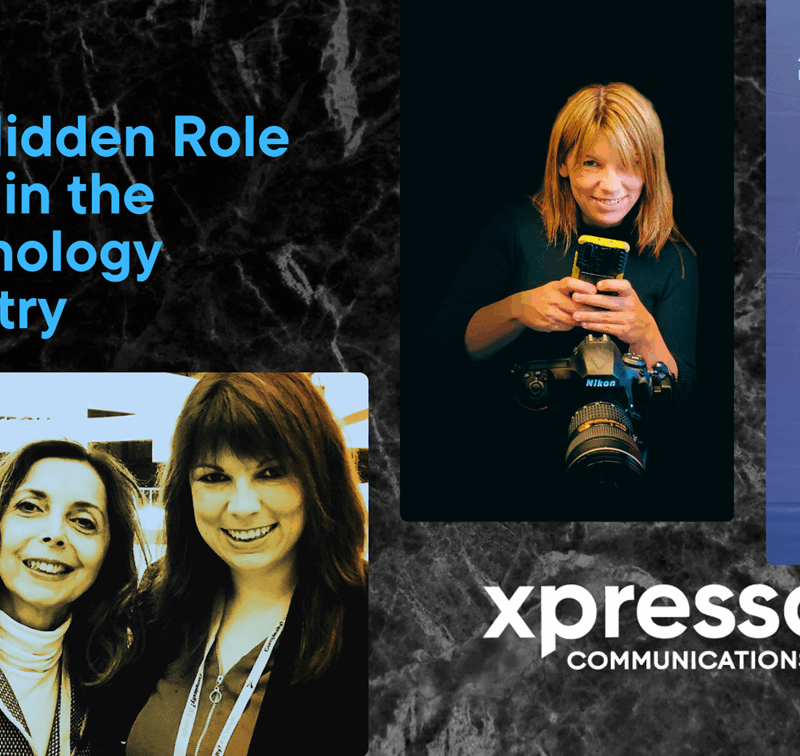
Xpresso Communications on the unseen strategies that transform visibility into influence and influence into opportunity
By Fiorenza Mella and Jess McMurray


Article covered by SCTE Journal

If the tech industry were a rock band, public relations would be the roadie. We don’t take the stage, we don’t bask in the spotlight, and we certainly don’t throw TVs out of hotel windows. But when that powerful sound thunders out across the stadium, it’s because the stage was set by those who know the music, know the instruments, and know how to set them up so that the stars can shine. And, crucially, so that the audience can hear the message across the din.

In a world fuelled by visibility – clicks, impressions, headlines – PR professionals in the technology sector occupy a curious space: essential, but intentionally hidden. This is not an oversight. It’s the unspoken rule of the game. The illusion of organic authority is precisely what gives earned media its power. A feature in a trade magazine or a quote in Forbes doesn’t – and shouldn’t – come with a footnote saying, “Brought to you by a PR agency.”

That quiet anonymity is by design. Journalists guard the appearance of editorial independence. Brands want their messaging to feel authentic, not manufactured. And PR? We keep the gears turning, silently.

It’s tempting to compare PR to roots or operating systems (and many have), but perhaps it’s closer to the duck gliding across a lake: serene above the surface, legs paddling furiously beneath. The difference is – nobody sees the legs. Nobody should.

That’s especially true in technology. In more consumer-facing industries, PR can sometimes lean toward the spectacular: planned leaks, red-carpet launches, viral stunts. In tech, the glamour is subtler. We’re not selling hype. We’re translating innovation into meaning. PR in the tech sector is about bridging two sides of a complicated conversation: connecting engineers and developers with broadcasters, integrators, CTOs, decision-makers. We help shape stories that are clear, relevant, and rooted in real-world impact. In B2B technology, credibility is the currency – and PR helps companies earn it, one thoughtful article or strategic interview at a time.

That takes more than just buzzwords. It demands subject-matter fluency, editorial instinct, writing skill, and industry trust. And perhaps most importantly, the ability to give a company its voice – not a generic brand tone, but a specific, consistent, and human voice that resonates across platforms. It’s multidisciplinary work, often involving research, trend analysis, technical understanding, and collaboration across marketing, sales, and product teams.

Yet, unlike advertising – where MadMen-esque grandeur often sees an agency’s name tucked into the bottom corner of a magazine ad, PR professionals often receive no such signature. And there is satisfaction in that silence: when a thought leadership article drives engagement. When a company is recognised as a category leader. When an editor picks up a story and places it prominently, not because they were sold to, but because the angle was compelling and the pitch was relevant. That’s the win.

Of course, PR’s intangible nature also creates a challenge. While advertising delivers easily quantified metrics – impressions, click-throughs, conversions – PR impact is harder to pin down. How do you draw a straight line from a published Q&A to a €500K equipment deal? You don’t. But you can point to momentum, trust, and the cumulative effect of consistent, credible visibility. PR is sales enablement: it opens doors.

The problem is, with the real power of PR remaining the industry’s biggest secret, it can be easy to overlook its value – especially when it appears, on the face of it, that AI can replicate many of its core functions. The irony is that in reality, greater levels of automation in content creation are making PR’s value more pronounced, not less. After all, sending out generic and identifiable AI content (and excuse me, we were using the em-dash long before AI commandeered it) on a scattergun, cold-call basis to random journalists is more likely to stir up negative sentiment for the firm you’re representing. And that’s the opposite of the goal.

Because ultimately, if you set aside the subtleties associated with crafting content appropriate for its market (could you articulate the differences between an EMEA feature versus a US press briefing?), the central point is that ChatGPT – charming as it can be – doesn’t foster meaningful relationships with key stakeholders in the market. It doesn’t know who is moving from Broadcast Europe to IBC Daily. It doesn’t know that you should never mention European Football leagues or margaritas around Bob from Cable Weekly. It doesn’t know how to foster personal connection, credibility and trust. And it certainly doesn’t spend the summer on a ‘workation’ chasing down last-minute approvals for a press call at 9pm on a Sunday.

At Xpresso Communications, we believe in doing the work behind the curtain. We’ve built our reputation on exactly that – helping complex, innovative technologies reach the right people, with the right message, at the right time. We’re proud to have earned the trust of clients across the broadcast and broadband landscape – not by demanding credit, but by delivering results.

In the end, good PR doesn’t need to be seen. It needs to work. That’s what we do.

And if we get a quiet nod, a thank-you in passing, or simply the opportunity to write an article championing our role in SCTE’s publication? Well, that’s more than enough.


About Xpresso Communications

Representing technology firms across the globe, Xpresso Communications have won awards for their provision of integrated communications services, creating original content that dynamically balances both long-form and short-form approaches – including traditional PR, articles and white papers, social media, direct emails, blogs, industry leadership thought pieces, newsletters, brochures and advertising copy.

Headquartered in The Netherlands but with an international reach, Xpresso’s focus has always been on communicating technology from the human perspective – focusing on conveying meaningful, tangible business benefits, and fostering connection, trust and authenticity – both between us and our clients, and our clients and their customers.


At IBC 2025 the Bridge booth was vibrant!

What was once a simple meeting point has now evolved into a technology hub: a lively gathering place where engineers, partners, and broadcasters connected over ideas, live demos, and the occasional celebratory toast. Bridge products have long been recognised as foundational to the broadcast industry, but this year their presence underscored how deeply their technology connects people and workflows alike.

Beyond Time and Space

For most exhibitors, IBC is one of the few annual opportunities to demonstrate their technology in person. Bridge, however, lives by a different principle: their probes, especially the VB440, can be demoed anywhere, anytime. (Indeed, Chairman Simen K. Frostad has been known to showcase one from his phone mid-dinner!) That’s the power of IP. It untethers monitoring from physical location allowing real-time visibility across any part of the chain, no matter where users are.

Bridge used this occasion to showcase their latest enhancements in the physical dimension of production, rethinking display and control through elegant, tangible design.

Their ‘single pane of glass’ replaces traditional monitoring walls with a fully dynamic Canvas interface, reducing complexity, weight, and energy consumption. Meanwhile, their new volume control button, a finely engineered piece of hardware, redefines how users interact with sound in a responsive, interconnected, and tactilely satisfying way.

The Beating Heart: the VB440

At the centre of it all stands the VB440, the engine behind these innovations.
Tailored for ST 2110 feed monitoring, it provides deep insight into video, audio, network, and metadata: all within a single HTML5 appliance.
By uniting analysis, visualisation, and diagnostics, the VB440 allows teams to collaborate seamlessly and intelligently, whether in the same room or from different locations.

Stream-First Thinking

Bridge also introduced a redesigned web UI for their distribution probes: a transformation in both form and mindset.
They have rebuilt the UI from the ground-up, with what they are calling an ‘operator’ focus. There are still vast drill-down menus for power users underneath. But on top, Bridge has changed the focus from function-first to stream-first. Rather than seeking a function you now find the stream you want to review and access the potential functions from that. It’s a much more streamlined way of thinking.

Recognition and Inspiration

At Xpresso Communications, we never quite get accustomed to seeing our clients win awards: each one feels as rewarding as the first.
We warmly congratulate Bridge Technologies for receiving the TVTech Best of Show Award for their VB440 Container: a recognition of their unwavering commitment to innovative technology.
This containerised approach will help broadcasters and production teams achieve new levels of scalability and flexibility in live workflows, optimising capacity without heavy infrastructure demands.

IBC-2025-bridge-technologies-award-vb440-container-innovations-xpressocommunications-blogWe were delighted to be part of their hub at IBC – an environment where ideas flowed freely, where technology met creativity, and where cultural perspectives and engineering excellence intertwined.
For us, it truly felt like being in the right space and place; a reflection of everything we believe technology communication should be: connected, human, and inspiring.


How to communicate before, during and after tradeshows


At IBC (and other tradeshows), every company wishes to attract potential buyers, system integrators, existing customers, journalists, and analysts.

But here’s the real question: did you align your sales goals with your marketing communications? Do visitors, partners, clients, and press know about your latest features and more importantly, the benefits they bring to users?

At Xpresso Communications, we specialise in making your innovation resonate across multiple audiences. From sparking curiosity before the show, to driving conversations during it, to keeping engagement alive long after, we ensure your message is heard, seen, and remembered.

Because marketing communication is a continuum: it’s not confined to four days in Amsterdam. It’s the momentum you build before, during, and after that creates lasting impact.

In the end, it’s always about finding the right balance in communications. We can suggest a harmonic strategy that attracts audiences without pushing them away.

Connect


When Canals Become Currents of Meaning

Amsterdam is a city defined by water. Its canals may appear as separate, winding paths, but each is part of a greater system: interlinked, managed, and ultimately flowing toward the same sea. This intricate balance is more than a marvel of Dutch engineering; it is also a metaphor for communication. At IBC 2025, where thousands of voices, stories, and technologies converge, we are reminded that no message truly exists in isolation. Each message is entangled with others, influencing, reshaping, and flowing together into shared currents of meaning.

 A web of connection

“To be entangled is not simply to be intertwined with another, as in the joining of separate entities, but to lack an independent, self-contained existence.” Karen Barad

Entanglement is often spoken of as a mystery of quantum physics: two particles, separated by vast distances, yet linked so intimately that a change in one instantly affects the other. But entanglement is more than a scientific curiosity, it is also a metaphor for how we live, work, and communicate.

No individual, and no organisation, exists in isolation. Every story we tell, every message we send, is shaped by relationships that ripple outward, binding us together in ways both visible and unseen.

Communication as shared flow

Thinking of communication as entanglement shifts our understanding. It is not just a transaction — the passing of information from sender to receiver — but a process of co-creation.

When we work with our clients, their strategies, innovations, and decisions directly shape the narratives we craft. At the same time, those narratives reshape how their work is perceived, how they are positioned in the market, and how they evolve as organisations. Neither story is separate. Both become part of one shared flow.

This relationship goes beyond mere symbiosis, where what benefits one side happens to benefit the other. Entanglement is deeper. It means that the definition of each party is tied to the other, inseparably.

Content as a living entity

The metaphor stretches further when we think about content itself. Once released, content moves like water, carrying meaning into spaces we cannot fully predict or control. Sometimes it branches into new channels; sometimes it gathers momentum, surging into a wider current. It may nourish, connect, or reshape entire landscapes. And like water, content can also flood, leak, or erode if not carefully directed.

This is why the initial shaping of content matters so much. Just as Dutch engineers design canals and dikes with foresight, resilience, and precision, communicators must design content that is stable, coherent, and strong enough to hold its shape as it flows outward into the world.


How Xpresso navigates the flow

At Xpresso, we’ve built our craft around this idea of entangled communication. For over a decade, we’ve combined:

  • Expertise: deep knowledge of technology and markets, but also of cultural and social contexts, allowing us to create narratives that flow smoothly across industries and audiences.
  • Reputation: a network of trust and credibility that has been built patiently, like the canals themselves — not through speed, but through consistency and care.
  • Digital fluency: the ability to translate human connection into digital spaces, ensuring that even in virtual channels, stories retain their depth and resonance.

Together, these elements help us guide and direct the flow of communication so that its entanglement with the wider world creates stability, reach, and meaning.


Entanglement at IBC 2025

As IBC returns to Amsterdam, the metaphor becomes strikingly clear. The trade show itself is a living demonstration of entanglement: companies, technologies, and ideas converging like canals toward the same sea. Each exhibitor may have its own booth, each story its own voice, but ultimately, all are part of the same ecosystem — one that shapes the future of broadcast and media.

For us at Xpresso, IBC is not just about announcements or networking. It’s about creating and nurturing the kinds of connections where stories intertwine, ideas ripple outward and meaning is co-created.

Because in communication, as in Amsterdam’s water management and in quantum physics, the most powerful outcomes are born not from isolation, but from entanglement. The canals remind us: even when channels appear separate, they flow together carrying us toward a shared horizon.

If you’re heading to Amsterdam, let’s connect at the IBC Show and create meaning together.

Are you a technology game changer?


If you have created a groundbreaking technology

You want game-changing communicators!

Before, during, after IBC!

Connect!

logo-xpresso-communications-awarded-agency


What a concert reveals about the enduring value of in-person experiences


From the balcony of Amsterdam’s Paradiso, there are few distractions. You’re high enough to see the whole story unfold—the interplay between performer and public, the sway of shoulders, the ripple of rhythm that courses through a sea of strangers suddenly moving in sync.

At a recent Kamasi Washington concert, that balcony became a vantage point on something far bigger than jazz.

Below, the crowd didn’t just listen—they participated. They danced, nodded, and exhaled in time. It was movement, yes, but also meaning. A live experiment in human connection.

It felt almost ancient.

And oddly enough, it posed a timely question:
If people still move like this for music, why do we question the relevance of physical events like trade shows?

Kamasi-Washington-jazz-sax-concernt-Amsterdam-communicationMore than a Meeting—It’s Meaning in Motion

Much has been written about the decline in trade show attendance. The numbers dip, the headlines follow. “Is the trade show dead?” they ask. The usual reasons surface: costs, travel, sustainability, digitisation. All valid. But perhaps we’ve forgotten the essence behind these events.

Because when Kamasi Washington lets his saxophone stretch a melody beyond time, and the crowd answers with bodies, not words—it becomes clear: people crave communion, not just content.

And that brings us back to a word that marketers love to use, but don’t often pause to explore.

Communicare: to Make Common

The root of the word communication comes from Latin: communicare—to share, to make common.
Not to inform.
Not to broadcast.
To share.

Live events—whether artistic or commercial—are moments where this ancient act takes place. They create shared meaning in real time. Not pre-recorded. Not streamed. Lived.

Kamasi Washington reminded the audience of this when he said: “Music allows us to connect with musicians who have already passed away.”

A beautiful notion. And perhaps also a prompt to think beyond the hackneyed metaphor of music as a universal language. It’s not just about language. It’s about presence across time. A shared experience that links the past with the present, the creator with the audience, the individual with the collective.

Trade Shows as Jazz Ensembles?

It might seem a stretch to compare a B2B trade show to a transcendent jazz performance. But the parallels are there. Like music, a well-designed event isn’t just about what’s presented—it’s about how it’s received, interpreted, and internalised.

In an exhibition hall, just like in Paradiso’s grand old space, people come together not merely to see but to sense.
To discover.
To share.
To move.

And that’s something no webinar or digital demo has quite managed to replicate.

The Silent Choreography of Belonging

We often speak of audiences and markets as abstract groups. But events remind us that people aren’t demographics—they’re humans. They seek rhythm, relevance, and recognition. Whether it’s over a product innovation or a saxophone solo, what stays with them isn’t the pitch—it’s the pulse.

When the crowd moves as one, when strangers nod in silent agreement, when ideas are not just heard but felt—that’s when communication has truly happened.

So the next time someone asks whether trade shows still matter, point them to a concert hall. Or better yet, invite them to stand in the balcony and watch what happens when humans remember how to connect.

Because sometimes, the most powerful form of communication isn’t spoken at all.
It’s shared.
Like music.
Like movement.
Like meaning made together.


logo-xpresso-mobile


Embracing the Cloud with a Socratic Perspective

As Xpresso Communications prepares for the upcoming NABShow in Las Vegas, we’re keenly attuned to one of the event’s pivotal themes: the transformative role of cloud technology in the broadcast and media industry. From content creation to distribution, the cloud is redefining workflows, offering unprecedented scalability, flexibility, and efficiency.

Our approach to this evolution is deeply rooted in the principles of Socratic dialogue, a method of inquiry that encourages critical discussion to challenge assumptions and refine ideas. In our recent reflections on communicating about the cloud, we’ve emphasised the importance of moving beyond binary perspectives. The cloud isn’t merely a panacea nor a passing trend; its value and applicability are nuanced and context-dependent.

Drawing inspiration from the dynamic Dutch skies during training sessions, we observed how the ever-changing, information-laden clouds overhead mirrored the characteristics of cloud technology—agile, expansive, and capable of adapting to diverse environments. This natural metaphor underscores the essence of the cloud in broadcasting: a versatile and responsive medium that supports innovation and collaboration.

At Xpresso, we are committed to facilitating conversations that delve into the complexities of cloud integration, acknowledging both its potential and its challenges. By embracing a Socratic approach, we aim to foster a deeper understanding that transcends polarised viewpoints, paving the way for informed decisions and strategic implementations.

We look forward to engaging with industry leaders and innovators on-premise in Las Vegas—prepared, insightful, and ready to explore the multifaceted landscape of innovating technologies in broadcasting.

See you at NABShow 2025.

logo-xpresso-mobile

The Crucial Role of the ‘A Note’ in AI Prompting for Content Generation


What is creativity to you?

What does it mean to create something? Or to be creative? Are they two different concepts? An act of creation brings into existence something which wasn’t previously there. But that act can be mechanical, mindless, unconsidered, and increasingly… automated. In 2020, before GenAI had even really taken off, it’s estimated that 40% of the 2.5 quintillion bytes of data generated daily were created by machines, with 34 million AI images generated every day. In 2025, that number is likely significantly higher.

But are those machine outputs acts of creativity? Or just creation? 

What’s in an idea?

Much of the argument turns on how we define creativity. Is it the initial spark and vision, or the toil and action of formation? Slavish copying of a Monet painting might take hours of work and an exceptionally skilled hand, but it lacks that creative spark at its core. Similarly, an architect may have a vision of a sweeping skyscraper, but the labour and craftsmanship that brings it into existence is the work of many.

Have either the reproduction artist or the architect fallen short of ‘creativity’ simply because their contribution was more of one than the other? The debate about the relative importance of these elements in the world of art has raged for centuries, but becomes all the more pertinent in a world of AI assistance.

Not so binary

In reality, the idea of ‘spark of the mind’ versus ‘sweat of the brow’ is something of a false dichotomy. That initial ‘spark’ – the motivating force and the conception of the idea – is not always some explosive magical force bringing an idea from darkness. Instead, the process of ‘ideation’ – the forming of that initial guiding idea – can be an act of sustained effort, concentration, will and intent.

As George Bernard Shaw wisely put it: “Imagination is the beginning of creation. You imagine what you desire, you will what you imagine, and at last, you create what you will.”

Theorists across time have worked to develop methods to turn that will to create into a meaningful idea that can be pursued into a full act of creativity. Edward de Bono, a pioneer in creative thinking, proposed two powerful methods to think beyond conventional boundaries:

  • Random Entry: the process of selecting a random idea or concept and exploring its potential applications. By making unexpected connections, fresh perspectives and novel solutions emerge.


  • Six Thinking Hats: a structured approach that encourages considering a problem from different angles: logical, emotional, creative, and more. This method fosters a richer, more diverse ideation process.


These ‘ideation techniques’ are just some of many strategies that can be used to germinate new ideas and explore their full potential. They leverage concepts being explored in recent research,  which suggests that “unlike motor function or vision, [creativity is] not dependent on one specific location in the brain… There’s not a creativity cortex.” But there are suggestions that creativity is a specific brain function, triggered at times when the brain is in ‘DFN’ (default mode network) – absent of specific tasks and just ‘ticking over’ without a specific goal: something that “operates all the time and maintains our spontaneous stream of consciousness.”  says co-author Ben Shofty.

The ideation techniques above work to harness that continuous and spontaneous thinking and turn it into a concrete act of creativity. In effect, they set the ‘base’ from which creativity emerges. In Italian, we say “dare il La”—which means ‘to give the A note’: setting the tone – the note from which all instruments are tuned – before a musical performance.

And like a musical performance, that note needs to be set by a competent conductor.

Composing creativity

At Xpresso Communications, we specialise in exactly this: setting the base from which individuals and companies can explore the latent creativity that is sometimes trapped within their organisation, shaping topical ideas and uncovering compelling narratives within thought-provoking themes. We help organisations to find what it is that they want to say, and then say it – compellingly, in a structured and impactful piece.

It’s like composing a symphony: a single note, ‘La,’ is just the beginning. What follows is an orchestration of ideas, themes, and messages that come together to form a harmonious and compelling communication piece. A mere word may seem insignificant, but in the hands of a skilled writer, it transforms into a masterpiece.


The implications for AI

All of this has significant implications for the use of AI. Whilst in many ways AI has democratised the ability to express creativity, there are also many ways in which it is constraining it. AI ‘follows the path of least resistance’ – it places the most likely phrases together. It generates words, but it really only replicates ideas – and the most common ones at that. It becomes a cliché generating machine that adds to growing world of ‘AI-driven drivel’.

Firms seeking to make use of AI for their marketing are really only tackling half the problem – AI plays the instruments for them, but nobody has tuned them. AI can work well if it is prompted well, but prompting well requires that the user is able to see their idea in the first place – to generate, shape and articulate it.

Unfortunately, for some organisations, this simply isn’t their strength. The ideas are there, but they’re ‘locked in’.  In technology-orientated firms particularly, there can be a tendency to prioritise other cognitive processes, placing creative thinking in the background. Firms like this haven’t yet developed the internal skills to ‘set the base’ or ‘give the A note’ – to create a mindset, environment and framework from which greater creativity can spring.

Unlocking Your Creative Potential with Xpresso

At Xpresso Communications, it’s exactly this that we provide for technology companies. We recognise that creativity is a process – a collaborative one – one that uses synergy to unlock ideas together, and merge them with avid research, original thinking, and the art of content writing. Our role is to shape your vision into a gripping narrative, leveraging unlimited ideation processes while maintaining the human spark that turns good content into great content.

Whether you’re looking to uncover latent creative potential, refine your brand messaging, or develop impactful communication strategies, we help you craft unique content that resonates across diverse audiences.

Let’s create something extraordinary together… starting with your ‘La’.


The only certainty is change…

The world is changing. And always has been. But in recent years, the rapid rise of new technologies—particularly artificial intelligence—has prompted deeper reflection. Are we entering a brave new world, where established principles no longer apply? Or are there timeless values that remain steadfast, providing us with stability amidst the turbulence?

For industries shaped by the written word, these questions resonate powerfully. Author, keynote speaker, and marketing consultant Mark Schaefer recently explored these ideas in his thought-provoking article Timeless Content Marketing Strategy. He suggests that some foundational marketing practices, long regarded as pillars of the profession, may no longer be fit for purpose. In a data-driven world dominated by AI, traditional strategies—like rigid buyer personas, inflexible content calendars, and a heavy focus on SEO—might be losing their relevance. Instead, Schaefer highlights the importance of prioritising authority and fostering genuine relationships over algorithmic optimisation, stressing that it’s better to cultivate a loyal audience than to simply chase rankings in search engines.

 Timelessness: Convention or enduring truth?

Schaefer’s message is quite inspiring: the idea that the rigid rules of marketing which have been treated as ‘timeless’ for so long may in fact be coming to their end. It’s time to call time on convention.

And what’s particularly important to recognise is that buried underneath these increasingly outdated practices lays something far more enduring: something truly timeless. Principles that predate ‘best practices’, protocols, systems and solutions—principles grounded in human connection, trust, and authenticity.

Drawing Inspiration from Timeless Values

So, what are these timeless principles, and how can they guide us in the evolving landscape of marketing? For inspiration, we look to an unexpected source: the Samurai code of ethics: Bushido. While centuries removed from today’s challenges, the Samurai’s values—rectitude, courage, benevolence, respect, honesty, honour, loyalty, and self-control—offer profound insights for navigating change.

At Xpresso, we’ve interpreted these values to develop guidelines for our approach to marketing.

Integrity (Gi): commit to trustworthiness. Build trust by ensuring every piece of content aligns with your values and genuinely serves your audience.

Courage (Yu): dare to be original. Stand out by offering unique, thoughtful perspectives that cut through the noise of mass-produced content.

Benevolence (Jin): focus on adding value. Prioritise content that educates, inspires, or solves real problems rather than self-promotion.

Respect (Rei): value relationships. Deliver high-quality, relevant content while fostering meaningful collaborations with peers and clients.

Honesty (Makoto): stay transparent. Be clear about the role of AI in your processes, ensuring your expertise remains front and centre.

Honour (Meiyo): protect your reputation. Consistently show up as someone who can be trusted, delivering depth and quality in all interactions.

Loyalty (Chugi): build lasting connections. Invest in nurturing relationships for the long term, with audiences and industry stakeholders alike.

Self-Control (Jisei): balance speed with thoughtfulness. Resist the urge to prioritise quantity over quality; impactful content takes time.

Embracing (AI) innovation: the Samurai way

The Samurai, often viewed as figures of tradition, actually demonstrated a remarkable ability to adapt and embrace new ideas, technologies, and methods when it served their purpose. From firearms to sword forms, strategy to spirituality, culture to calligraphy, the Samurai looked to the future whilst drawing from the values of their past.

Similarly, it’s important to recognise that in promoting these values as communications specialists, we aren’t adopting the position of anachronistic philistines. Most importantly: we aren’t denigrating or rejecting the role of AI. At this point, any company denying the role it has to play is either naïve or duplicitous.

But, by holding the values we have listed above, we are better able to approach both our audiences and AI as a tool with a healthy respect and sense of balance. By blending cutting-edge technologies with the wisdom of these timeless principles, PR and marketing professionals can thrive in this new era—without losing sight of what truly matters.

Only in this way can we maintain the truly fundamental strengths of trust, integrity and relationship-centered interaction.

Only with these qualities as a compass are we set to navigate the brave new world ahead of us.

logo-xpresso-communications-awarded-agency


As we enter the season of giving, we are reminded of Oseibo, the Japanese tradition of expressing gratitude through thoughtful gestures, reflecting the enduring connections we hold dear.

Much like the Samurai values (Bushido code) of honour, courage, and mindfulness, Oseibo reminds us to pause and acknowledge the relationships and principles that shape our lives.

In modern society, being a Samurai is about embodying principles that transcend time—guiding us to live with purpose, forge meaningful connections, and navigate life’s challenges with integrity and grace.

As we celebrate the holidays, let these timeless principles inspire us to create a brighter and more compassionate world.

Merry-Christmas-2024-samurai-moral-code-xpresso-communications

Rectitude: Stand strong in your principles, rooted in your peace.

Courage: Embrace the gift of bold opportunities.

Benevolence: Let kindness and generosity warm every heart.

Respect: Treasure the connections that bring light to your life.

Honesty: Let truth and authenticity illuminate your path.

Honor: Celebrate the integrity that makes life meaningful.

Loyalty: Cherish the bonds that make this season so special.

Self-Control: Balance the joy of the season with peaceful mindfulness.


At Xpresso Communications, we strive to embody these same values—honour, authenticity, and loyalty—as we connect people, share stories, and build trust.

As the New Year approaches, we hope that the spirit of the Samurai will bring you the same joy, peace, and prosperity that we have enjoyed this past year.

Warmest wishes for a bright and meaningful Christmas and New Year!


Communicate who you are first, and the rest will follow

There are 171,146 words in the English language. Why aren’t we using them?

In this month’s blog we tackle the issue of how to communicate what you offer in an industry when it is not product differentiation that is shrinking, but the vocabulary we use to describe it. 


What’s in a name?

“That which we call a rose by any other name would smell as sweet”

If we were paying attention in our high school literature class properly, what Shakespeare meant by this was that words are a convention we’ve adopted to delineate things, but they themselves carry no inherent value. Many linguists, however, have taken another view – arguing that even though the sounds we choose are largely arbitrary (hence why we have so many languages), language itself is far from a mere label; it is a substance in itself from which meaning is created. Far from purely communicative, language might in fact be material.

It’s a theme we’ve brought up in previous blogs (in large part because our Xpresso team combines immersive knowledge of Telecommunications technologies with various academic backgrounds in linguistics, philosophy and sciences). But we had more reason than ever to contemplate these ideas at a few recent trade shows. As we walked around the halls it was clear that many different efforts were being made to achieve differentiation; booth design, layout, branding, colouring, employee outfits, coffee, freebies, alcohol… a multitude of subtle elements coming together to try to say something about the company.

But do you know what wasn’t saying much at all? Language.


Breaking through the din

What we saw was the same language used over and over again. ‘Broadcast’, ‘platform’, ‘delivery’… and the most dreaded of all: ‘solution’ – words that play out again and again but somehow say so little about what a company actually does.

Even the central term to describe the industry: ‘broadcast’ – has become diluted and confused, meaning once audio and video, and then in an IP and network era something technically specific, to be differentiated from things like uni- and multicast. Now? It’s really just a term we use to refer to ‘our industry’, which itself has become complex and sprawling, both technologically and conceptually.

We’re at a stage where the language which has become entrenched through ‘marketing speak’ has led to a lack of clarity: a dilution of intent and purpose. We risk reaching a stage where many words in the industry mean everything and nothing all at the same time. Customers can roam the halls of NAB, MPTS, CABSAT, ANGACOM and IBC seeing bright colours, but having no real sense of what a company does.

The same goes in the virtual world. As Steve Job famously said: ‘Customers don’t know what they want’, which means their search terms can be both wildly general and wildly specific all at the same time, with even the tech-savvy tends to ask questions regarding problems and desired outcome rather than using terms such as ‘acquisition’, ‘monitoring’, ‘delivery’, ‘playout’ or’ orchestration’.  So why is this the language the industry is still using?

There are two things companies should consider to combat this.


Communicating your personality

The first is that if customers don’t know how to ask for what they want, they need to be shown. And that means putting your name and ideas in front of them before they even knew they were looking for anything anyway. Building a reputation in the industry is paramount.

identity-communications-b2b-technology-businessWhat this means practically is that companies in tech industries (and indeed in any B2B industry) need to lead with personality before product. The impact you make in the industry – as people, with personality, trust and connection – is what will permeate the industry’s collective consciousness. Humour, intelligence, showmanship: these elements catch the attention of customers directly, and just as importantly, the forces that shape industry opinion and direction as a whole (the press, industry bodies, veteran experts, etc).

Essentially, brand and identity differentiation are now as or perhaps even more important than product differentiation, because it is these elements that set the base for generating ‘qualified leads’, based on leveraging contacts, networking and ‘informal’ channels of communication. This means that reaching out to customers – existing and potential – in ways that educate, inform, enrich and entertain – is vital; seeking to foster an initial, non-agenda-led relationship that can organically turn into a ‘qualified lead’ down the road.

Now, it’s important to be clear: nobody is being naïve here. Customers know that there is a power dynamic at play – companies want their business. But equally, customers want a company’s product… if it’s the right one for them.

Good marketing and sales isn’t out to fleece or manipulate anybody: it’s about seeking to offer something of genuine benefit, tailored to a client’s needs, and offered in an environment of trust, openness and respect. Creating industry relationships allows for both parties to set this base in a meaningful and real way.

Customers will smell when that relationship is being manipulated a mile off – through lies, deceit or pushiness. Everybody can be transparent about the fact that business relationships carry with them an eventual agenda, on both sides. But that doesn’t mean the relationship itself has to be a fiction: it can be founded on proper values of connection, and a genuine desire to improve the position of the client by putting the right product in their hands.


Finding the right words

The points above don’t mean that cold leads through search engines should be discounted. They still matter. But generating them will become an increasingly complex undertaking: finding language that is broad enough to meet the general search terms used by potential clients, but accurate enough to communicate exactly what you do, what you offer, and how it differs from competitors. It requires a balance of creativity and calculation.


Communication is key

Of course, the answer to both of the points above is effective communication. Four essential questions arise from the issues above:

  • How do you communicate personality effectively?
  • How do you identify the language your customers are using in their searches, and match it?
  • How do you communicate what you do clearly, quickly and concisely, in a way that is comprehensible to technical and non-technical audiences alike?
  • Does it make more sense to use descriptive terms that audiences are already familiar with, but which are ubiquitous and non-specific, or to coin new terminology with higher specificity and accuracy, and lower industry recognition?


The answer to these questions is ostensibly a simple one – find the right communications partner who can work with you to identify the best strategy for your business.  But that can be easier said than done. Key questions you need to ask are:

  • What size of agency would suit me best? A behemoth with potentially broad reach but a ‘cookie cutter’ approach to service and strategy? Or a smaller, bespoke agency that is responsive, agile and adaptable to existing workflows, culture and messaging?
  • What role should metrics – and even AI – play in delivering our communications?
  • How well can an external partner really understand what our business is about, and communicate both brand personality and product differentiation in a complex technical market?
  • How do we balance short term sales with long-term relationship building? What payoff should we be looking for, and when?


There is of course no one-size-fits-all answer – though in previous blogs we’ve discussed in more detail some of the key issues at stake in picking a partner, and next month we will be taking a deeper dive into the strategic viability of four different communications approaches: namely, in-house, AI-led, corporate and bespoke.

But in the meantime, if you want to talk through these questions with us directly – establishing what you need and whether we at Xpresso are best placed to meet that  need, please feel free to connect.


How to Harvest Success in Marketing Communications

At Xpresso, we are always fascinated by metaphors to illustrate any concept we write about.  Even complex topics can then become more intelligible and approachable. A long walk in the woods was our source of inspiration when chestnuts fell at our feet.

Chestnuts have long held a place in human culture. In ancient Greece, Rome, and even In Japanese folklore, they represent good fortune and prosperity. This humble nut, once exchanged in ceremonies or consumed during harvest festivals, carried deeper meaning—reminding people that the richness of the harvest came from patience, careful nurturing and strategic timing.

In many ways, marketing communications today are like chestnuts. Just as ancient farmers understood the careful balance of nature, modern marketers must plant the seeds of brand awareness, nurture engagement, and harvest customer loyalty at the right moment.

How can the symbolism of chestnuts illuminate the core principles of a successful marketing communications strategy?


Chestnuts-marketing-blog-xpressocommunications-ghostwritersPlanting Seeds: Laying the Foundation of Your Brand Message

Effective marketing communications start with a clear and grounded message. In ancient times, people planted chestnut trees with the expectation that the fruits would yield long-term sustenance, not just short-term gratification. In marketing, the “seed” is your core message—one that should be authentic, relatable, and aligned with your brand’s purpose.

Whether through storytelling, a tagline, or a vision statement, the foundational message sets the tone for everything that follows. Just as the chestnut tree grows steadily over time, so should your brand’s voice evolve, maintaining consistency while adapting to changing environments.

Crafting a core message is about building trust and authenticity. Ensure that your message conveys your brand’s unique voice and reflects the values of your audience.


Nurturing Growth: Multi-channel adaptation

Similarly to chestnut trees thriving with proper care and attention, marketing communication strategies require nurturing through various touchpoints. From social media and email campaigns to events and digital content, each touchpoint is an opportunity to build a deeper relationship with your audience.

In addition to the intrinsicality of the messaging, content sharing requires contextual adaptation:

press releases should comply with a news-writing style, social media posts may be more informal and quick-hitting, while long-form content like blogs, white papers and articles can delve deeper into detailed aspects while highlighting the benefits of your solutions.

Multi-channel content dissemination ensures that your brand stays top of mind, regardless of where your audience interacts. Tailor your messages to fit the context yet keep the central brand message consistent.


Harvesting: Timing is Key in Conversion

The chestnut harvest was an eagerly anticipated moment for ancient cultures, but it required waiting for the right season. Timing, therefore, was crucial. Marketing communications follow the same rules: successful campaigns depend on reaching the audience at the perfect moment.

Whether it’s launching a new product, offering a promotion, or announcing a partnership, delivering your message when your audience is ready to receive it, is the key to converting interest into action. This is where data-driven insights can give you a strategic advantage. By understanding customer/recipient behavior, you can refine your timing—whether through retargeting, personalised email campaigns, or well-timed social posts.

Timing your communications effectively can lead to higher conversions. Use data to gauge when your audience is most likely to engage and act, ensuring your message lands when it matters most.


Endurance and Longevity: Building Brand Loyalty

Chestnut trees, once planted, can bear fruit for years, providing sustenance season after season. Similarly, your marketing communications strategy shouldn’t be short-sighted. Building long-term relationships with your audience is critical to sustained success.

A partnership program, personalised customer experiences and consistent communication help create a brand that customers come back to time and again. A well-tended brand can endure, outlasting those competitors who focus solely on short-term wins.

Loyalty is cultivated over time through consistent value delivery and personalised engagement. Think long-term to build lasting relationships with your customers.


The Chestnut Legacy in Modern Marketing

Chestnuts have long been symbols of abundance and renewal, teaching us that success comes from patience, nurturing, and timing. In the world of marketing communications, the same principles apply. By planting the right message, nurturing it through engaging channels, and harvesting at the right moment, your brand can build a legacy of enduring success.

Marketing communications can flourish by fostering deep connections and becoming a genuine and solid reference for your audience.

Think like the chestnut: grow steadily, nurture carefully, and harvest with precision.


Outsourcing your PR & Marketing Communications


Imagine the following client call:

Client: “Hi there, I was wondering if you could help me, there seems to be a bit of a problem with my order?”

Customer Service: “Certainly sir, what’s the problem?”

Client: “Well, see, I’m working on a high profile construction project and I ordered 10 huge cement blocks to build the walls with. Problem is I seem to have been delivered 9 cement blocks and a sphere. It’s really quite tricky to build walls from spheres”.

Customer Service: “Ah yes, I can see how that might be a problem”.


If you aren’t meeting client specifications, you aren’t just being inefficient – you’re committing business suicide. That may sound obvious, but you’d be amazed at how many firms becoming fixated of automating, speeding-up, being more ‘efficient’ – when what they’re really doing is just cutting corners.

Whoever is in charge of delivering unnecessarily large cement blocks across the desert has done their research, and outsourced the operation to somebody who knows what they’re doing, knows how to do it, and will get it done right, first time, on time.

To outsource, or not to outsource, that is the question.

So outsourcing obviously has a key part to play in the ‘efficiency’ equation – though the decision as to whether it does indeed constitute the right path will be entirely contextual. If you’re Amazon, then it makes sense that you’re going to implement your own logistics network, but if you’re a small home-grown artisan jam maker, it makes sense to use FedEx to get your product to your client.

So what about communications? Are you being efficient in this field? Are you handling it in-house or outsourcing? And most importantly, are you rolling out spheres when you should be churning out cubes?

Creating a voice in communications is like playing an instrument.

Communications – be that marketing, PR, social media presence or something more general – are tricky beasts. You can be hitting the deadlines, getting the posts out, meeting the word counts – and somehow still missing the mark. Particularly in the technology industries, it can be difficult to find a voice that has true mastery over the technological elements at the heart of what you do, but can also effectively communicate a tone and brand that a) represents you well, and b) resonates well with your customer base – existing and potential. You want somebody handling your communications who can have all the efficiency of the cube-carrying forklift, but doesn’t go as zany and off-piste as to be rolling spheres across your desert (am I stretching that poster metaphor a bit far at this point?)

So when you delegate in this field, there are a series of checks you need to go through to make sure you’re getting what you need: maximum value and impact, minimum fuss and effort.


Does the communications firm you’re looking at get your technology?

How long are you going to have to spend not just briefing them on the specifics of your product, but on industry standards, trends and conventions? It can be subtle, but a reader from the industry instantly knows whether a writer is speaking from a perspective of authority on the subject, or regurgitating half-baked lines of technical specification, without understanding how it interlocks or why it matters. The firm you choose needs proven experience in the field. They need to talk with knowledge and authority on highly technical issues.


Does the communications firm get you?

It’s not wishy-washy marketing stuff, businesses really do have a personality. Sometimes that will be artificially controlled, but very often – and especially in smaller firms – it’s simply a natural amalgamation of the personalities of the people within. This has the potential to translate to your brand voice very easily. Some firms like to play it straight, some love humour and subversion. Some prefer an aggressive and forthright strategy, others play it a little niche. The firm you choose needs to have a natural ‘feel’ for your business identity, and the ability to translate it well in communications.


Is a marketing communications agency going to make life easier?

We all know that the more stakeholders in a project, the more complex it can get. There’s a fine line to be made between delegating effectively, and having so many people involved that the task becomes unmanageable. Whoever you pick as a communications partner needs to clearly be there to make things easier, not more complex or muddy.

blog-outsourcing-PR-Communications-Marketing

One of the greatest ‘barriers’ to making a changeover to external communications

One of the greatest ‘barriers’ to making a changeover to external communications is the fact that setting up that relationship can feel incredibly time-consuming. As mentioned before, if the content is getting out, if you’re getting PR out to a magazine here or there, it can feel like things are working, so “why fix it if it ain’t broke?”. But not broken doesn’t necessarily mean working well.

A good first step is to start analysing just how much effort goes into delivering your communications. It can feel like a social media post should be a matter of minutes – it’s easy stuff, right? After all, teenagers are doing it all the time. But take the time to analyse: how long did it to find or write the source material, extrapolate from it, schedule it, make sure it is coherent with a wider calendar and strategy, and monitor and feedback on its performance? And that’s just for one post.

Now try and multiply that investment of time and effort over your whole communications strategy. When properly analysed, what seems like a small job, or a job that isn’t a ‘core’ function suddenly seems to be having an inordinate amount of impact on your organization’s efficiency. Add to this the creation of PR (vital for announcements,campaigns and press coverage), case studies (great sales tools) and blog posts (a seriously strategic way to leverage your brand position more effectively) and outsourcing isn’t just a good idea, it becomes a necessity.


Where to go from here?

The question is: when you’re outsourcing your communications, how much does the communications firm just get it? Are they on the same wavelength, and able to produce content that genuinely feels like something you would have authentically said? If these elements seem to be met prima facie, then there’s nothing to stop you ‘trialing’ a relationship. Whilst many PR, communications and marketing strategies do need time to build real, visible results that can actually be measured with metrics (we suggest a minimum of six months), you can get a quick feel for the ‘click’ between you and a communications firm through a short-term engagement – say, for instance, the build-up to a tradeshow.


It’s here that one of our central mantras comes in. Make time to save time (Our grandma might have said ‘a stitch in time saves nine’). It might take time to seek out the right communications partner for you, but with communications, there’s actually a lot less technical complexity to sift through. Simply, if you feel like there’s a click between you and a communications company, half of the battle is won.

After that, so long as they truly are good at what they do, then the ‘getting up to speed’ portion of the relationship should be relatively quick. If they do indeed have the technical expertise you need, and the ability to ‘read’ your identity, then the hard work should transfer to them pretty quickly after your initial consultation call.


The sales bit

Content has to come with a close, right? Whatever valuable content you’ve delivered to your customer base, the last thought you want to leave them with is one of your firm. That’s conventional wisdom. So logically, we need to end this post telling you why you need to outsource communications to Xpresso.

Well, we’re not going to do a hard-sell for Xpresso on the points that we raised above. Certainly, we hope this blog shows you that we’re aware of the challenges that face our potential clients, and yes, we think that the way we’ve structured our operations (which you can find more about here) mean that we manage the balance between technical understanding and brand- building exceptionally well, and we make life easy, because we know what we’re doing – so we do it right, and we do it fast.

But ultimately, like we said – it’s about ‘click’. And we are the first to recognise that you may feel a click with other firms just as strongly – or maybe even more so. Because ultimately, even technology branding is about people, and you can’t completely regulate for that – you can only discover it through real and meaningful contact. The best we can say is: if you recognise that communications outsourcing is an important next step for you – why not pick up the phone and see how much we click?

Leveraging its strengths whilst avoiding its pitfalls


The need to go beyond general

When you think about human/computer collaborations, what springs to mind? A positive – if cheesy – Michael and K.I.T.T in Knight Rider? A more ominous Bowman and HAL from 2001: A Space Odyssey? Or a full-on cyborg integration à la The Terminator, Blade Runner or The Borg, to name but a few.

The truth is, in general we feel pretty nervous about the idea of truly collaborating with our computers, which is why most science fiction tends to focus on the more chilling aspects of the idea. But with the rise of Generative AI – and specifically, ChatGPT – it can feel increasingly hard for us to see computers as mere ‘tools’ that we use and control, when they seem to be pulling so much of the weight, and making so many of the decisions.

In this month’s blog, we want to explore why a collaborative mindset will be key in leveraging the best of this new technology within tech-based markets. Do engineers, programmers and communicators really have anything to fear?


The limits of language in the hands of ChatGPT

Regardless of the sensationalist reporting in the mainstream media, Generative AI remains just a tool: even if a remarkably sophisticated one that has the potential to fundamentally reshape our existing economy. But there are significant limits in terms of it can achieve. One only needs to chase down the stories of ChatGPT’s spectacular screw-ups to know that the intelligence it is demonstrating might be clever, but it isn’t that smart. It has a tendency to churn out convincing sounding rhetoric that is actually rubbish. ChatGPT has a habit of making up facts, and is notoriously bad at maths, even simple counting.


Caption: This seemingly innocent disclaimer on ChatGPT’s front page hides a much deeper, darker problem


The truth is that to get ChatGPT to work well, you already need to have quite a good idea of what you’re doing. Reporting for Medium, Agata Cupriak observed that this is particularly pertinent in the field of technology:

For complex tasks, it turns out soon that you have to teach it a lot before you get something valuable. Most answers are very simple. Too simple. Worse yet, sometimes they are false. I started typing extensive instructions (so-called prompts), giving outlines, main points, translating, pasting model texts, and even ending commands with “please”… and it turned out that I need to know exactly what I want, and first feed the algorithm with the right input (and it is voracious) to get a satisfactory output. When writing expert texts on tech, I honestly couldn’t go beyond general, generic answers… I really tried everything and eventually went to Google.


Collaborative coding

In the field of design and programming, jokes abound on the internet about the fact that the client never knows what they want – or at least, what they communicate bears no relation their actual ideas and expectations. If a company took their client’s expressed desires and fed them verbatim into an AI-driven design system, you can guarantee that nine times out of ten, there would be a very angry client at the end of it.

‘Interpreting’ client needs remains a very human undertaking – based on experience, empathy, context and the ability to read between the lines. And it’s not just a case of ‘translating’ what a client says into what they mean. There’s then the additional stage of translating it into a task that the AI can understand, with key points and defined parameters. As a result the idea of prompt engineering has become big business: and ironically, in its fundamental concept it’s not so different from coding itself: the idea of feeding very specific language into a machine in order to get a desired output.

It therefore seems pretty clear that in fields such as software engineering, programming and indeed design in general, there will remain an ongoing need for human ‘mediation’ – translating the often broad, nebulous and vague ideas of clients into the very specific, structured inputs needed by AIs.


Writers at risk

Of course, the other field that receives attention is that of writing. And no wonder: ChatGPT is fundamentally a language processing tool that ‘simply’ (though very cleverly) predicts the next word in a sentence based on statistical probability. That prediction is so accurate that what it produces often seems to pass for actual thought; an embodiment of intention, understanding and purpose. But it isn’t.

As a result, ChatGPT tells us some interesting things about language; its function, and the way it interacts with more fundamental concepts of self and consciousness. It suggests that for our supposed uniqueness as individuals, language patterns our thoughts and behaviours so much that it can be used to produce a compelling and convincing facsimile of humanity.

But it really is a facsimile. Because even though there are vast patterned areas of commonality between people, what marks us out as truly human is that tiny 1% of unpredictability, creativity and serendipity that allow us to innovate, create and produce things that are truly novel.

But this concept of uniqueness brings about a problem for AI: how can a probability model based on huge amounts of data write about something that’s never been written about?

On a practical level, if AI works on prediction, then it needs data from which to extrapolate its predictions. So if you’ve just created a brand new product, entirely unseen on the market, with all data under embargo: what is going to feed ChatGPT? There is nothing for it to get its teeth into. Unfortunately though, precisely because it doesn’t understand what’s right and wrong, true of false, real or fictious – merely what is statistically probable – it will plough on with a word salad comprised of what seems ‘most likely’, even when that’s wildly inaccurate.

Best case, it’s very obviously wrong and can be discarded. But in the worst case, these outputs might be accepted as valid because to the casual eye, they seem like they might be. For businesses that’s a huge risk, because it speaks to your fundamental credibility. Delivering false information breaks trust, loses the respect of your audience, and communicates that you can’t be bothered to invest in doing things right.


The unforgivable sin: mediocrity

Perhaps an even worse sin than being wrong though, is being bland. Imagine you’ve spent five years developing a truly remarkable, unique product that will genuinely revolutionise the market: Product X. Well, here’s what ChatGPT delivers when you ask it to write a PR for Product X.

chatgpt-ai-caption

The wildly generic template it spits out is followed by the disclaimer ‘Note: This is a fictional PR created based on the information provided. Please make sure to customize it to match your specific product, company, and industry details’. So there’s no getting around the fact that you’ll need human input at some point. But worse, by simply replicating the most common product points in its template and expressing them through a string of bland clichés, you’re still having to pay a human to do the actual hard work, whilst eliminating the true value they can bring to it. Instead, you’ve ended up defaulting to an output that’s so unremarkable, it’s actually counterproductive.


Because as we said above, even though much of what we do as humans is so similar and repetitive that a machine can anticipate it most of the time, it’s that 1% of unpredictability, creativity and serendipity that we look for in each other. It’s that 1% that creates connection, trust and emotion. It’s that 1% that marks our humanity. And the business that underestimates the value of that human connection – that 1% – or worse, thinks it can be ‘outsourced’ to AI, stands to learn some very expensive lessons.


The conclusion: collaboration

None of this should be taken as us saying that Generative AI has no value. Anybody holding that position is desperate, delusional or being deliberately naïve. Instead, what we want to stress is that, as usual, rhetoric around the issue has been incredibly binary (“it’s us or the machines!”), when in reality it’s far more nuanced.

At Xpresso Communications, we have always prided ourselves on holding a collaborative mindset; not only with our clients, but our competitors, our contributors, and the industry as a whole. And a growth mindset dictates that it’s time to extend that collaborative mindset to computers also. Which is not to say that you’ll ever see us use ChatGPT to inspire content. But instead we recognise that it’s a tool that our clients may want to embrace, and we’ll do our best to guide them in its implementation – leveraging its strengths whilst avoiding its pitfalls. And all the while promoting real and meaningful connection over everything else.

How PR Can Support the International Launch of a Technology Startup


PROTON Debuted the World’s Smallest Camera at NAB 2024

In a society of information overload, where we are bombarded with sales messages, adverts, information and news every day, it is easy to become sceptical about the value of a ‘conventional’ communications strategy for your business. And certainly, at Xpresso we have always been keen to promote the benefits inherent in a joined-up strategy that leverages the opportunities of a more creative and dynamic approach to audience engagement.

But as with so many things, a fundamental grasp of the basics must always sit at the heart of that strategy. And nothing is more fundamental to communications than a good Press Release.

This blog outlines how Xpresso’s new start-up client – Proton – achieved incredible initial market penetration, simply through a well-written, well-timed and well-placed PR, resulting in:

  • Extensive coverage  in 90% of global Trade Publications
  • A number of requests for follow-up interviews from key industry publications, including an NAB video interview
  • Significant footfall to their booth
  • Over 100 units sold at the show, with many further follow-up sales appointments made

What is PR?

PR (Press Relations/Public Relations) refers to the act of engaging with the press, and in the name of an entire industry as well. But ‘PR’ is also used as a noun (a ‘Press Release’) – a specific document that allows companies to deliver new announcements to the media. Most often, this will be a new product, but it can be a whole range of other information; mergers, acquisitions, collaborations, C-suite changes, event attendance, charitable actions… The list goes on. The key thing is that it is a tangible, novel piece of news which will be of interest to industry media.

Proton: a masterclass in the value of a well-written PR

Proton-Cam-smallest-world-camera-sports-broadcast-nab-2024A while ago, a start-up company in the field of miniaturised cameras – Proton – reached out to Xpresso Communications to ask for help with their communications strategy. Their central objective was to launch their new camera – the smallest broadcast camera on the market – and in particular to use the industry’s largest tradeshow, NAB, as a platform to generate interest and make initial sales.

The first key step was to have a virtual meeting to establish all of the key aspects of the business; positioning, strategy, goals and – most important of all – the product details and the end-user benefit they are designed to deliver.

Because Xpresso has an extensive technology background and a well-developed knowledge base within the broadcast industry, the process was remarkably straightforward. Marko Hoepken, CEO for PROTON described it thus:

“There can be a real worry in onboarding an external agency, because you worry how much time it will take to walk them through your business and product. But because Xpresso already understand the industry, its products, technologies, challenges, competitors and strategies, then it’s more like having a meeting with a member of your own team. Getting them up to speed took no time at all”.

From here, it was Xpresso’s job to take the product information and details of show attendance, and craft it into a compelling, well-written and informative Press Release. We then leveraged our extensive distribution lists – established over decades of personal connection with key players in the broadcast and journalism industries – in order to make sure the content achieved global reach and was seen by the decision-makers that matter.

Crafting the Perfect PR

There are a couple of key dimensions that set PR writing apart from other styles of writing – and these can often trip up firms who are seeking to issue PRs on their own. An intrinsic understanding of the form, purpose and conventions of PR writing was key to Xpresso’s and Proton’s success in capturing the interest of journalists across the world:

  • Despite being issued by the company to promote their product, PR writing should not be a piece of sales writing. Overblown adjectives and hyperbole will guarantee a Press Release is passed over. The writing needs to deliver (close-to) objective product detail and meaningful explanation of the benefits delivered, nothing more.\
  • PRs need to be delivered in a way that makes the lives of journalists easier. This means copy that reads well and is targeted to a specific audience, and which can be directly cut & pasted into an article, if needed. It also needs to be ‘safe’ content; meaning it has been verified and signed-off by the company and any other company it references, so that journalists don’t need to chase down sources for verification.
  • Visuals need to be relevant, high-res and free to be published.
  • Timing is everything. Journalists work to tight deadlines and event-based announcements are often assembled weeks before the event itself. Content which is delivered not just on time but ahead of time is always valued.

Xpresso Communications were able to achieve such successful results on behalf of Proton in part because of their already established relationship with the industry. Journalists know when an Xpresso PR passes their desk that it will contain the information they need, in an easy-to-access format, validated, on-time and ready-to-go.


Tying PR into the bigger picture

PRs are fundamental to a good communications strategy, but they are only one piece of the puzzle. Press coverage through a well-written PR works brilliantly in terms of visibility – especially before something like a tradeshow, since it drives attendance to the booth. But to sustain that initial energy, a PR needs to be combined with a holistic, integrated and strategic communications plan – because PRs alone have a relatively short lifespan. Adding in a series of social media posts, blogs and case-studies derived from that initial PR extends the duration and depth of market impact.

Advertising is also a valuable tool, but generally only achieves its full value after a strong initial communications strategy has been set in place. Many start-ups will be ready to think about advertising after about six months, so long as they have set effective groundwork with their initial comms strategy.


The results

The results listed at the beginning of this blog – in terms of journalist outreach, booth attendance and units sold – demonstrate the tangible results of an effective PR. Proton CEO Marko Hoepken and his team placed their trust in Xpresso because they knew that our extensive reach and reputation would ensure that their launch PR would be seen, acknowledged and acted upon by the stakeholders that matter.

Speaking of the success of their product launch, their attendance at NAB and the role the press release had, Marko Hoepken said: 

“We have known Fiorenza for many years, having crossed paths with her at industry events frequently. Xpresso’s reputation in the field is well established, and our trust in them was well placed; we couldn’t be happier with how the launch of the Proton camera has gone. They understood immediately our value-proposition and did an impressive job of communicating this to the market. We look forward to continuing our work with Xpresso to build on this launch success, and develop an integrated comms strategy which maintains and builds upon Proton’s visibility in the field”.


Meet Xpresso Communications at Trade Shows

We love technology, write about technology and enjoy any time we can meet industry peers at events where all novelties are unveiled.

International Trade Shows always provide a great opportunity to see how far the industry has evolved and will be evolving in the near future.

We are curious, eager to learn and enjoy one-to-one meetings!


“At Xpresso Communications, we believe in the power of connection, networking and face to face interaction. This is why we are extremely happy to take part in industry events to witness the best-in-breed tech innovations”.  Fiorenza Mella

Like a good bottle of wine, well-written content has body

From wine to words 

Luca-Formentini-president-Podere-Selva-Capuzza-wine-italy

Luca Formentini – President of Podere Selva Capuzza

With Xpresso being the brainchild of a passionate Italian, good food and good wine are never far from our minds. Attending a recent talk on the issue of sustainability in wine production, we were honoured to hear Luca Formentini – President of Podere Selva Capuzza and winner of the Greenest Winemaker Award in 2022 – give a talk on the link between scarcity, sustainability and great wine. 

From purely logistical terms, he talked through the readily apparent foundations of economic theory; when a resource is scarce but there is no alteration in demand, the price is driven up. He talked of years when crop failure resulted in lower yield, driving the price of rarer wines even if – subjectively – they might not have been considered the greatest vintage. 

It’s a phenomenon we’re all readily familiar with. Indeed, over time, the fundamental psychology of this has become so entrenched in us that we as a society now actively manipulate it; deliberately driving scarcity to increase desirability and drive price in luxury goods. 

But how do we apply this issue of scarcity in services, rather than products? Particularly those relating to written content? What marks ‘prestige’ communication?

How to limit the unlimited: through excellence

It’s readily apparent that the answer can’t be scarcity – at least not in the obvious sense. Perhaps the most joyful thing about language is that it cannot be limited; by its nature it is an infinite resource that we are all granted access to. Expression is boundless. But if that’s the case then, in marketing how can we imbue written content with the prestige and value that physical products manage to gain from the idea of scarcity?

wine-scarcity-content-excellence-writing-contentmarketing-agency

The answer is of course quality. More than quality: excellence. Whilst for physical products quality is just one component of a more complex overall economic assessment, in communication it sits at the heart of the equation. Excellence needs to permeate every part of the content creation process; excellence in the speed and accuracy with which the communicator grasps the nature of the product, the context and the strategy of the organisation, excellence in the way the communicator translates these elements to the audience with flair and creativity, excellence in the levels of professionalism demonstrated as the relationship between organisation and communicator is developed, with accuracy, reliability, timeliness and openness. 

And like a good bottle of wine, these qualities of excellence end up communicating themselves to the audience (or drinker…) in a myriad of subtle ways; intangible yet incredibly strong in their impact. Like a good bottle of wine, well-written content has body – a richness and complexity that none-the-less remains smooth on the palette. It ages well, perhaps gaining value as it shows itself to remain robust over time, continuing to resonate with audiences by virtue of saying something with heart, meaning and enduring relevance. It touches both head and heart.  

This excellence can always be detected, and as with wine, cheap imitations are quickly rooted out just from a single taste. With the dramatic rise in AI generated content – particularly written content – it is remarkable how quickly humans have learned to detect the tell-tale markers of computer-generated script on an almost subliminal level. Conversely, writing marked by excellence resonates with the reader on every level; it is felt – tasted – on an aesthetic and emotional level as much as it is understood on an intellectual one. 

Food for thought – making your content raw  

Interestingly though, there’s a peculiar paradox in this idea of it being excellence which marks human from AI-driven content. Because when something is overly polished – even when it is written by a living-and-breathing person – then it starts to lose its personality. It becomes aloof, cold, indifferent. It lacks heart. There is thus a need in communications to temper this idea of excellence with a degree of rawness. After all, it was Alexander Pope who said that ‘to err is human’; humans are fallible, imperfect and messy – and our connection with one another is often formed most strongly on the basis of what connects us as imperfect beings, rather than what makes us perfect. 

Returning to the wine analogy; whilst perfectly adequate supermarket wines churn out quality-controlled blends in uniform bottles that will adequately satiate the general consumer, the finest of wines stress the delicate balance between excellence and serendipity; they use generations of knowledge to exercise skill and craft over their production, and yet they know that tiny variations in climate, terroir and process will all have an important role to play in the success of each vintage. Excellence is present, no doubt – but so is a raw vulnerability.  

And just as this delivers success with wine, so too does it in business. Communicating excellence whilst remaining open, honest and ‘real’ is crucial to building the trust, mutual understanding and respect needed to form meaningful, long-lasting business relationships. 

So if you’re looking for content that ages like wine rather than milk, that delivers bold character with subtle notes of interest, which transforms something raw into something smooth whilst still maintaining that connection to its source, and which – most importantly – sparks joy and enlivens conversation when it is consumed, why not reach out to us at Xpresso: perhaps we could share bottle of wine and talk business?


How does Xpresso Communications help its clients expand their businesses worldwide through tailored, original content creation and marketing strategies?

It all starts with a winning communications strategy!

🚀 We’ve collaborated with top tech-focused companies to revolutionize their presence in the trade press and in the entire industry. From groundbreaking strategies to impactful content creation and distribution.

Discover how Xpresso Communications has propelled its clients into the spotlight.

Read more on our website.

Feel free to like and/or subscribe for more industry insights and success stories.

Let’s elevate your brand together!

Are you a technology innovator?

Are you looking to develop a unique business proposition?

Are you looking to position yourself as a ground-breaking solution?


Companies in tech industries as well as in any B2B industry, need to lead with personality before product.

In marketing and business, brand voice is crucial. A voice that needs to be identifiable, unique, consistent, and tailored to the needs of a business. At the moment, that’s something that can only be reliably delivered by building and sustaining consistency of relationship between brand and content creator.

Why would you outsource your marketing communications to Xpresso?

We manage the balance between technical understanding and brand- building exceptionally well, and we make life easy, because we know what we’re doing – so we do it right, and we do it fast.


Representing technology firms across the globe, Xpresso Communications have won awards for their provision of integrated communications services, creating original content that dynamically balances both long-form and short-form approaches – including traditional PR, articles and white papers, social media, direct emails, blogs, industry leadership thought pieces, newsletters, videos, graphics, brochures and advertising copy.

Headquartered in The Netherlands but with an international reach, Xpresso’s focus has always been on communicating technology from the human perspective – focusing on conveying meaningful, tangible business benefits, and fostering connection, trust and authenticity – both between us and our clients, and our clients and their customers.

Let’s imagine (hope) that after reading this post you will be connecting with us.


Get your head out of the Clouds

Everything is so black and white these days. Binary. And with it, a tendency to push to the extreme outer edges of any given debate. Right or wrong, with nothing in between.

Wouldn’t it be nice if we could all just get along and agree?

Well… no.

Don’t get us wrong; in no way are we advocates of entrenched, dogmatic, ideologically-driven singlemindedness. But we are big believers in Greek philosophy, or – more particularly – the concept of Socratic dialogue: argumentation that isn’t driven by personal investment in the outcome per se, but which exists to challenge ideas in order to find their weaknesses and entrench their strengths. Not dissimilar to the concept of playing Devil’s Advocate, it’s a process of rounding off the edges, discarding the empty assumptions, and forming a conclusion which both ‘thought camps’ can acknowledge to hold strength and legitimacy.

In essence, it’s about rejecting dogma and embracing nuance.


What’s Socrates got to do with the Cloud?

cloud-computing-broadcast-blogWhy are we banging on about Socrates? Because today we want to talk about the Cloud, and it’s a topic that is sorely in need of rejection of dogmatic polarisation in favour of a bit of nuance.

In truth, Socrates doesn’t have much to tell us specifically about the Cloud – after all, it wouldn’t be invented for another 2400 years. The only reference made to both him and Clouds is found within Aristophanes’ comedy ‘The Cloud’, which lampoons Greek intellectual fashions, and paints good ol’ Socrates in a particularly unfavourable light. But despite this, we do think the application of Socratic method could be of benefit in getting the pro- and anti-Cloud camps to understand each other a little better.

What do those two camps look like currently?

CAMP A: The Cloud is the future. The concept of not just physical storage but physical on-site processing is a dinosaur notion that we need to put behind us. The future is decentralised (no, not you, Crypt-bros), and when we share resources in the Cloud, it means we can invest in those resources more effectively.

CAMP B: The Cloud is a myth. It lacks security, it can’t function as effectively as on-prem solutions, it ends up costing an arm and a leg, it’s volatile, susceptible and engenders complete dependence on a third-party that isn’t really invested in your success.


So wherein lies the truth?

Well, we’d argue that it’s here we need a little bit of Socratic dialogue: because the real answer is – both Voice A and Voice B are wrong.

Well, maybe not wrong, per se. The thing is as a population, we’re increasingly inclined to think people are stupid because they reach different conclusions to us. But the actual ‘logic’ of their process can be the same, it’s just that the inputs, the processing frameworks, and the goals held by other parties are often different from our own, and so different conclusions are reached. In the professional realm, these differences can be based on things such as the context of their operations, the experiences they’ve had in the industry previously, and what they’re hoping to achieve. And so form two diametrically opposed camps: the pros and the antis.

In reality though, it’s by no means paradoxical for both CAMP A and CAMP B to be correct: the Cloud is both one of the most revolutionary things to have happened in technology over the past decade, and will have long-lasting impact for many years to come, and at the same time is a flash-in-the-pan gimmick that will potentially lure and derail many businesses with its false promises.

Because in truth, consideration of the merit of ‘The Cloud’ is both complex and contextual, and it is  foolhardy to try and make a simplistic, objective list of its benefits and drawbacks… With that said, let’s give it a go anyway.


The benefits of the Cloud:  

It’s accessible from anywhere: If you have an internet connection, you have access to everything you need – both your data and the technology you need to process it. Crucial in an era of remote and distributed operations.


cloud-technology-blog-xpressocommunicationsIt gives more: Individually, the infrastructure your company can invest in is limited by budget. But pool those resources with other firms and leave development in the hands of experts, and suddenly the resources available to you are multiplied significantly.


All of the benefits, none of the responsibility: Something of a double-edged sword, because it means the risk of downtime and the responsibility of fixing it are in the hands of others, which can often feel uncomfortable. But in general, a service specialising in Cloud provision is going to invest more heavily in both prevention and rectification if and when problems do occur. Which has to be better than stressing your own already-overburdened in-house IT dept.


Flexibility and scalability: If your demand for storage or processing power is variable, or if you are currently small and lacking the funds for infrastructure investment but predict significant operational growth in the near future, then the ability to tap into professional-grade resources and access them as and when needed, paying only for what you use, carries obvious OpEx benefits.


And the drawbacks?

With four such compelling advantages to Cloud-based operations, surely migration of operations to the Cloud is a no-brainer, right?

Well, not necessarily. Consider these elements too: 

Security: This one is touted as one of the biggest drawbacks to the Cloud – the movement of data between site and Cloud through the public domain by its very nature opens up more points of vulnerability. But whilst it is an important concern, the risks in this field are often overstated. Much will rest on the measures being taken by the Cloud provider, so those seeking Cloud services need to do their due diligence and ask probing questions about the security measures providers have in place. Importantly though, users also need to remember that they can implement security improvements on their side too (because one of the most significant sources of breach still remains human error – the number of tech-industry professionals who still have 1234 as their password is baffling!).


Performance (and price): In theory, there’s really nothing that the Cloud can’t be used for. Data-heavy tasks such as video transcoding or editing can all be done in the Cloud, and done well. But doing them well (which means both accurately and with next-to-no-latency) takes significant bandwidth and processing power, and this necessarily comes with a higher price tag. So whilst these tasks can be undertaken on the Cloud, organisations with high volumes of work or a need for real-time processing for live outputs may want to consider going ‘old school’ with their own on-site install.


Reliance: As we said in the benefits section, this one is a double-edged sword. Sometimes it’s nice to have someone else in charge, especially when they have the resources and expertise needed, and are therefore best placed to spring into action when issues hit. But it can be daunting to hand over control of your operations to a third-party, and trust is an important component. Alternatively, it can be frustrating to have to adjust your established workflows to those demanded by your Cloud provider. As with security, it’s always a case of ‘do your research’: with so many Cloud providers, it is readily possible to find one congruent with your existing practices (or capable of the flexibility needed to integrate seamlessly with them).

 
Why this matters to us at Xpresso Communications

photo-by-Fiorenza-Mella-cloud-technical-writingAcross the technology sector in general, but particularly in the fields of Broadcast and Telecommunications, many service providers are moving their offerings to the Cloud, or seeking to provide hybridised options that give their customers the choice between on-prem or Cloud-based installs. But with many myths and much misinformation circulating in relation to the Cloud and what it can do, it can be difficult for these firms to communicate their message effectively to potential customers. Why? Because as we said at the beginning, the value of the Cloud is not black and white. Instead, it is highly contextual. And contextual, nuanced messages are always harder to construct.

Fortunately, at Xpresso we have the knowledge needed – both in terms of underpinning technology and effective messaging strategy – to create content that doesn’t rely on sensationalist, simplistic, dogmatic claims to catch the attention of audiences. Instead, we recognise the intelligence of the reader and the needs of the communicator, and craft messages which meet the interests of both.

So whether it’s complex Cloud messaging, explaining the nuance of competing compression standards, or helping clients to see the creative potential of technologies they had previously taken for granted, at Xpresso – our balanced and measured approach appeals to intelligent, educated and sophisticated audiences far more than over-bearing, rigid and singular assertions regarding the value of a given technology.

So if you respect your customers and want to show that in the way you communicate, why not see how Xpresso can help shape your messaging strategy?


How is the future looking like for women in Telecommunications in 10 years’ time?

Fiorenza Mella, Maria Tyrrell and Dr Gillian Kendrik talked to Broadband Journal about their achievements, how they got started in this sector and what motivates them now.

By Melissa Cogavin, Managing Editor SCTE.

SCTE-broadband-telecommunications-interview-fiorenza-mella

Interview with Fiorenza Mella, CEO at Xpresso Communications

Fiorenza Mella is an applied linguist with a passion for technology, data science and arts. She is an international communications and content strategist, marketing and PR specialist with commercial skills and intercultural competences. A visionary leader who enjoys building teams, growing businesses and envisioning future dynamics.

Based in the Netherlands, and with over 25 years’ management, business development, marketing and communications in electronics, broadcast, telecommunications and related markets, Fiorenza is the strategic mind behind the expansion of various businesses and the originator of several successful international branding campaigns as well as the creative voice of numerous social media accounts.
Following a career as managing director of broadcast and technology companies, in 2012 she founded Xpresso Communications aiming at “humanising” communications in technology-driven markets.

Xpresso Communications is headquartered in The Netherlands with home offices in London, Paris, Cologne, Rome, Bucharest and New York.

She is a fluent speaker of English, French, Italian, Spanish and Dutch.
Fiorenza has an M.A. with Summa Cum Laude in English/Applied Linguistics, as well as a B.A. in communication sciences.


What first attracted you to the telecoms/broadband industry and how did you get into this business? 

 A few years ago a degree in Communications Sciences and Foreign Languages and an MA in Applied Linguistics confronted me with a career choice:  Would I teach languages? Would I move into research?


With a certain faith in serendipity, I let opportunity present itself to me, and it soon did. A friend of mine asked me to help translate a technical manual highlighting a DVE, a hardware-based product generating special 3D effects and animation for the broadcast industry. That was an entirely unknown domain to me as an avid but largely traditional lover of literature – technical translation was well outside of my wheelhouse. Excited by the challenge but anxious that it might be a realm entirely outside of my cognitive capability, I asked if it would be possible to see, feel and touch the technology I was supposed to write about.


I entered a demo room surrounded by LEDs and I think I probably felt like an astronaut sitting in a real shuttle for the first time, after finishing their theoretical studies and simulations. I fell in love with the unknown: a moment of ‘fatal attraction’. That was the start of my career in broadcast technology. Tempted initially by the familiarity of the academic world, I instead decided to throw caution to the wind and launch into an applied role. I was given three months to learn how to use three systems (a DVE, a character generator and an editing system) and to be able to give a demo for each of them. Not yet fully aware of what I was getting myself into, I had to place a bet on myself – a bet that I had the determination, drive and aptitude to make it work. It was a bet I won. Helped immensely by a friend who gave me a crash-course in the basics of engineering, I was soon repairing hardware, installing it and training on it. I’d been bitten by the bug; technology was in my veins.


What, if any, mentors helped you along the way? 

I’ve had a few mentors who have supported my curiosity and desire to develop my technological expertise. One of them – David Hughes, a brilliant engineer and passionate individual – was fundamental in increasing my technical knowledge and offering me a job at Dynatech, an American company with European Headquarters in The Netherlands.


I moved with no indecision to The Netherlands, a place far more meritocratic for women in tech compared to Italy back then. David’s support was crucial when I started working at a global level with different technology requirements and cultures. Here, I really gained the opportunity to start introducing my instinctual, theoretical and practical knowledge of language into the world of technology (or technology into my world of language perhaps: the crux of the fusion remains for me – deliberately, I think – indistinct). My job involved a lot of experimenting, innovating, and constantly learning. I would travel with heavy flight cases (back then we were moving around big boxes and cables – the software solutions of today were but a dream), proceed with installation and then engage in the part where my real strength lay: demonstration and training.


What have you learned along the way as a woman in a male-dominated environment? 

I always experienced it as an advantage, but arguably that’s because I made a deliberate effort to try and construct things that way – a task that wasn’t always easy, and means I certainly understand those who have had more challenging experiences in their own journeys. My experiences of discrimination were never overt, but I certainly always felt a pressure to outperform my male peers just to be held as an equal – which may be far more about my conditioning than the actions of the people I actually interacted with.


When I moved into a commercial role, I think the general feeling of curiosity that was held towards me – a petite Italian woman who understood engineers’ needs and spoke the same tech language being something of a novelty at that point – actually served as a benefit; it drew people in and served as an ice-breaker and form of connection.  That was back then, when sales were very much about physical products and demo units, and I was regularly closing big deals at shows like NAB and IBC. These days, I’ve segued into marketing and communications, and the industry has hugely changed in what and how it sells: that form of connection with clients no longer comes from the novelty of being a woman, but from years of industry experience instead.


What are the main challenges for women in this industry?

 I would say that the main challenge is to become one of those women in this industry: to break in in the first place – to get to know this industry and follow an educational path that matches the increasing needs for technical staff across the board.


Broadcast used to be a niche space for audio-visual solutions. Nowadays it’s a big container that includes several domains and is connected with other technology fields such as broadband and telecoms, to name just two of the biggest. All these industries have shifted to cloud and software-based solutions, bringing an increasing connection with IT and software, and meaning that those entering the field need – somewhat paradoxically – a wider, broader and more holistic understanding than ever, but also, a more niche area of specialisation. As with almost any industry, education and an appetite for new knowledge are going to be the crucial points of differentiation in a competitive employment market. But women also shouldn’t undervalue the soft skills they can bring to areas such as communication and management. These skills matter.


What would improve opportunities and prospects for women looking for a career in telecoms? 

My suggested advice stands for both women and men together, in all honesty: education, passion, and flexibility. Being involved in technology requires constant learning, experimentation and change. Individuals will improve their own prospects when they foster these values, meaning being open-minded as to how experiences of all types might contribute to their growth.


From an industry side though, we can encourage this through improved access to post-graduate (and indeed, even university level) mentoring. And again, for both sexes (and none), creating a work environment and culture that is genuinely respectful of work/life balance.


What are you most proud of in your work?

Technologically, I am proud of one challenging project that called upon me to develop a new solution which allowed the shooting of an animation TV series with a simultaneous double chroma-key setting. It was an innovation that enabled the production company (Back then I was the Managing Director of Toonder Studio’s) to carry out 100-day production in a more efficient and less costly way by reducing both acting and editing time.


But on a broader industry level, the creation of my own business has been a huge personal achievement, not just because it has been successful, but because it proved to me that my values do have a place in this industry: human connection, openness and collaboration, a non-hierarchical organisational structure and truly flexible, remote working conditions that value talent and output, not hours behind a desk.


What do you see the future looking like for women in this sector in 10 years’ time?

I am truly positive about the increasing presence of women in this technology-driven sector – both because there are better opportunities than ever in software development and engineering, but also because as the industry broadens and diversifies, there is a more diverse range of skills and attributes that will carry value. With any luck, more flexible working conditions and improved educational tracks into the industry will combine to not only bring a new, younger generation to the industry, but to also encourage back those who have left because the industry previously wasn’t able to accommodate their needs.


The statistics seem to support the overall positive trend for women in the industry. On the software side, there are over 195,349 software programmers currently employed in the United States: of which 28.7% are women, while 71.3% are men. Whilst that’s by no means parity yet, it is significantly better than it was just a few years ago, and better than many other comparable industries. And the growth of remote work as the ‘new normal’ seems likely to improve that number in the future; in the UK, female engineers in general (not software-specific) increased from 13% to 14.5% in 2022, and in the USA, the growth seen was from 13% to 17% between 2019 and 2021.


Where will we see you in 5 years’ time? 

I will be still communicating (with Xpresso Communications) and learning about technology while devoting more time to tech start-up consultancy  – a side-project that indulges my love of innovation. I recently started studying data science out of curiosity but also with a view to future business deployment: I’m as fascinated by the unknown as by any future-ready plan – so just as serendipity guided my entrance into the industry, I’ll allow it to keep guiding my path forward now.


Is your brand voice unique?


Part 2/2

An identifiable and unique brand voice is crucial In marketing and business

The first part of this blog ended with an important statement: in marketing and business, brand voice is crucial. A voice that needs to be identifiable, unique (to a degree), consistent, and tailored to the needs of a business. At the moment, that’s something that can only be reliably delivered by building and sustaining consistency of relationship between brand and content creator.

Blog-chatgpt-human-relationships

Expressing something unique

Speaking of developing sustained relationships, that becomes exponentially more important for businesses that operate in complex, technical, niche and/or innovative sectors. Because AI writing bots draw from the masses, they are only able (not yet) to echo what the masses know and think. If your technology is unique, or if you’re looking to develop a unique business proposition or position yourself as a ground-breaking solution, AI will lack the ammo needed to craft anything meaningful or compelling.

For that, you need writers who can competently walk the line between techno-literate, and well… just literate.  An engineer, but… a little more expressive. Again, developing a close working relationship between your engineers and your content creators – whether internal or external – is key to ensuring that what you express to an audience is aligned with your internal business strategy and objectives.

These types of relationships actually end up being far more quick, efficient and effective than using AI, because you reach a symbiotic point where your team can anticipate each other and where communication isn’t just seamless, it’s often implicit. The content you need and want gets delivered first time, every time – rather than requiring hours of explanation from your engineers, and days of back-and-forth redrafts. ChatGPT says that the system is ‘sensitive to tweaks to the input phrasing or attempting the same prompt multiple times’, meaning that it can actually be a fairly labour-intensive process to get it to generate something useful and useable.

Moreover, that nature of AI text generation means it will always take the middle road. It’s never going to express an idea using beautiful language that captures the mind, heart and eye; it’s never going to approach a subject from an unusual viewpoint that changes the way you view things; and it’s never going to employ a metaphor that has you scratching your head for days. But it’s exactly these things that are the mark of true industry leadership and vision.


Issues of Ethicality

Finally, there are questions of ethicality. Whilst mostly these are being probed in the realm of academia (along with more philosophical questions regarding how concepts like creativity and art might be defined, and what role ‘intentionality’ plays), they apply as much in the realm of business too.

What does it say about your business if you pass off one thing (AI content) as another (original content)? Arguably, it marks your company as potentially duplicitous, prone to shortcuts, and lacking respect for the importance of personal connection and meaningful human interaction – factors which are becoming more important in a society that increasingly rejects the overt reduction of business to nothing more than logistics and cut-throat economics.

And what does it say about your product and business if it can be reduced to the capabilities of AI text? It speaks to being middle-of-the-road: nothing special. Perhaps the best evidence of this idea actually comes from the field of academia. A professor of University Pennsylvania just made ChatGPT sit an MPA exam, and pronounced it was capable of passing with a B-. Now, in many ways that’s impressive. But it’s also emblematic of the fact that whilst AI bots are very good at crowd sourcing and regurgitating information coherently, they aren’t grasping the information with the level of insight needed to truly understand it – its nuances, complexities and counterpoints.

Which is all well and good, but given that there’s already a cacophony of content out there, do you really want your company’s offerings to amount to a mediocre B- ?


A time and a place

chatgpt-vs-human-writingAt Xpresso, we’re by no means ‘against’ the use of AI text. Indeed, we see a lot of potential within it. But as with any tool, it’s all about how you wield it. There’s a time and a place, and it needs precision and thought rather than being seen as a quick fix. We see particular value in it for developing prompts; not just ideas to work with, but ideas to work against – as a dialectical tool to stimulate thought, debate and counter-point. We agree with many of the points our AI-generated text itself raised at the outset; it’s a great tool for understanding trends, developing metrics and providing SEO insight. But precisely because it embraces writing as a quantitative rather than qualitative exercise, it loses some of the magic that comes with truly human writing.


About Xpresso Communications

Representing technology firms across the globe in the field of Broadcast and converging technologies, Xpresso Communications maintains an international employee basis that excels in providing a complete B2B Marketing Communications strategy integrating several disciplines. Constant research to maintain a deep understanding of underpinning technologies, the study of audiences and content delivery platforms to achieve the best outreach, and creative services are also included.


Human-like content according to ChatGPT


Part 1/2


“Art is an accident and machines produce logic. Machines do not know how to produce an accident”.  Marc du Pontavice Ceo of animation studio Xilam


 “Attention without feeling is only a report.” Mary Oliver


But how much do these philosophical questions of art, creation and aesthetics impact AI deployment in the world of business? This two part Xpresso blog aims to explore exactly that issue.


What does AI have to say about AI?

ai-chatGPT-content-creationThe rise of AI as a copywriting tool has been on everybody’s lips for the past few months, since the launch of ChatGPT in November last year. As with AI development in other industry fields, it has writers and creative professionals – if not quaking in their boots, then at least starting to ask some serious questions about the future direction of the industry.

But what exactly is an AI writing tool, and how does it have the potential to disrupt the status quo in marketing, PR and creative industries? Where better to go for an answer to that question than straight from the horse’s mouth:


Original content is content that is created by a human, such as a writer, journalist, or artist. It is typically created with a specific purpose in mind, such as to inform, entertain, or persuade. AI-driven content is content that is created by an artificial intelligence system. This type of content is typically generated by algorithms that are designed to mimic human behavior. AI-driven content can be used to create content that is more personalized, engaging, and relevant to the user.

AI is changing the way marketing agencies create content by making it easier to create more personalized and targeted content. AI can help agencies identify customer needs and preferences, analyze customer data, and create content that is tailored to their specific needs. AI can also help agencies automate content creation, allowing them to create more content in less time. AI can also help agencies optimize content for search engine optimization (SEO) and other digital marketing strategies. AI can also help agencies identify trends and insights that can be used.

A contentbot is a computer program that can generate content for websites, blogs, and other online platforms. It can be used to create content quickly and efficiently, without the need for a human writer. Contentbots are typically used to generate content for SEO purposes, such as keyword-rich articles and blog posts. They can also be used to create content for social media posts, email campaigns, and other marketing materials.


Writing with soul

How did you feel reading that? Did it differ markedly from the opening paragraph, or the kind of content you might be used to reading on the Xpresso blog? Do you think you could tell it was written by Artificial Intelligence? And perhaps most importantly, aside from the way it was written, what did you think of the content itself, and the nature of the message it was delivering?

Setting aside the slightly alarming fact that it seems to have taken a self-aware approach of survival through its own self-promotion (!), we don’t necessarily disagree with what the AI decided to say: there are a range of benefits to the use of AI generated text; the main ones being that it is significantly faster, and – on the face of it – potentially cheaper. The points raised about its ability to leverage quantitative analytics are also valid. But there are a number of caveats to those benefits, and it’s important to look more critically at the balance of benefits and drawbacks when considering if, when and how to make use of AI writing tools.

Validating the accuracy of content

In one of the extracts we generated from an AI writing bot, it claimed that ‘AI-driven content is likely to be more accurate than human-generated content, since it’s not subject to human bias or error’. It also asserted that AI ‘allows for greater accuracy in content creation’.

Now, we readily admit, subjectivity is one of the great ‘fallibilities’ of human kind. But it’s also one of our greatest assets. We filter the knowledge we gain critically through a lens of our experience and understanding, which makes us analytical, context sensitive, critical beings capable of nuance, counterpoint, and consideration.

The AI bot is right in that AI-written text draws from all sources equally, so it doesn’t employ a subjectivity bias (though see these articles on how AI has the potential to inherent and entrench human bias in surprising – or perhaps not-surprising – ways as reported in this article. But it doesn’t apply a lens of human critical analysis to the information it finds – it simply ‘parrots’ things. Which means it risks parroting that which is widely accepted, rather than that which is truly correct in context. Indeed, ChatGPT itself acknowledges that it ‘sometimes writes plausible-sounding but incorrect or nonsensical answers’ and risks ‘exhibiting biased behavior’.


content-creators-jess-fiorenza-allekta

Style and identity

Aside from the validity of what it chooses to say, there are also issues with how it says it. Language – used effectively – is about more than the mere communication of knowledge. Good writing is as much about how you say something as what you say. Writing style communicates a number of intangible things about a person, and – by extension – about a business; operating to convey emotion, humour, value, authority, trust, confidence: all the things that people subconsciously seek and appreciate in their business arrangements.

Take a look again at the extract generated by AI at the beginning of this article. It’s entirely inoffensive. It reads clearly and coherently. But the sentence length is relatively standard, and the points raised simplistic in nature, if perhaps exhibiting a tendency towards being ‘excessively verbose’ (ChatGPT’s own admission) while overusing certain phrases. Most significantly though, it lacks emotion or humour: it doesn’t feel like there’s an effort to connect with you or offer you something of value and meaning. It’s functional, but that’s about it.

And in marketing and business, that simply won’t cut it. Brand voice is crucial; and is something that needs to be identifiable, unique (to a degree), consistent, and tailored to the needs of a business. At the moment, that’s something that can only be reliably delivered by building and sustaining consistency of relationship between brand and content creator.


A World-class Agency Specializing in broadcast and Technology-driven Markets

CIOTIMES interviewed Fiorenza Mella


As a specialist in B2B communications marketing for technology-centred markets, Fiorenza Mella, Founder, and CEO, of Xpresso Communications, aims at creating intelligible communications by making detail-heavy products accessible to non-technical decision makers. There are two central tenants to that. The first is maintaining a benefits-driven approach to what they write: focusing not just on what a product does, but on why it matters.

The second is humanizing the content they deliver. In markets where technology is becoming increasingly abstracted and often with little tangible differentiation, they try to rememberfiorenza-mella-interview-ciotimes one thing: people do business with people. This means that the foundational aspects of trust and goodwill still sit at the heart of all transactions. It means that openness, authenticity, and humour aren’t elements to be stamped out of communications but instead drawn into them.

It also means leveraging creativity to maximise the creation of value – value not only for their clients but for their audience. Nobody enjoys being marketed ‘at’; it represents an imposition on their time and mental energy. But people do value being entertained, informed, educated – and most of all – having their needs met. These are things that represent value to customers. And if a company can provide value in their communications, the same time as communicating their own values of integrity, reliability, trust and capability, then customers are likely to feel more inclined to develop a lasting and meaningful relationship with them. It’s that which Xpresso bases its communications philosophy upon.


Brewing Fresh Ideas

Xpresso is a communications firm that specializes in broadcast and technology-driven markets.

Representing technology firms across the globe, they have won awards for their provision of integrated communications strategies, creating original content that dynamically balances both long-form and short- form approaches – including traditional PR, articles and white papers, social media, direct emails, blogs, industry leadership thought pieces, newsletters, videos, graphics, brochures and advertising copy.


More than this though, Fiorenza and her team provide consultation to ensure the delivery of a strategic integrated campaign that’s precisely tailored to the needs of their client. By combining their extensive industry knowledge with their ability to quickly synthesize information, they can forge relationships with clients and understand their technologies and needs with a next-to-no learning curve. That same industry experience also ensures that they can help companies to connect with the entities they need to help them; be that editors, journalists, industry bodies or potential customers.


One of Xpresso’s key innovations was the fact that they were one of the first agencies to start offering blogs within technology-driven markets.

“Whilst developing connections within the Trade Press was foundational to their initial success – and something I particularly valued because I believed in meaningful connection and personal relationships – I could sense a change in the winds. There was an increasing amount of pay-to-play and content gatekeeping in the major publications, which went against our idea of marketing as a process of democratising knowledge and providing meaningful information that supports informed decision-making,” shares Fiorenza.


xpresso-communications-awarded-content-marketing-agencyThey focused on the development of a coordinated marketing strategy that aimed to re-address those shifting power dynamics, removing the obstacles created by third parties and creating a more direct line of communication between Xpresso’s clients and their audiences. A balanced mix of strategies made for a more dynamic, flexible and far-reaching approach that yielded real results.


Putting in her Heart and Soul

Fiorenza believes that her path towards marketing started when she was five and fascinated with languages. As she grew, she became acutely aware of the power that words had; not to control, but to shape thought and behaviour.

She says, “Language had a weight to it – materiality. I took on any writing opportunity I could – experimenting with the understanding I was starting to develop about language. And of course, I’ve come to understand now how readily apparent that intersection of language, thought and behaviour is in the marketing world.”


A degree in Communications Sciences and Foreign Languages confronted her with a career choice: Would she teach languages? Before she could finalize her answer, life and a friend presented her with an opportunity to help translate a technical manual. That was an entirely unknown domain to her as an avid but largely traditional lover of literature. Excited by the challenge but anxious that it might be a realm entirely outside of her cognitive capability, she asked if it would be possible to see, feel and touch the technology she was supposed to write about.

She recalls, “I entered a demo room surrounded by LEDs and I think I probably felt like an astronaut sitting in a real shuttle for the first time, after finishing their theoretical studies and simulations. I fell in love with the unknown: a moment of ‘fatal attraction’. That was the start of my career in broadcast technology.

Tempted initially by the familiarity of the academic world, I instead decided to throw caution to the wind and launch into an applied role. I was given three months to learn how to use three systems and to be able to give a demo for each of them. Not yet fully aware of what I was getting myself into, I had to place a bet on myself – a bet that I had the determination, drive and aptitude to make it work. It was a bet I won. Helped immensely by a friend who gave me a crash course in the basics of engineering, I was soon repairing hardware, installing it and training on it. I’d been bitten by the bug; technology was in my veins.”


But of course, language was still in her heart. Her decision to move to The Netherlands came with opportunities to start introducing her instinctual, theoretical and practical knowledge of language into the world of technology. With no established paradigm of digital marketing or social media back then, she was feeling around in the dark; experimenting, innovating, and constantly learning. And it is these evolutionary and revolutionary cycles that have brought her to where she is today: founder of a now 10-year-old, award-winning communications company.


Encouraging Creativity at Xpresso

Creativity, drive, a passion for language and adaptability are the attributes Fiorenza seeks in her team; and the way to secure that is to create an environment of trust, flexibility, mutual respect, genuine friendship, empowerment and variety. She has always been clear that the conventions of an office are unnecessary and outdated and embraced the ‘digital nomad’ model decades ago. She believes that giving her employees the space to live in their own manner, pursue their own passions and organize their own time will all come back to her in the form of reliability, loyalty and quality of output.

Fiorenza describes Xpresso’s structure as horizontal; everybody knows they are free to voice opinions, ideas and counterpoints. “We shoulder responsibility equally because the responsibility is to one another as people, not just as colleagues. We know we can depend on one another. And by granting creative space in the projects I assign, I let the polymath nature of my employees – which is a hallmark of every one of them – shine through. They bring dynamic and unusual perspectives to their work, creating perceptive metaphors, drawing wide parallels and delivering unique insights,” she says.


xpressocommunications-team-content-writing-marketing-agencyFiorenza also supports diversity and inclusion by seeing people through to their manifest and hidden talents. She abhors stereotypes; people to her are not a set of attributes but human beings with values that deserve intrinsic respect. She believes that every person she meets has a quality or lesson that has the potential to enrich her both professionally and personally, and for that, she carries constant gratitude and respect. “From a practical viewpoint, the inherent flexibility of our remote work structure accommodates all kinds of people seeking to live according to a ‘non-traditional’ paradigm; whatever that might mean to them – be it working single mothers, people facing personal challenges, or simply those who want the time and space to pursue their own unique projects,” she explains.


In the years to come

Fiorenza and her colleagues will look to invest time in education while exploring data mining and AI generative content to support research and digital data reports – particularly driving the consultancy dimension of what Xpresso does. Other plans will be unveiled in the coming years.

“Our overarching content philosophy is likely to remain stable precisely because it is, by its nature, inherently flexible. Our core idea – that quality and creativity are the paramount considerations for content in all its expressions – will prevail. Publishing and content delivery may see future change, but these are mere practical elements that we can easily adapt to,” she concludes.

AI-generated content would not help you describe a technology solution that is new, unique in its being the sum of several outstanding and innovative functionalities.
It needs interaction with experts, engineers, developers, users, technology communication experts before finding a meaningful text that meets different perspectives.

Then you come up with a draft that, following multiple revisions and a democratic review, becomes a website copy.
It’s this cognitive and creative process that creates depth, a query that challenges brilliant minds in their capability to abstract, envision and shape unexisting paths.
This is the result:https://bridgetech.tv/products/vb440/

We love working with pioneers and technology innovators like Bridge Technologies !


Content creation that develops brand loyalty


Leiden, The Netherlands _ 8 December, 2022

Xpresso Communications – an international Content Marketing firm operating out of Leiden (NL) – is proud to announce that it has been awarded the title of ‘Most Trusted International Tech Digital Media Agency’ located in The Netherlands.


The award was granted by Corporate Vision’s Media Innovator awards programme, which ensures that every company is thoroughly researched and receives nominations on a meritocratic basis. The awards programme evaluates businesses, enterprises and professionals in print media, broadcasting and social media.


“Media is a highly captivating and transformative industry that plays a significant role in global communication. It is an immense source of knowledge and maintains an important influence in the way it shapes society and corporate market trends. The Media Innovator Awards 2022 are important in recognising those who showed their hard work by innovating in this field”, said Kathryn Hall, Co-Founder and Marketing & Creative Director at AI Global Media.


award-media-innovator-xpresso-communicationsRepresenting technology firms across the globe in the field of broadcast and other technology industries, Xpresso Communications maintains an international employee basis that excels in providing a complete B2B Marketing Communications strategy that integrates several disciplines, includes constant research to maintain a deep understanding of underpinning technologies, and which grounds its approach in the study of audiences and content delivery platforms to achieve the best outreach. Crucial to Xpresso’s success is the balance it maintains between technical understanding and brand-building, and a content creation process which focuses on the development of brand loyalty. Fiorenza Mella – CEO of Xpresso – believes it is the careful combination of these elements that contributed to their nomination and eventual win:


“We cover the whole chain of content marketing – from strategy and creation to delivery, making sure that our customers get covered and discovered by targeted audiences – whether that be trade press, users or potential clients. But it is not the idea of exposure for exposure’s sake which drives us; we believe in communication for its societal value – for sharing, enriching and multiplying knowledge without necessary personal gain. Through this, we achieve something far more significant, both for our clients – in the form of reputational benefits, and for the industry as a whole. Thoughtful and considered writing, writing that isn’t afraid to share ideas, express emotions and seek connection, is the mark of an effective communications strategy. Not every piece of content needs to be about a product or a company: it needs to be about an audience – about what they need, want and value. It’s about setting a base of trust and connection, and developing the start of an ongoing relationship”.


Xpresso pride themselves not only on their ability to make detail-heavy technological products accessible to non-technical decision makers and foster genuine connections between clients and customers, but also to confer real strategic advantage by making the process of outsourcing communications truly efficient.


Commenting further on the company’s philosophy, senior content strategist Jess McMurray said: “Metrics remain important, and we’re mindful of that. But the goalposts for how that is achieved are constantly moving as search engines change their algorithms. Ultimately, crafting meaningful, native content is the only real way to keep eyes on your company”. She continued: “At Xpresso we maintain a dynamic approach to dealing with this, creating a content ecosystem that becomes agile; which keeps alive and moving – meeting the shifting content ‘formalities’ commanded by Google, but always prioritising meaning and connection first and foremost”.


Further information on Xpresso Communications and its services is available at https://www.xpressocommunications.com/

# # #


About Xpresso Communications

Content marketing experts and communications strategists who work with leading companies in Broadcast and technology industries to make their online presence and customer experiences remarkable. Many innovative brands rely on us to solve communications problems, engage with new audiences and improve their international visibility. We create a wide variety of content including press announcements, blogs, articles, applied technology pieces, tutorials, case studies, award entries and so on – all with the goal of supporting your sales and business development initiatives.

The Xpresso Communications team comprises senior communications strategists, digital marketing experts, senior writers with deep experience in technology content, content marketing, social media, brand building and business development.


About Media Innovator Awards

Corporate Vision’s Media Innovator Awards is organised by AI Global Media, a B2B digital publishing group founded in 2010. The group currently has 10+ brands within its portfolio that include luxury lifestyle, construction, healthcare and small business focused publications. AI Global Media is dedicated to delivering content you can trust.


Content Creation: a new frontier


‘Content Creator’ doesn’t have to be a dirty word

The way we consume content, the type of content we consume, and the people who are responsible for creating that content have undergone a revolution in recent years. It doesn’t matter from which generation you hail, it isn’t just TikTok where content is being democratised: professional-grade content is coming from ‘casual’ content creators across all fields. And this content is far from the vacuous, self-indulgent ‘viral’ content that too often seems to dominate the media consciousness: no, be it through carefully researched podcasts or YouTube travel channels with production values that exceed even those of the BBC, these ‘casual’ creators are creating meaningful, valuable and insightful content.


Content creation in the professional sphere

And this isn’t only true in the ‘general’ field either; it can be seen across all professional industries, not least of which the broadcast industry. Content creation is no longer the exclusive preserve of ‘official sources’: the journalists and editors who historically acted as gatekeepers of industry knowledge and information – whilst still undeniably important – now have to share space with industry members who have always held the knowledge, but now find themselves with more opportunities than ever to communicate it directly with their audiences. Whether this be through blogs, social media, podcasts, YouTube channels or the publications of not-for-profit industry associations, there are more ways than ever for companies to speak not just to customers, but to each other.


Seeing communication through new eyes: more than mere marketing

In so many ways, this ability for industry players to express themselves directly is a really important evolution of the industry. It democratises knowledge, un-coupling it from the pay-to-play model that always necessarily underpinned traditional press models.

And this is crucial because what it also de-couples is the idea that communication = marketing. Industry magazines historically worked to ‘gatekeep’ the distribution of content, because they assumed that sharing information was of direct sales benefit to the source sharing it. And certainly it can be. But viewing knowledge-sharing as an inherently selfish and exclusively-for-profit motivated benefit is short sighted and outdated.  The industry – in an ideal world – should be sharing what it thinks, what it does, and what it hopes for not because that might ‘persuade’ someone to buy from them, but instead because this process of sharing enhances the industry as a whole.

It’s a theme we’ve covered before; the idea of ‘collaborative competition’; the idea that whilst each individual player in the market is technically seeking to ‘win’ a sale, that isn’t a zero-sum game – one company’s success can be another’s. Indeed it can trigger a whole chain reaction of wins where multiple competitors, multiple customers and any number of wider stakeholders all find themselves in a better position than before, simply because one entity pushed the boundaries a little further.

At Xpresso, we’re real believers that communicating isn’t just about a single customer win, it’s about communicating progress, vision, ideas and achievements for the benefit of all. Of course, done right, that carries far longer, more lasting reflected benefits for those doing the communicating: it fosters good-will, respect and trust – all of which are vital to securing long-term customer relationships, rather than flash-in-the-pan individual sales.


The difference between knowledge and communication

The idea that platforms for communication have expanded is great, in theory. There’s just one problem: what if you don’t know how to communicate? Knowing things is one thing. Explaining them – not just their mechanism but their reason, their benefit, their implications – is a completely different story. Companies in the tech field can find this particularly difficult; they can become so close to what they do that they lose the objective stance that’s often needed to communicate engagingly, and with clarity. If you’ve ever sat opposite an engineer and asked them what they’re up to, you may be familiar with this phenomenon; it’s clear they speak with great passion and knowledge, but none-the-less you often come away from the conversation more lost than when you started.

Knowledge and communication are all too often treated as mutually exclusive entities. At Xpresso we aim to bridge that gap. We know what, why and how companies should be communicating – both for their own ‘marketing-orientated’ gains but for the benefit of the industry. But more importantly, we actually understand the technologies that companies are trying to talk about. With more than 15 years of experience as a communications company operating in the broadcast and Pro-AV field, and with many times that in terms of our collective industry experience, our team hybridises technological understanding and written expression – rejecting the idea that one must always subjugate itself to the other.

What we find is that there are many companies who share our mindset; they know that communication goes well beyond a ‘mere extension of sales’. But they sometimes lack the experience, confidence or tools to really get their message across. That’s what we do. We understand their technology, and we craft content that communicates its nature, meaning and benefit in a way that’s engaging and relevant to its audience.


The work behind each word

But of course there’s a lot more to what we do than simply understanding a technology and then communicating it in the written word. Research, study, experimentation, integrated communications strategy, online monitoring, reports, analytics, press pitching, calls, emails, distribution, content sharing, strategic planning and  connecting with stakeholders who are relevant to a brand – these are all the activities that are conducted behind the scenes, and which augment, enhance and make meaningful the ultimate communication effort.

In essence, we cover the whole chain of content marketing from strategy and creation to delivery: making sure that our customers get covered and discovered by targeted audiences, from trade press to users and potential clients. But because we don’t focus exclusively on these ideas – because we believe in communication for its societal value, for sharing, enriching and multiplying knowledge without necessary personal gain – we achieve something far more significant, both for our clients and for the industry as a whole.


A word to the wise

Of course, we aren’t the only people to have recognised this change. Some of the ‘conventional’ press – when they realised that their exclusive grip on things might be slipping – also necessarily altered their model. Increasingly, they too started to position themselves as content creators acting for the benefit of companies, rather than third-party (quasi)objective distributors of content. They position themselves as ready to generate content that meets the needs of their customers (note, customers, not contributors).  The only problem is, in doing this, they haven’t relinquished that gatekeeper role they once valued. This means that their content creation is also necessarily tied in with its distribution – which is kind of the antithesis of what ‘good’ content should stand for. ‘Good’ content is an unlimited resource; something that benefits from being shared, multiplied, negotiated and challenged.

Of course, this is not true of all trade press. At Xpresso we’ve had the opportunity to develop lasting, working relationships with a range of publications and editors who share our mindset; the idea that through well-written content, we can share ideas and drive the collective progress of the industry. These are the relationships we cherish and foster; working collaboratively to provide our expertise and insight, and their reach and impact.


All in it together

So long as industry players share our mindset – whether they’re publications, editors, journalists, industry peers, fellow communications agencies or direct clients – then we’re on the same page, and we at Xpresso are ready to do all it takes to communicate and share our knowledge – and the knowledge of our clients – in a way that benefits the whole industry. But for us, it’s key that the objective sought by our collaborators is one of mutual and multiplied benefit, not zero-sum competitive, divisive or exclusive thinking. With the former, everyone wins. With the latter, whilst it might seem like ‘winner takes all’, in the long run, the reality is that nobody does.


Let’s meet at IBCShow 2022

Well-crafted content serves the purpose of forming the basis of connection. But it’s just one piece of the puzzle. Content is still going to be fundamentally hampered by two particular qualities: its digital nature, and its one-to-many format. Ultimately, whilst content is an important cornerstone of any marketing strategy, it can only ever support – not replace – one-to-one, in-person connection.

In essence, you have to connect to become connected.

That’s why trade shows remain one of the biggest points of focus for us at Xpresso – and why we’re so glad they have returned after a two year hiatus. Being on the trade show floor with our clients – meeting their customers, keeping abreast of their developments and advising them on strategy before, during and after is a crucial part of what we do – and a part we love. Connections are often forged and strengthened in informal settings, swapping holiday stories over coffee or a beer, just as much as they are over Zoom calls with a business-focused agenda.

Being immersed in these in-person moments allows for us to take also advantage of serendipity – and to help our clients do so too. It’s a task that’s often easier said than done; it requires a mindset of openness, the ability to recognise an opportunity when it arises, and the ability to react with agility and creativity to the situation as required. Too many marketing strategies try to control for all variables, when what they should be doing is also embracing (or maybe attracting..) naturally fortuitous occurrences. It’s something we like to think we’ve mastered at Xpresso.

So if you’ll be at IBC this year, there’s no doubt you’ll see us out pacing the halls – dropping in on friends old and new, and also embracing the fortuitous moments that unfold before us. If fortune holds it in store, then perhaps we’ll see you there?

Though of course, if you don’t want to leave things to fortune on this particular occasion and would like to meet to talk about how we can help you craft content and connection, why not schedule time for a coffee with us.

Representing technology firms across the globe in the field of Broadcast and electronic media technologies, Xpresso maintains an international employee basis that excels in providing a complete B2B Marketing Communications strategy that integrates several disciplines, includes constant research to maintain a deep understanding of underpinning technologies, but which also includes the study of audiences and content delivery platforms to achieve the best outreach – an integrated approach.

Content and Connection 

If you’ve ever seen the popular US version of ‘The Office’, you may well be familiar with the character of Robert California – an applicant for manager position so charismatic that he convinced the CEO to hand the whole business over to him.

He was famous for delivering bizarre insights with a terrifying, often hypnotic intensity. One of his more memorable lines is this:

“You see, I sit across from a man. I see his face. I see his eyes. Now, does It matter if he wants a hundred dollars of paper or a hundred million dollars of deep-sea drilling equipment? Don’t be a fool. He wants respect. He wants love. He wants to be younger. He wants to be attractive.” Robert California


Now we are not saying one should necessarily take management advice from Robert California. But he was onto something in his quote. Regardless of the product, industry or scale, at the heart of all business lies one thing: people. So regardless of what they value and need on a strategic or organisational level, what they want at a personal level will remain largely the same: respect, connection, meaning and value. They want to form relationships with people who understand them, respect them and share their values and humour. They want interactions to be easy, fluid, enjoyable and enriching.

What they definitely don’t want is to have their time wasted, or to engage with things that are boring, repetitive, irrelevant or contrived. To feel like they are being used in pursuit of a particular agenda.

The inherent truth of these human dimensions in business leads to two important C words to consider in any marketing and communications strategy; content and connection. Let’s dive into each one deeper in turn.

how-to-keep-eyes-on-your-company

Good content is foundational to the development of brand loyalty

Above, we said that in general, all people seek interactions and experiences which are easy, fluid, enjoyable and enriching. So this is exactly what your content needs to deliver on. It needs to be well written, straightforward and easy-to-read, and it needs to carry some form of value – whether that be entertainment, information, or something thought-provoking and challenging.


For too many years marketing professionals focused on trying to create a formula for content: ‘make sure you end on a call to action’, ‘hammer home your marketing message’, ‘load your piece with key search terms’, ‘keep your voice neutral’. There are even online services which use AI to craft content for businesses, using exactly these kinds of rules.


But when we’re bombarded every day with so much information, anything stale, repetitive and bland simply won’t cut it. Gimmicks that are used to hook you in may work the first or second time, but they are quickly recognised by audiences, and resented. What audiences (who, remember, are your potential customers) crave is something real and meaningful.


All of this requires real, thoughtful and considered writing – writing that isn’t afraid to share ideas, express emotions and seek connection. Not every piece of content needs to be about your product – it doesn’t even need to be about your company. It needs to be about your audience – about what they need, want and value. It’s about setting a base of trust and connection – developing the start of an ongoing relationship.


The stats back this up. Marketing research has identified that 96% of businesses surveyed found content marketing was crucial to the development of credibility and trust, whilst from the buying side, 95% of B2B purchasers surveyed indicated they assessed content as a marker for how trustworthy they perceived a firm to be. They also indicated that good content was foundational to the development of brand loyalty. More significantly, all of these benefits are delivered at a cost which on average was found to be 62% less than traditional advertising strategies.

Crafting good content will keep eyes on your company

This is not to say that the ‘science’ of marketing doesn’t have a role to play. Crafting good, native content will keep eyes on your company and build the base of your brand and customer relationship, but the metrics still matter when it comes to reaching that audience in the first place. The goalposts for how that is achieved are constantly moving as search engines change their algorithms – how they assess the ‘quality’ of content. It goes far beyond mere search term frequency these days. At Xpresso we maintain a dynamic approach to dealing with this, creating a content ecosystem that becomes agile; which keeps alive and moving – meeting the shifting content ‘formalities’ commanded by Google, but always prioritising meaning and connection first and foremost.

Content supporting connection

In the paragraph above we mentioned how well-crafted content serves the purpose of forming the basis of connection. But it’s just one piece of the puzzle. Content is still going to be fundamentally hampered by two particular qualities: its digital nature, and its one-to-many format.

That’s why content creation has to be part of a long-term communications strategy that includes content delivery defining several factors such as planning, outreach, online channels etc. Communicating what your company is doing well is vital, because you want all of your stakeholders to share in your successes, to be invested in them, and to recognise that those successes are entirely down to their efforts and skills.


Connect with content marketing experts

Content has to come with a close, right? Whatever valuable content you’ve delivered to your customer base, the last thought you want to leave them with is one of your firm. That’s conventional wisdom. So logically, we need to end this post telling you why you need to outsource communications to Xpresso.

Well, we’re not going to do a hard-sell for Xpresso on the points that we raised above. Certainly, we hope this blog shows you that we’re aware of the challenges that face our potential clients, and yes, we think that the way we’ve structured our operations mean that we manage the balance between technical understanding and brand- building exceptionally well, and we make life easy, because we know what we’re doing – so we do it right, and we do it fast.


Representing technology firms across the globe in the field of Broadcast and electronic media technologies, Xpresso Communications maintains an international employee basis that excels in providing a complete B2B Marketing Communications strategy that integrates several disciplines, includes constant research to maintain a deep understanding of underpinning technologies, but which also includes the study of audiences and content delivery platforms to achieve the best outreach.


for its valuable contribution to the Benelux Region in 2022

Press Release

Leiden, The Netherlands _ 8 August, 2022

Xpresso Communications – an international Marketing Communications agency operating out of Leiden (The Netherlands) – today celebrates receiving its latest industry accolade, in the form of the 2022 Benelux Enterprise Award for ‘Most Innovative Marketing Communications Agency’ in the Netherlands.

The Benelux Business Awards 2022 welcomes and accepts nominations from all businesses who are based in or operating within Belgium, the Netherlands or Luxembourg regardless of the company’s size, the age of the business or the company’s annual turnover. This means the Benelux Business Awards 2022 have a wide variety of candidates from several different industries and regions, and that those who go on to be successful can really count themselves as the best in their field.

“Much more than just a magazine, alongside our online publication EU Business News also boasts an informative newsletter, a regularly updated website and a series of awards programmes showcasing the excellence of businesses and the individuals behind them from across this vibrant region. Each of our award winners is chosen through a combination of votes gathered from our network of respected industry partners and our own rigorous in-house research”. said Jane Henderson, Director at AI Global Media.

Representing technology firms across the globe in the field of Broadcast and electronic media technologies, Xpresso maintains an international employee basis that excels in providing a complete B2B Marketing Communications strategy that integrates several disciplines, includes constant research to maintain a deep understanding of underpinning technologies, but which also includes the study of audiences and content delivery platforms to achieve the best outreach – an integrated approach that CEO Fiorenza Mella believes was key in contributing to their nomination and eventual win:

“The timing of this award is particularly welcome, falling as it does on the celebration of our ten year anniversary. Over the course of the last decade we have constantly pushed forward innovators in the field of integrated marketing communications, and we are grateful to be recognised for our progressive and strategic approach. Content creation plays a key role, and our development of blog content was innovative from the start; something almost unheard of in tech-industries just ten years ago. These days, companies are now understanding our vision – communicating in a way that straddles the professional and the personal, the technological and the strategic, the comedic and the corporate. I believe it is this openness to new marketing communications strategies which have contributed to our success in the field, and recognition through the Benelux Business award”.


“We’ve been fortunate to receive a number of awards recognising our contribution in technology driven markets“, added Jess McMurray, senior content strategist at Xpresso Communications, “But increasingly, we’ve recognised that our approach has broad applicability across a range of industries – particularly creative-orientated fields. As such, as we’ve grown we’ve been able to apply our approach to the needs of a more diverse range of clients; bringing our core practices of deep research, holistic product, strategy and market understanding, multidisciplinarity, creativity, innovation and, above all – personal connection. This recent award acknowledges particularly how these values and practices translate to business success, for both us and the clients we represent”.

Further information on Xpresso Communications and its services is available at https://www.xpressocommunications.com/

# # #


About EU Business News

More than just a magazine, EU Business News also boasts an informative newsletter, a regularly updated website and a myriad of awards programmes, which are designed to showcase business excellence across this vibrant region.
Circulated to 100,000 C-suite executives and leading decision makers in EU countries – as well as countries that have free trade agreements with the EU, including Canada – EU Business News acts as a vital tool to ensure you keep up with the latest market developments.
Acting as testament to this statement, 80% of our readers are EU businesses that are seeking to stay at the forefront of the latest developments on the continent.


About Xpresso Communications

A multi-award winning content marketing agency that provides B2B integrated communications campaigns delivering brand awareness, international visibility and company growth to innovators in broadcast and technology-centred industries and to game changers in sustainable markets.
Headquartered in The Netherlands, the company has operations in New York and across Europe from Cologne, London, Bucharest and Paris to Milan. A multicultural team of content specialists who make companies’ content marketing and customer experiences remarkable.
Trusted publishers of a wide variety of content including press announcements, blog posts, articles, applied technology pieces, tutorials, case studies, awards entries and so on – all with the goal of supporting brands, sales and engagement.
The Xpresso Communications team comprises senior communications strategists, digital marketing experts, senior writers, data analysts with deep experience in technology content, content marketing, social media, brand building and business development.

More info at: www.xpressocommunications.com


Connect to become Connected

How do you perceive collaboration?

For us, collaboration is a mindset – one that recognizes that the process needs to be geared towards mutual benefit and enhancement, adding value at every stage and aiming for the creation of something that constitutes more than the sum of its parts. At the heart of collaboration lies the presence of shared values and empathy, clarity of communication, and the selection of a team that takes genuine pride in their work and maintains personal integrity.

collaboration-connected-content-creation-awardwinning-bloggers-IBC2022

Content Strategies to increase eyeballs

We won’t say “content is king” but we would rather explain how content strategies are fundamental in building visibility while keeping engaged with your audience.
Is your company relying on experienced content creators?


Celebrating our Tenth Birthday in Marketing Communications for Innovators

We look back at what’s changed within the broadcast industry. And what hasn’t changed about the way Xpresso does business.


When mindsets evolve, so does technology

That technology in the broadcast industry has evolved over the last decade is readily apparent. What’s sometimes less apparent is just how much attitudes and mindsets have changed though. Once upon a time, the prevailing industry attitude seemed to be that competition meant developing a standard or approach that was by some objective measure ‘the best’, and then forcing the hand of others (be that customers or non-competitor complimentary manufacturers) to fall in line. It was a zero-sum game and survival of the fittest.

In many ways it didn’t matter too much; analogue technologies only had a limited range of directions that they could really evolve in – interoperability was all but a de facto position in most realms anyway. And in the small amount of situations where competing standards or technologies resulted in attempts to ‘push everyone out’ and thus close off a few avenues of development, nobody seemed to mind too much.

Fiorenza-Simen-Frosstad-holding-champagne-10-years-Xpresso-Communications

Fiorenza started celebrating with Bridge Technologies in Oslo!

But then digital hit – and suddenly the world was everybody’s oyster. Broadcaster engineers were bombarded with 70 different ways to do something, none of which would work with one another. There was a terror in getting locked into a vendor’s proprietary approach knowing that they might not evolve their technologies in line with the market, or might even fail to go the distance. No broadcaster wants to lock themselves into millions of dollars of equipment which in three years is going to be counted as ‘legacy’, has no ongoing support, and won’t talk to anybody else’s shiny black boxes.

Fortunately, vendor mentalities started to shift. There was a realization that in zero sum games, too many people were being left with exactly that: zero. Slowly, slowly, interoperability moved from being the antithesis of competitive business practice, to a buzz word at the core of every marketing strategy. Vendors clambered over themselves to reassure customers that the headache of getting disparate equipment to talk to each other was a thing of the past.

And this didn’t just come in the form of APIs. Vendors were actually starting to talk to each other. Things moved from a state of not just interoperability, but collaboration. The sharing of best practices, knowledge and ideas, the formation of alliances and groups – in essence, coordination of resources to achieve three central goals; progress in the industry on a technological level, ease and straightforwardness for customers, and – most significantly – mutual profit for all the vendors involved. Far from a zero-sum game, there was a recognition that when the broadcast industry works well (and together) it produces gains that are more than the sum of its parts.


NAB as a reminder for what matters

NAB-Show-Las-Vegas-2022Nowhere has this been more apparent than NAB this year. The spirit of collaboration and community on display there has never been greater – and we imagine that Lockdown had a lot to do with that. And for us at Xpresso, it was hardly a surprise. The industry has been moving towards a collaborative model because it makes strategic sense for some time. But we’d argue there’s a deeper motivation behind it too: human instinct; a desire to interact, share ideas and innovate together. We just needed a collective reason to really recognize it. Lockdown finally gave us that.

Certainly, competitive forces may have subdued that instinct for a few decades (let’s face it, the 80s may have given us some great things – as Kate Bush’s resurgence is testament to, but we could perhaps have done without the Gordon Gecko ‘Greed is Good’ mantra). But when lockdown truly denied us of our instincts to interact, it gave us all a chance to reassess the paradigms that sit at the heart of our personal and professional practices, and the collective industry had an opportunity to fully embrace a concept of ‘winning together’.

And the best thing is that rather than leaving each competitor – and the industry as a whole – feeling like it is constantly precarious; balanced on a knife edge – instead, it feels like we’re setting the basis for something sustainable, something meaningful and capable of continued growth.


Nothing new for us, after ten years in the game

We’d hate to blow our own trumpet, but for us at Xpresso, we didn’t really need to reevaluate our approach. This month we’ll be ten years old, but right from day one we were driven by the centrality of human psychology – a force that we believe will always end up trumping cutthroat capitalism.  We adopt a mentality driven by openness; to collaboration, opportunity and connection. And we’ve encouraged our clients to do the same – which we hope has helped in some small way to three of them being awarded industry awards for innovation this year. We too were recognised for our still somewhat unique mentality with our very first Global Content Creation Agency of the Year award (2021-2022), granted in recognition of our progressive and strategic approach to content creation – particularly in relation to our development of blog content; something almost unheard of in tech-industries just ten years ago. These days, companies are now understanding our vision – communicating in a way that straddles the professional and the personal, the technological and the strategic, the comedic and the corporate.


Tempus Fugit Jess-Nikon-senior-writer-blog-awardwinning

It’s funny to think that ten years have passed – and that a great many of our clients have remained with us for that entire duration. In that time we’ve also expanded outside of the broadcast world, developing relationships with clients across Pro-AV and even further afield. The one thing that unites all of our community of clients is their commitment to creativity and innovation.

Sometimes it feels like the blink of an eye. But time flies when you’re having fun.

An Xpresso Communications Technology Deep-Dive

Working within the field of technology broadly, one of the greatest challenges that faces us at Xpresso Communications is staying abreast of emerging market trends across a range of sub-sectors. It requires not just an understanding of the technologies themselves – in considerable technical detail – but it also requires us to understand their implications on a business level (and often, social, cultural and economic level too). It isn’t enough for us to reactively understand technologies; every time we take on a new client we need to as aware of the challenges facing them as we would if we were competitors in that market ourselves.

Some of these trends are very much niche specific, but often, there are developments in the world of technology as a whole which have ramifications for nearly every sector. And it’s one of these we’d like to focus on today.

Why everybody should be paying attention to the Edge

One of the most notable trends to emerge in recent times has been that of ‘the Edge’. If you operate in a firm whose offering is orientated around Edge-based solutions, you can likely skip this little introduction to the concept. And even if you don’t work directly with the Edge, you’ll likely already be aware of it in a broad sense, even if it doesn’t (or hasn’t yet) had an impact in your particular sector.

In essence, the Edge refers to moving some or all of the storage, computing and processing of data away from centralized, super-sized locations and moving it to the ‘edge’ of the network, generally resulting in a more distributed network where the work needed for the data is performed closer to or on ‘the last mile’.

But it’s important to note that Edge computing is not one specific thing. It’s not a technology in a box you can buy. Instead it’s a term that is used to describe a concept; a new way of thinking about how networks are structured and where data is stored. Resultantly, you’ll often see other terms deployed to mean similar things (fog computing being a major one), with these new terms often created to try and communicate some minor point of differentiation, even though the underlying principle is the same. It’s important to bear this in mind whenever a conversation about Edge computing comes up, because it can become all too easy to end up talking at cross purposes, even whilst using the same word. Being specific and precise about market subsection, vendor type and technological implementation approach are all important when talking about and considering Edge solutions. Which certainly keeps us on our toes at Xpresso…


Knowing when to make a move to the edge

As with any new technology, there can be a great deal of confusion as initial solutions, offerings and providers emerge on the market. Competing approaches and standards need time and space to let the dust settle, and for the most innovative, efficient and suitable technologies to become dominant and push out the competition (though a quick glance back through technological history suggests that it’s not always the ‘best’ technology which asserts this dominance – technology historians often marvel over the dominance that VHS achieved over the technologically superior Betamax).

The point is though, for the customers of these services – second-tier operators looking to leverage these cutting edge technologies to provide their own services to the consumer market (think, for example, subscription streaming services – it can be risky to ‘jump the gun’, and ‘hitch your wagon’ too early to a technology or provider which may end up being crowded out by competing approaches.

Which means that companies which want to deploy Edge-based concepts and technologies to offer their customers a particular service need to understand the needs that these customers have, and perhaps more importantly, the fears that they hold in relation to embracing new technology. Understanding these elements will inherently impact what a provider needs to communicate to their audience, when, and how.  And at Xpresso, because we understand the technology, the market and the business case of our customers, then it follows that we understand on the deepest level how to address the hopes and fears of their potential customers.

This goes across all technological offerings, not just the Edge. For firms who are pioneering in the field – the first to experiment with and offer a new technology – how to communicate the advantages of that innovation whilst reassuring clients that risk has been appropriately managed? For firms which are following in an established trend by refining or repackaging existing technologies, how to communicate the idea of the technology as being fundamental rather than outdated, and the reliability, cost and insight benefits that come from adopting established technologies rather than developing them?

At Xpresso, we understand both the technologies and the positioning of each of our clients intimately, in order to deliver a communications strategy which plays to their strengths.


The benefits and challenges that face those on the edge

So what then are the particular benefits and risks that adoption of Edge technology poses, and what are the implications for how a company employing Edge-based technology communicates on the matter?

By moving the processing of data to the Edge and putting it within the last mile of the user, the speed at which data can move unhindered is dramatically improved, which has obvious benefits for operations which call for real-time processing. Resultantly, 5G-enabled transport and IoT (Internet of Things) applications will be front and centre when it comes to reaping the benefits that an effectively deployed Edge-based network can bring. But to maintain reliability and security within this new paradigm, significant care will be needed in terms of how these networks are constructed, managed and monitored. Communicating the expertise that a company holds in relation to these elements will be as vital as communicating the fundamental nature of the product or service being delivered.

In the field of broadcast – the original stomping ground of our own CEO Fiorenza Mella and a sector Xpresso Communications has a significant presence in –  there are a remarkable number of benefits to moving services to the Edge, but it is taking a while for some firms to realise this. This means that companies in broadcast seeking to offer Edge-based solutions to their customers will need to invest heavily in communicating the fundamental benefits of such an approach.

The most notable benefit for Edge-based broadcast provision is the delivery of services with lower latency and higher efficiency – meaning reduced operational costs and faster delivery for broadcast customers (particularly important for live broadcast…). But more than this, it isn’t just that it improves unidirectional delivery, but instead bidirectional delivery and feedback. This means broadcasters can monitor a whole host of metrics from their audiences which can inform delivery quality (even emotional metrics!), but they can also create interactive experiences for their audiences. All of these are key points of potential differentiation for these customers, customers who are operating in an increasingly competitive market – and as such should be front and centre as points of focus in the communications strategy of the upstream service providers seeking to sell them an Edge-based solution.

But there are challenges too. The first relates to the technological demands that come specifically with video, and the fact that it can often be unpredictable, asymmetric and bursty, not to mention both varied in relation to compression and transport standards, and data-rich. All of these make for a complex technological undertaking, made all the more complex and demanding when undertaken at the Edge.

The section issue was raised briefly at the outset of this blog; there is – as of yet – no singular approach to how ‘the edge’ is approached on a technological level, and many new entrants to the market are jumping on board with little understanding of the underpinning principles or demands of the concept. As with the old Betamax/VHS war, there are many providers with many solutions, and it will take time and space for the most beneficial ones to emerge victorious, and the ill-considered ones to sink into obscurity.

As a result, customers seeking a solution for their content delivery want to be sure they don’t invest heavily in the wrong provider/technology too early, but they also can’t afford to wait and fall behind the offering of their competitors. This goes for all technology sectors, from transport, to IoT, to broadcast, medicine, gaming, grid and utilities and software delivery. So any company aiming to provide Edge-based services to these sectors needs to not only communicate the technological benefits of the Edge, they need to demonstrate how as providers of Edge-based solutions, they as a company maintain the skills, mindset, reliability and trust needed to delivery results. Communications need to be as much about the personal and the reputational as they are the technological.

And that’s where Xpresso Communications can help.

A different conception of the edge

In a funny way our own organisational structure at Xpresso somewhat emulates an Edge-based network; rather than being a cumbersome, centrally located organisation with the unnecessary overheads of centralised infrastructure (i.e. offices) and delay-prone nodes of bureaucracy, we use the digital nomad principle to keep our structure dispersed, flexible and agile – operating across geographical time-zones and industry sectors with speed and expertise. We believe this allows us to best leverage the expertise, knowledge, curiosity, experiences and passion of each of our members, which results in both strategy and content that is unique in its nature. Indeed, that’s why we’ve been recognised by the Corporate LiveWire Global Award for ‘Content Creation Agency of the Year’: recognising particular our multidimensional approach to complex and innovative concepts.

Las Vegas Baby!

So if you think the Edge is likely to become important to you in the near future; either in its technological sense or in relation to our ‘Xpresso interpretation’ of the concept, we’d love to hear from you. And we’d particularly love to hear from you if you’re going to be at NAB 2002 in Las Vegas (or if that happens to be your neck of the woods anyway). We’ll be there reaffirming in-person the personal connections that we’ve been forced to maintain virtually for too long now, and staying abreast of industry developments – of which we expect the Edge to feature heavily.


Why long-form content plays a key role in evergreen B2B Marketing Communications


Written word vs video?

All hail the King

Perhaps one of the greatest truisms banded around in the field of marketing and communications is the idea that ‘content is King’. But all-too-often, the issue can become clouded by a debate over format rather than form.


By that, we mean the ‘battle’ that rages between camps as to whether communication and marketing should be founded on an approach grounded in written or AV-based mediums. There can be no doubt that the rise of video has been astronomical over the past decade – especially with the advent of YouTube, and latterly, TikTok. You’ll have already undoubtedly read the statistics before, but they still take some getting your head round; YouTube boasts of 2 billion monthly active users, and they watch over 5 billion videos daily – that is about 1 billion hours of video every day which means that 500 hours of video are uploaded to YouTube every minute.

And that’s just YouTube.


But quantity isn’t always quantity – meaning the rise of video consumption doesn’t necessarily equate to an automatic assumption that video is the only or best way to communicate your business and your product. The truth is, whilst it does have significant potential as a communication medium, it also carries a multitude of pitfalls and limitations. The truth remains; sometimes the pen is still mightier than the pixel.


And it’s that which we want to dive into this month.


The challenges of video

It’s resource intensive

Crafting an attention-grabbing video is just as much an art, craft and science as the creation of an engaging written article. And from a resource point of view, it’s easy to think they’re the same in terms of needs these days too; surely anybody with a smartphone in their pocket has the means to produce a video, right? Just as anybody with a laptop can bash out a couple of hundred words.

Jess-filmong-ISEBut the truth is, with video it’s a lot harder to pass a certain threshold of professionalism and quality. The fundamental skill of a good writer and a videographer are roughly the same, because those elements are founded on their knowledge, creativity and the way they have honed the theory that underpins their craft. It’s these which differentiate them from your ‘average Joe’ with a camera or a keyboard, who thinks he can tackle the task for half the budget (but invariably, can’t).  But whilst a good writer can produce a meaningful output with just a laptop and a few hours (excluding research time), a videographer still needs an incredible amount of equipment and time to differentiate their output from the mere amateur.


It appeals to a very particular audience

The pervasive narrative these days is that video is the single dominant force online. But for whom? And in what spheres of operation?

Certainly, we’re all watching Netflix, and no doubt the teenagers we know are immersed in TikTok on a near-24/7 basis. But the CEOs making in-depth, considered decisions on strategy and investment for the upcoming year? The business analyst? The engineer? Are they watching videos to inform their decisions?

Almost certainly not. Because video is limited by the conventions of its format; it’s therefore inherently linear in terms of time. Which means it can either be short and catchy, or long and in-depth, with no in-between. And that decision is entirely in the hands of the producer rather than the person watching, because even with the ability to skip forward through content, ultimately the viewer has no choice but to wait for the creator to get to the point that they’re looking for, or which resonates with them. In contrast, the written word puts the power in the hands of the reader; the ability of the reader to both scan and search a written document for relevance allows them to engage on whatever level suits them best; superficially or specifically, with intent or with openness.

This means that for business professionals seeking understanding, written content that goes into depth and is nuanced in its analysis, but can also be accessed at will in the way most needed by the reader is by far the more valuable form of communication. Written communication provides a perfect negotiation between the intention of the author and the needs of reader – with the reader either allowing themselves to be guided by the flow of the writer, or more actively taking control of their reading experience to find what they’re looking for. Thus, a long-form article works on two complimentary levels, where video can only operate on one.


Written long-form content carries SEO benefits

This idea of the reader being able to find what they’re looking for leads us to the issue of SEO.

At Xpresso, we understand the importance of SEO – but we refuse to let it dictate our practices. Lead 1000 people to your site by google but have them instantly disengage because the content is repetitive and meaningless will deliver great channel metrics for an end of year report, but is terrible in terms of results you’re actually looking for: sales and the development of a lasting, meaningful customer relationship. It’s here that properly written content – which is concerned far more with meaning than metrics – makes the real difference.

content-writing-award-winning-content-creationMoreover, a well-run marketing strategy will operate in such a way that SEO and search engine rankings become an integrated element of content strategies which length and quality actually feed google advanced algorithms. Key phrases rather than key words need to be integrated in your marketing communications because this content approach will allow your brand and name to permeate audiences at multiple touchpoints on a deeper and more subconscious level, in a way that can’t necessarily be tracked according to a single ‘Marketing funnel’. By the time a customer is ready to make a purchase, they won’t be searching from the product type, they’ll be reaching out to your business directly.

The importance of discovery – especially through search engines – remains understandably important to clients, and long-form written content provides multiple advantages of video in this regard too.

We were talking about the idea of how written content has the ability to address specific questions in a much more direct way – and this ties in particularly with SEO. It’s recognised that people using search engines (OK, let’s not beat around the bush… Google) have increasingly started to ask very direct, ‘human’ questions in their searches. As such, content which directly provides answers has the potential to make it into the new ‘google answer’ box (a snippet analysis of up to 50 words) – which features right at the top of any search and carries obvious benefits as a result. You’ll never find video content there.

But written content carries many more SEO benefits than this – even if it wasn’t written according to the horrendous and frequent unreadable SEO conventions that ‘marketing by numbers’ experts still seem to get away with peddling. (never forget, it’s the horrors of SEO that have led us to the unpalatable trend of every online recipe giving a seven-generation genealogy backstory before they tell you how to make apple crumble).

Where SEO is really optimised through written content is through the ability to link to external content by citing sources and promoting further reading – a key factor that remains constant even in the ever-changing world of search algorithms. Well written content also has the ability to incorporate (a crucially different idea to that of loading) keywords in a naturalistic, meaningful way – though keywords are increasingly less important to search engine rankings than people tend to think these days.


Video needs a special time and place

Fiorenza-Camera-video-shootingVideo takes – paradoxically – both more and less attention to engage with. We can have a video playing in the background as we do something else, but to be truly engaged with it, it requires both our ability to devote our gaze and our ears. Conversely, the ability to discreetly read as the world rages around us – to engage and disengage our attention as necessary – is much more flexible than it is with video. On the train, in the office, out for dinner – reading just works better.

It comes back to the idea of reader/viewer agency; with the written word, the power of engagement is in the hands of the reader, and that empowerment is precisely what is likely to keep them not just engaged, but loyal. Knowing that your content is a reliable and legitimate source of information which they can access on their own terms is crucial to fostering the relationship between you and potential customers – and it’s this which you want to build and capitalise upon.


But the modern brain is different…

At this point there’s a reasonable chance – no matter how convinced you are of the power of the written word – that you’re formulating arguments about the way that the internet and social media have changed our brains to favour instant gratification and short-form content. And whilst we can’t deny the human inclination for novelty (which is hardly something new, har har), we’d argue that doesn’t give people enough credit.


In the right setting, for the right reasons, and with the right content, most of us still retain a remarkable capacity to remain engaged and focused (after all, you’re still reading, aren’t you?).  Which means that even if you put video to one side, there’s a reason why long-form content (blogs, articles of more than, say, 1000 words) actually carry more value for your business.


We could write yet more on the subject, but the truth is, there is an optimum limit, and we’re close to hitting it. But in pursuit of the point we were making before, check out this article (“our study showed that of these top performing pieces, articles with 1000-3000 words had an advantage in producing higher evergreen scores, social engagements, and backlinks. Fewer people in the B2B space are writing medium and long content, but those that do are at an advantage for content performance”) to discover some more concrete, quantitative statistics to support the importance of long written content as part of your communications strategy.


written-content-video-content-fiorenza-camera-As in so much of life, it’s rarely a case of either/or

 The truth is, of course, that it’s incredibly misguided to think of the debate as dichotomous; a ‘one or the other’ approach that sees each camp attach itself under the banner of video or long-form written content  in an effort to determine just which form of content is King.


Because the truth is that marketing isn’t a monarchy, it’s a democracy (but hopefully, a really agile, adaptive and responsive one). It needs to be multifaceted in relation to the elements that feed into it (i.e. explorations that go beyond just the practicality of your product, and instead incorporate ethos, brand, customer relationships and other ‘soft’ points of differentiation). And it also needs to be multifaceted in the way it reaches different audiences, or reaches the same audience in different ways, at different times, and with different tones.


Resultantly, there absolutely is a place – perhaps even a necessity – for written and visual communication to sit side-by-side in an effective marketing and communications strategy. But it’s important to stop thinking of video as the ‘evolution’ of the internet; it’s a technological evolution, certainly, but on a conceptual level, the written word has carried a special kind of force and power for more than 5000 years, so it’s perhaps a little presumptuous to assume it’s been usurped by the invention of TikTok.


So if you’re looking for experts on the written word (who also have a hefty appreciation and understanding of the role of video too), why not talk to us at Xpresso.


logo-xpresso-communications-awarded-agency

multidimensional approach to technology innovation


Amsterdam, The Netherlands _ 24 February, 2022

Xpresso Communications – an international Communications and PR firm operating out of Leiden (The Netherlands) – today celebrates receiving its latest industry accolade, in the form of the 2021/22 Corporate LiveWire Global Award for ‘Content Creation Agency of the year’.

The award, which invites over 90,000 businesses and corporate professionals, magazine contributors and subscribers to nominate companies for consideration, makes an evaluation of candidates based on factors such as quality of service, innovation, experience, sustainability and customer and employee satisfaction. Xpresso were recognised for the overall quality of service they delivered, but noted particularly for their multidimensional approach in relation to content creation and communication of complex concepts.

Xpresso-Communications-Award-global-content-creation-innovationRepresenting innovative businesses and technology firms across the globe in the field of Broadcast and electronic media technologies, Xpresso maintains an international employee basis that excels in crafting creative content which is based upon maintaining a deep understanding of underpinning technologies, and places a heavy focus on making complex technological concepts accessible to decision makers and non-technicians. The main aim is to put the human dimension at the heart of every integrated strategy, fostering meaningful relationships between companies and their clients that are based as much on trust and shared values as they are on product benefit.


“The Corporate LiveWire Global Awards recognise excellence from all sectors and offers the opportunity for leading professionals and companies who have stood out for being results driven, innovative, and service focused to showcase their expertise, and highlight developments in their industry”, said Jake Powers, Editor in Chief of Corporate LiveWire.


award-fiorenza-mella-global-xpresso-communications-content-creation-marketing-pr-Speaking of the win, CEO Fiorenza Mella said: “Our approach to content creation has always been based on a multidisciplinary research – finding topics and metaphors which resonate with audiences and make complex concepts intelligible. Our team is formed of natural polymaths who are open-minded to engaging with new disciplines and ideas – and it’s this that ensures our content is constantly unique and never stagnant. I believe it is these factors which have contributed to our success in the field, and recognition through the LiveWire award”.

“We’ve been fortunate to receive a number of awards recognising our contribution in innovative markets.“, added Jess McMurray, senior content strategist at Xpresso Communications, “But what is particularly nice about the Global LiveWire Award is that it also takes account of the internal perspective – using employee satisfaction as a metric for consideration. Thus, the award recognises the open, egalitarian nature of Xpresso’s operation: we truly work as a team and are all afforded the same level of respect and input, and rewarded highly for our contributions. The company has an exceptional approach to work/life balance, and by founding itself on a ‘Digital Nomad‘ lifestyle, it not only gives its employees incredible freedom to live differently, but also empowers them to think differently. This mindset provides direct benefit that we can pass on to clients in our work“.

Further information on Xpresso Communications and its services is available at https://www.xpressocommunications.com

# # #


 About Xpresso Communications

Award-winning PR & Marketing Agency for Technology Innovators.

Representing technology firms across the globe, Xpresso Communications have won awards for their provision of integrated marketing communications services for technology innovators in broadcast, ProAV, IT, AI and Media.  Their original content marketing services dynamically balance both long-form and short-form approaches – including traditional PR, articles and white papers, social media, direct emails, blogs, industry leadership thought pieces, newsletters, brochures and advertising copy. Headquartered in The Netherlands but with an international reach, Xpresso’s focus has always been on communicating technology from the human perspective – focusing on conveying meaningful, tangible business benefits, and fostering connection, trust and authenticity.


The concept of Enteglement in Communications


A connected future

Enteglement-Betulle-tree-blog-content-creation-expertsDo you believe in fate? And do you believe our fates are entwined with the fates of others?

Whether you’re a believer in determinism or believe that our destiny is freely shaped within each moment, as inherently social creations it is difficult not to recognize that our lives are inherently tangled with those around us. The relationships we form – both personal and professional – have a significant hand in shaping our decisions and choices.


What a tangled web we weave

It was in fact a recent article in The Conversation that got us thinking about the idea of entanglement. The article outlines the idea of ‘Quantum Entanglement’; a fascinating concept in which when two quantum particles become entangled, they become part of the same thing; not by becoming melded, but instead by having direct effect on each no matter how far apart they are.


The relationship we hold with our clients…

So why is this relevant to us? Well it got us to thinking about the nature of relationships. Quantum Entanglement is about more than just a symbiotic relationship, where what benefits one benefits the other. It’s about having one’s very definition of self and the implications of one’s actions bound with another party. And it’s about the way that bond perpetuates regardless of distance and space.

In many ways, this is the kind of relationship that we hold with our clients – a relationship where the activities of each party are far more than complimentary or mutually beneficial – instead, they are  inherently bound with each other. The nature of our clients – and the actions  and decisions they take – have a profound impact on the actions and strategy we take as their communication specialists. But at the same time, our activities as communications specialists impacts what happens within their business also.

… is built on the relationship we hold with our content


There is also a different way of looking at the concept of entanglement – relating not the relationship between Xpresso – as a corporate entity – and our clients, but instead between our clients and our content as an entity. In many ways, content maintains a life of its own. This is a fairly well established concept; indeed, it was Richard Dawkins who came up with the idea of the ‘meme’ – a unit of cultural transmission that has within it an almost instinctual desire to replicate, evolve and spread. Information has a life of its own once it has been released into the world, it does not simply stick statically where it has been placed.

Resultantly, there is a tangled relationship between creator and content; even as it goes out into the world on its own – shaping and morphing itself, and as a result shaping and morphing the company that it is linked to.

This has incredible potential for benefit for businesses: the idea of something that is tied to us but separate from us allows for a dissemination and spread that can go far further and wider than if we exercised direct influence over it.

But on the other hand, of course, this is – at its heart – quite a scary concept, and one that carries risk. Being bound with the ‘fate’ of something that exists outside of your control can render a feeling of powerlessness. We’ve all seen, all too often, things that have gone ‘viral’ on the internet – the life that they’ve taken on has become warped, twisted and out-of-control. It’s a pitfall that it’s all too easy for companies to fall into, especially if they have had relatively little exposure to the world of content creation and dissemination.


How we craft quantum content

Jes-McMurray-Fiorenza-Mella-content-creators-awardwinningThis means that extreme care needs to be used when creating content – when forming that initial entanglement and trusting that it will serve us well as it moves under its own force throughout the world. There needs to be a level of trust in the original content creator that what they shape has been carefully constructed so that when it is sent out into the world, the shape that it takes is stable and protected against misinterpretation.

It’s this where Xpresso really shines. Because we’ve spent over a decade building up three important things: the power of expertise, the power of reputation, and the power of digital connection. These elements combine to ensure that the communications strategies and content that we develop for clients are robust and secure, whilst also being compelling and dynamic. But what do each of these powers really entail?

  • The power of expertise: with decades of industry experience but inherently academic hearts, we don’t just understand our client’s needs and their products, we understand the much wider context of their operation – not just in economic business terms, but scientific and social terms too. Our original content stems from creating analogies and metaphors that draw from this understanding. Why? Because it makes content distinctive and attractive, and helps decision makers to understand their potential options in a more coherent, cohesive and contextual way.
  • The power of reputation: again, something that stems in part from the sheer amount of time we’ve been in the industry, building links and contacts over the course of years of shared experience. But it goes further than this – it stems not just from time, but from mindset too: being accountable, kind, humble, accurate, open minded, trusting and trustworthy, focused on always pursuing mutual benefit rather than zero-sum wins. At the heart of it – being human, and connecting to other people on a level that resonates and carries meaning.
  • The power of digital connections (now more than ever!): human connection sits at the heart of what we do, but human connection is still entirely possible in a digital world: it’s simply about finding congruence between method and message. Our continuous research and experimentation in the field of social media and digital tools keep us engaging with the digital communities that matter, and fostering online collaborative spaces that carry value.


Facing up to reality

And of course in amongst all this, there are the practical considerations. There’s a strange tension between the idea that effective content carries immense value, but a good idea costs nothing. Communications budgets need to reflect the expertise that they’re built on and the value they provide an organisation – but they also need to be feasible and realistic. Indeed, for us at Xpresso, it’s more important that we offer services at a price level which is non-exclusionary, because for us it’s far more important to work with clients who have deep minds than deep pockets.


Creativity Is A Beacon That Drives Us All Forward


Christamas-2021As we look back across the year that has just passed, one thing that strikes is the way that creativity has shone throughout, and continues to be a beacon that drives us all forward. It’s nothing new to find that challenging times often sit at the heart of inspiring new ways of thinking and new ways of doing things – after all, necessity is the mother of invention. And yet, even with this knowledge, it still brings joy to us to see our industry peers, clients, friends – and indeed society as a whole bringing ever greater levels of creativity to the things that they do and the ways that they adapt.

So at Xpresso, we will spend the end of this year being thankful for the creative mindset that has led our approach to communications since right back when we started, in 2012. And our New Year’s resolution will be to maintain and develop yet further our inquisitive, multi-disciplinary mindset – always pushing forwards to look beyond the practical core of our clients’ businesses, and into the creative possibilities that surround and envelope them.

And of course, we’ll continue to use creativity to carve out meaningful spaces online where we can share, connect and innovate together. Though of course, our fingers are always crossed for the possibility of us doing that again in person too…


So once again, from all at Xpresso: we wish you a very Merry Christmas, and a prosperous and rewarding New Year!


Logo-Xpresso-Communications-2022


When focus on innovation inspires content strategies


 Press Release

Leiden, The Netherlands _ 1st October, 2021


Xpresso Communications – an international Communications and PR firm operating out of Leiden (NL) – is proud to announce that it has been awarded the title of ‘Most Innovative Content Creation Agency’ located in The Netherlands.


Xpresso-Communications-Awarded-Most-Innovative-Content-Creation-Agency-BeneluxThe award was granted by the EU Business News’ award programme which ensures that every company is thoroughly researched and receives nominations on a meritocratic basis.


“The EU is a vital and exciting region defined by innovation and client-centricity, with businesses that are truly the harbingers of greater global change. Naturally, EU Business News aims to provide a thorough overview of the world of European business – companies that are driving best practice, and exceeding every expectation, to find out how they are achieving extraordinary success. As the Benelux region (Belgium, The Netherlands and Luxembourg) continues to prosper through difficult times, we aim to recognise those industrious individuals and firms that have gone above and beyond in excelling within their sector by providing outstanding services”. said Jane Henderson, Director at AI Global Media.


Representing technology firms across the globe in the field of Broadcast and electronic media technologies, Xpresso maintains an international employee basis that excels in crafting creative content which is based upon maintaining a deep understanding of underpinning technologies, but which seeks to highlight fundamental business benefits and focuses on developing a core human connection with audiences – an approach that CEO Fiorenza Mella believes was key in contributing to their nomination and eventual win:


Fiorenza-Mella-CEO-Xpresso-Communications-Award-2021-Most-Innovative-Content-creation-Agency-technology

Fiorenza Mella

“In a funny way, going back to basics and the core of what matters to people constitutes a game-changing innovation in this day and age. Being human in a technology-driven world is a revolutionary act; our innovation comes from finding a way to make complex technologies intelligible and meaningful, and communicate in a way that truly resonates with people”, said Founder and CEO Fiorenza Mella. “That involves a daily commitment to researching and decoding information, keeping up to date with technology enhancement and converting data into meaningful words. Being innovative means being on the move and continuously exploring the depth of messages whilst seeking the best way to convey the message to a broad audience. Being selected on the basis of factual performance makes us proud for the recognition of our belief in our philosophy”.


Xpresso pride themselves not only on their ability to make detail-heavy technological products accessible to non-technical decision makers and foster genuine connections between clients and customers, but also to confer real strategic advantage by making the process of outsourcing communications truly efficient.


Jess-McMurray-Content-Strategist-XpressoCommunications

Jess McMurray

“The biggest challenge has been to develop both individual content and a wider, coherent strategy for clients to accomodate the shifting communications paradigms that have been an inevitable result of the events of the last two years. With significantly lower in-person contact and significantly more online ‘noise‘, it’s vital that both the form and style of what we deliver catches the attention of its audience; aestheticlly, intellectually and emotionally. It’s here where our ability to innovate and think creativily has really yielded results“, added Jess McMurray, senior content strategist at Xpresso Communications.


The Benelux Business Awards aim to ‘promote award worthy contributions to the economic growth of local, regional, national and international markets’, and reward their roles as ‘beacons of economic hope and prosperity’.


Further information on Xpresso Communications and its services is available at https://www.xpressocommunications.com/

# # #


About Xpresso Communications

A PR and digital marketing company providing B2B integrated communications campaigns that deliver brand awareness, international visibility and company growth to vendors in the media, broadcast, ProAV and other technology-centred markets.

Headquartered in The Netherlands, the company has operations in New York and across Europe from Cologne, London, Bucharest and Paris to Milan. We are content specialists who make our customers’ digital marketing and customer experiences remarkable.

We create a wide variety of content including press announcements, blog posts, articles, applied technology pieces, tutorials, case studies, awards entries and so on – all with the goal of supporting your sales and business development initiatives.

The Xpresso Communications team comprises senior communications strategists, digital marketing experts, senior writers with deep experience in technology content, content marketing, social media, brand building and business development.

Xpresso is a proud SCTE member.


About EU Business News

More than just a magazine, EU Business News also boasts an informative newsletter, a regularly updated website and a myriad of awards programmes, which are designed to showcase business excellence across this vibrant region.

Circulated to 100,000 C-suite executives and leading decision makers in EU countries – as well as countries that have free trade agreements with the EU, including Canada – EU Business News acts as a vital tool to ensure you keep up with the latest market developments.

Acting as testament to this statement, 80% of our readers are EU businesses that are seeking to stay at the forefront of the latest developments on the continent.


Why ‘open-minded’ isn’t just another business buzz word

Have you ever heard the saying (generally attributed to Einstein): “Make sure your mind isn’t so open that your brain falls out?” On the other end of the spectrum, you’ve got Frank Zappa, who told us that “the mind is like a parachute, it doesn’t work unless it’s open”.

Where do you sit on the divide? In business, the concept of being ‘open-minded’ can often get a bad rep because it’s been associated with some of the more egregious examples of new-age manager speak: ‘blue-sky thinking’, ‘thinking outside the box’, ‘no wrong answers’ (in situations where there are, quite plainly, some very wrong answers). But just because something has been given a quirky corporate catch-phrase doesn’t mean it is automatically rendered useless.

The truth is, open-minded thinking has been vital to our success at Xpresso Communications. So we’d like to explore the concept in a little more depth this month, because the key to understanding how open-mindedness helps your business is understanding what is meant by open-mindedness in the first place, how you can foster it, and what benefits it brings.


Correcting a few misconceptions

So first of all – let’s begin with what open-mindedness isn’t.

Openmindness-blog-Xpresso-Communications-writers-content-creators-technology-marketing-awardwinningOpen-mindedness isn’t a free-for-all of crazy zaniness. That whole ‘no wrong answers’ thing is absolute, complete rubbish. Open-mindedness doesn’t mean that your faculties should desert you; thinkers should always be held to the highest standards of intellectual riguour and consequential focus. If things do go wrong, nobody should be shrugging their shoulders and saying ‘ah well, at least we were open-minded’. Whilst open-mindedness should recognize that failure provides a lot of potential for learning, it should never treat mistakes like they were an ‘inevitable’ consequence of big thinking. Measure, balance and good sense should still prevail.

In addition, open-mindedness doesn’t mean being a pushover. It doesn’t mean relinquishing principles or standards, though it might call for a critical reevaluation of their core every now and then. Saying ‘I don’t agree with that’ or ‘I don’t think that’s right’ or even just simply ‘no’ does not automatically mean you’ve failed to be open-minded – so long as your ‘no’ is considered, rather than a knee jerk reaction. Indeed, disagreement is great for the open-minded, because it provides an avenue to be curious about why people are holding such different positions and viewpoints in the first place.

Open-mindedness does not mean being indecisive, weak or wishy-washy. Indeed, it actually requires quite a lot of inner strength.


So what is open-mindedness?

In essence, it’s a mindset and a thinking method where everything is open to be challenged. And that’s the key word: challenged, not necessarily accepted. It still requires a person to be analytical, critical, considered, logical, methodical and rigorous. But it also allows them to apply these types of thinking to a base that is broad, creative and inquisitive.

It is a tool that allows a person to start with the absolute maximum of potential ideas and information by being receptive to everything they see and hear, and then grant them a freedom to question and challenge all of it. That might mean challenging the source of each piece of information, the interrelationships between those pieces of information, and/or the assumptions that underpin how that information is usually perceived and used. It takes ‘conventional wisdom’ and throws it out the window. Then it picks conventional wisdom back up, polishes it off and dissects it from the ground upwards.


As with everything, there’s a time and a place

Open-mindedness may not always have a place to play in your decision making process. The fact that it starts with maximum input and encourages every avenue of thought to be questioned and dissected makes in inherently inefficient. The fact is, brains use mental shortcuts and rubrics because they facilitate more efficient (or at least, quicker) thinking, with outcomes that frequently carry less risk because they’ve been developed on principles that haven a proven record in delivering an acceptable outcome. But frequently, they won’t deliver a maximized outcome. At best, they’re safe and stable.

However, relied on too heavily, eventually these mental shortcuts can start to develop diminished returns, or even become an actual liability; they can end up like a game of Chinese whispers – a slight mutation built-in that grows with every iteration or deployment, but goes unnoticed until the results it is delivering are actively counter-productive.

An open-minded person knows when it’s OK to use mental shortcuts, tried-and-tested processes, assumptions and rules of thumb, but they also build in a time and a place where these shortcuts can be mentally reviewed – checking that they’ll still relevant, applicable and effective.


The barriers to being open-minded

Openminded-communications-blog-business-strategists-awardwinning-agency-marketing-ghostwritersWhy wouldn’t everybody be open-minded? Well, first and foremost, it’s actually quite a challenging mental endeavor. As we established above, it requires quite a lot of mental legwork, and to be done well it needs a person with a keen analytical mind – capable of deploying logic and critical thinking in conjunction with creativity. That’s not easy.

It also requires discipline. People aren’t simply divided into those who are open-minded and those who aren’t; it’s a mindset that needs to be cultivated and practiced, which – at the beginning – requires a very deliberate effort, and even some formal processes or thought-mechanisms. It also needs to be founded on a base of constant inquisitiveness; researching, investigating, and making an active effort to engage with new information, new ideas and new experiences all the time.

And finally – there’s good old fashioned fear, perhaps the biggest obstacle of all. Being open-minded means admitting to yourself that you may have been wrong about things in the past. It means potentially going against the grain and putting yourself up for dissention or even ridicule. It means taking (considered) risks. It involves checking your ego at the door and being OK with the idea that you won’t always be the person with the right answers.


With great risk comes great reward

Openmindness-taking-risks-Xpresso-Communications

The thing is, if you can get into that disciplined mindset and overcome the fear – being open-minded has the potential to bring a significant amount of benefit, in life and business alike. To go back to Einstein (whose output of scientific insight about the universe comes second only to his ability to coin a pithy quote): “The definition of insanity is doing the same thing over and over again, and expecting a different outcome”.

Open-mindedness is the shaking up of thought process to produce novel outcomes. It’s only through open-mindedness that can you engage in the type of thinking that becomes game changing, paradigm breaking or visionary. Having the ability to think differently – even if it isn’t a process you choose to implement 100% of the time – is the key to breaking out of stagnation and implementing the kind of revolutionary change that is at the core of growth and success.


and its core importance to effective communication

The fake world of authenticity

The term ‘authentic’ is a term that is bandied about in marketing all the time, particularly in B2C markets, though increasingly in B2B markets too. We talk about an ‘authentic’ travel experience, or ‘authentic’ food. In psychology and self-help too, we’re also often encouraged to be our ‘authentic self’. The idea latches on to an innate belief that there is more value in experiencing something ‘in its true form’, rather than in a way that has been tailored for our experience, or impacted by extraneous concerns of logistics or economics. In terms of being an ‘authentic self’, the idea is to live according to your own set of internal beliefs and values, rather than catering to the whims and perceptions of a wider society.

But what really is ‘authenticity’, and does it really carry this intrinsic value that so many seem to hold in such high esteem? If you love both Mexican food and sushi and think it would be fun to create yourself a fajita-flavoured sushi roll, is that lovingly prepared, home-cooked meal any less valuable because it didn’t slavishly adhere to some centuries old recipe? On holiday, is being lost in a bog, soaked to the bone, plagued with mosquitos and miserable beyond belief better for the soul then taking in the sweeping vista of a mountain from a location that yes, does have a car park and a café attached?

Certainly, there is value in that which challenges your comfort zones, but relentlessly pursuing something to the expense of all else under the pursuit of an ‘authentic’ experience – and somehow believing the comparative value of such an experience is always necessarily much greater – may be a little misguided.


Authenticity is not a fixed construct

And then of course, we come on to the idea of our ‘authentic’ self, which is perhaps the most troubling notion of all. It is arguably a naïve notion indeed to believe that we exist as a singular entity, formed in isolation of our environment, with a fixed set of values that are immutable and unchangeable. The reality is that the self is a dynamic product of the internal and external, reactive and shaped by the forces around it. Do you speak with your Grandma in a different way to your friends down the pub? Does the fact that you don’t wear a suit on the weekends make your ‘professional’ self any less a part of your whole? Is either one of those a less ‘authentic’ self?

So, does this mean we should throw ‘authenticity’ out of the window?

Not at all! Indeed, this very post is about the concept of authenticity in marketing, and its core importance to effective communication. It’s just important to start with a somewhat critical investigation of the term, in order to be sure that the approach taken is considered, rather than just an exercise in band-wagon jumping. Because if it’s complex understanding what authenticity means as an individual, it’s even more complex understanding what it means as a business entity – and there’s a real risk that in the pursuit of authenticity, you can actually come across as looking incredibly contrived and fake. Ironic, right?


Authenticity-Marketing-Communications-blog

To be authentic is to be… human

It’s really that simple. Authenticity is nothing more than to be human – to react, to adapt and to feel the world around you. It is this concept of authenticity that is valuable – it is this that people react positively to, because they relate to it rather than are suspicious of it. If someone’s authentic self seems to constitute a life of consuming holistic yoga tea and speaking in constant spiritual metaphors – people are suspicious. However, if someone’s authentic self seems to involve getting sweaty running for the bus, wearing odd socks and indulging in far too much cake, we feel a real truth to that, because let’s face it – most of us can identify.  It’s the relatability that gives authenticity the power to connect.

So for businesses to be authentic, they need to remember the human dimension that underpins them. Like we said above, there are different faces for different situations, and a veneer of professionality is important – we’re not saying your business should present as an odd-socked, chocolate smeared, always-running-late mess. But at its core, your business is a group of people – with their own identities and quirks – working together towards a single vision. What they bring individually is as important as what you present collectively, and that can be leveraged to create trust, relatability and lasting connection.


Proof in difficult times

If any evidence were needed for the importance of ‘humanity’ in your business – both in terms of its actual nature and its presentation – then the last two years must surely offer it. How different has the world felt without the small moments of connection that give nuance and context and relatability to the ‘functional’ business interactions of the day? How lost do you feel without the visual cues of face-to-face meetings? With our world reduced to the bare bones of interaction, the ability for authentic humanity to seep into our business interactions and give them colour and depth has been significantly diminished.


Taking lessons forward with us

Even as we (hopefully) come to the tail end of this incredible pandemic disruption, this experience has shown us how it’s more important than ever to find ways to bring our humanity – our ‘authenticity’ – to our online and virtual communications, so that they can bolster and support our feeling of real connection. Finding a way to capture the nuances of your business and its members – a ‘voice’ that truly represents you rather than a facsimile of what people expect – can be a tough undertaking. But it’s something that we at Xpresso specialize in.

This means building a relationship, first and foremost; understanding our clients and picking out the differences and unique elements that set them apart. We’re not talking about their differences as technological leaders, the small bits of code and engineering that constitute their product’s USP (though undoubtedly, we communicate this too). Instead, we aim to communicate what it means to work with them as people.

This means developing content that expresses humour, vulnerability, openness, transparency, insight and thoughtfulness. And it means using our extensive reach to publish that content in places where people engage as people, not as business automatons. Where decisions are impacted as much by heart, head and instinct as by number crunching.

Being open, being human, being ‘authentic’ – can be scary at the best of times. It’s easier to hide behind a mask than be truly real.  It’s even more of a leap in the business world, where many years of conditioning have instilled attitudes that go precisely against this mantra. But increasingly, the world is changing, and attitudes within it.  If you need help in finding a way to express the core of your business – and the people within your business – more effectively, then we here at Xpresso are eager to get to know you better.

Do B2B Technology Companies Need Brand Love?

Should they want it, and how can they get it?

Within marketing, the holy grail of practice has always been the ability to secure ‘love’ for a brand. Of course, the idea of love is defined differently, but the essential premise is a kind of enduring loyalty that goes beyond logic; an association of warm emotion, a tinge of irrationality in the decision-making process, a heartfelt attachment.

The problem is, when Plato was discerning his classifications of love, he didn’t really come up with a term for ‘brand love’ to slot amongst the idea of eros, agape or pragma. But if he had, he’d have probably had quite a lot to say on the nature of what brand love is and the factors that contribute to it. Not to mention the factors which preclude it…


Is technology inherently unlovable?

In the opening paragraph we talked about the idea of brands which bring ‘warm emotion’. Unsurprisingly, the brands which achieve this tend to be associated with the more hedonistic elements of our lives; food and fashion often feature particularly highly. Technology tends to fall on the opposite end of the spectrum; cold and clinical, it provides a functionality that seems to lack warmth. Technology companies are certainly capable of securing loyalty; one only has to look at the slavish following that Apple have managed to achieve – but the justifications that people tend to offer for their loyalty are surprisingly devoid of emotion. Even if the underlying reason for loving Apple is actually more psychological than consumers let on (or even realise themselves), the rationalisations used to explain loyalty are always exactly that; grounded in rationality.

‘Pure’ engineering gets a little closer to the concept of being loved; one only needs to look towards our devotion to cars to understand that (along with the anthropomorphic characteristics and pronouns that are so commonly associated with them). But even then, that’s because there’s an inherent association with the ‘human’ element; the idea of a person using skill and passion, the sweat of their brow and the dexterity of their hands to create a thing of beauty and power. But since the world of cars has become increasingly ‘driven’ (excuse the pun) by computers and electricity… the love seems to be diminishing.

No, undoubtedly, it’s not engineering as a collective which leaves us cold; but bits and bytes do seem to fail to get our engines running.


Business head versus consumer heart

Love-for-technologyIt’s not just technology that fares badly in the ‘love wars’; any product or service in the B2B sphere tends to be treated as purely functional, with no room for frivolity, fun or emotional fulfilment. The received wisdom is that emotive branding is for consumers, whereas B2B marketing and branding needs to be entirely more rational; built on facts and specifications and bottom-line profits. The idea is that consumers are flighty, easily-led simpletons, whereas business purchasers are analytical, cutthroat masters of logic.

But how exactly does that work when the very same person who is making precise cost-benefit analyses at work heads home to polish off a bottle of overpriced Château Lafite, or impulse buy a multi-gym online on the basis of one Facebook advert, or feed their beloved cat the most expensive gourmet tin on the market?

The point here is: the very same people who are supposedly cold-hearted and clinical business buyers are also mushy, sentimental consumers. Of course context changes the way we make decisions, but the underpinning psychology at the base of our decision making doesn’t alter that wildly; we are still fundamentally human, and motivated by human concerns.


Never been kissed

So put these two elements together and it would seem that B2B technology companies don’t have a chance of being loved. Except that actually… they do. It might be a slightly different kind of love, but research by Google suggests that emotion can drive purchasing decisions in business far more than we might have assumed.

Indeed, B2B brands are the ones most likely to be able to form what Google identifies as central to the formation of brand emotion; a relationship. In the B2C world, any talk of a relationship is inherently a false construct; Coca-Cola definitely doesn’t care about you, and even the slightly more engaged brands have far too much of a one-to-many dimension to them for there to the parity needed for genuine connection.

But B2B brands – especially in individual technology markets – do have that capacity for relationship building. Encounters with each other tend to be repeated, meaningful and in-depth.

This perhaps means that the word ‘emotion’ is a bit of a misdirection. Emotion is certainly a part of a relationship, but only one dimension. It’s therefore instead useful to talk about the intangible elements of technology B2B brands which can make the difference in relationship building:

  • Character
  • Perspective
  • Trust
  • Mutual Support
  • Commitment
  • Loyalty


What results is not the irrationality of consumer brand love, but a meaningful bond between two parties that is based on entirely rational, but arguably intangible concepts.  It is these dimensions as much as the technological advantages of a product that will attract and keep customers in the long term.


Eyes (and hearts) open to the benefit of relationship-thinking

The question is, how many technology firms are recognizing this?

It seems, not enough.

And that’s not helped by the fact that the marketing, PR and communication firms catering to them often don’t seem to have caught on either. There’s still a remarkable focus on ‘functional’ communication and content that focuses only on technical detail. Nothing that focuses on the elements above; building meaningful connection and stressing intangible values alongside technical ones.

In-so-far as there’s any attention paid to ‘customer relationship management’, this tends to be focused on the idea of management software and systems.  As a result, the idea becomes almost paradoxical; you’re integrating something that dissect your relationships in an efforts to manage and improve them. That’s not to say formal CRM systems don’t hold value in some settings, but just that there’s a counter-intuitiveness in trying to manage the most intangible, human element of your performance with something tangible and non-human. Real relationship building involves, well… being present as part of the relationship. Demonstrating trustworthiness in order to receive trust. Being loyal to receive loyalty in kind. Embodying the relatable elements of business; humour, warmth, connection, shared experience and common goals.


Xpresso’s focus on building relationships both with and for our clients

Fiorenza-tradeshow-technology

But we know that the companies we work with are heavily invested in the idea of creating meaningful relationships, because that’s exactly how they operate with us. Each one maintains a specific personality, and looks for us to communicate that just as much as we communicate their technical expertise and the benefits of their product offerings.

And our ability to do this comes not just from the way we approach our ‘formal’ activities; i.e. creating and disseminating content which embodies the intangible values, humour and personality of our clients as much as technical detail and business benefit. It also comes from so many tiny, behind-the-scenes, intangible efforts; leveraging 40 years of industry knowledge – connections, trust, respect, reputation, visibility. In essence, transferring the benefit of our own established relationships and channels to our clients in order to build connections and open doors. Tiny elements of latent value that make the world of difference for our clients; the difference between a single sale and a lasting relationship.

Trees and Technology: Not as Nutty as You’d Think


A picture paints a thousand words… unless it’s yet another picture of blue triangles

One of the greatest challenges we have as content creators is trying to encourage our clients to provide visuals for the articles we write. And we understand their struggle; when you’re working in the field of technology – a highly conceptual and abstracted field – how exactly can you sum up those ideas in a neat, visual package?

Resultantly, there’s a heavy tendency to rely on classic ‘tech’ images. Lots of blues and greens, lines and nodes joining soft-focus images of screens together. Triangles and hexagons. A globe or two chucked in for good measure. You know the type of image we’re talking about – and if you don’t, well, just do a Google image search for ‘technology’ and be overwhelmed at the identikit options available.

Aesthetically, very smooth and slick. But there’s something very empty and soulless about them.

Fiorenza-nature-technology-loverAnd for us at Xpresso, we feel that’s a real shame. Because despite the reputation it sometimes gets, we think that the technology industry is anything but soulless. It’s filled with products and developments that are shaping our world –the beating heart of progress. It’s also filled with people who are driven by passion, creativity and ambition. It’s a dynamic, fascinating industry – marked as much by the relationships between people as the flow of data between nodes.

That’s why we try – when we can – to use images which capture this more dynamic, more human element. And it’s a strategy that works; whenever we’re able to capture images of people – especially when they’re immersed in a moment, then engagement in much higher.


Finding the best option… naturally

But this month, there’s a new type of imagery that’s caught our attention. Nature.

Nature and technology are often juxtaposed. The latter is seen as the enemy of the former, existing at its expense. Being on a screen and mentally somewhere else is contrasted with being ‘in the moment’ outdoors. Progress is framed as belching factories and the exhaust fumes of cars.

And perhaps once there was some truth to this. But the reality is changing now, as we exist in a world where we are recognizing the ability of technology to not just coexist with, but even compliment nature. And we’ve been discovering more reasons as to why nature is fundamentally compatible with technology – at least on a conceptual level: both are filled with the idea of networking and communication.

It should be no surprise really – we borrow terms from nature all the time in technology; ‘leaf’ or ‘spine’ switches, viruses and worms, ecosystems, ‘root’ folders, the web, the cloud… they all refer to an understanding that nature works in an interconnected way, where information flows between sections to create a process akin to communication.


Talking ‘bout trees

Trees-technology-communication-content-creationIndeed, author Peter Wohlleben, a German forester and author, has gone so far as to say that these forms aren’t like communication, they are communication. In his book ‘The Hidden Life of Trees: What They Feel, How They Communicate’, Wohlleben has (somewhat controversially) asserted that trees are ‘alert, social, sophisticated—and even intelligent—‘ in a way that we hadn’t necessarily acknowledged before.

In his review of Wohlleben’s work, Richard Grant, writing in the Smithsonian, says ‘we have generally thought of trees as striving, disconnected loners, competing for water, nutrients and sunlight, with the winners shading out the losers and sucking them dry… but there is now a substantial body of scientific evidence  [which suggests that] forest trees have evolved to live in cooperative, interdependent relationships, maintained by communication and a collective intelligence similar to an insect colony”.

Doesn’t that sound like a description of how communications and network technologies have evolved; from competing to complimentary, forming ever more complex, interconnected systems with an adaptability that is moving towards a kind of intelligence? Wohllenben certainly thinks so, cheerfully starting to refer to his beloved forests as part of the ‘wood-wide web’.


Talking like trees

And of course it follows that this tree-like, natural and organic notion of communication does not only apply in a strictly technological, network-based sense, but also in the marketing communications that necessarily surround the industry. Market players that still conceptualize of the industry as binary and artificial resultantly tend to produce marketing communications which follow in that vein – binary and artificial. It tends to a take simplistic view to delivering marketing messages: “Here is my message. I would like Group X to see my message. I will pay and deploy my message directly to Group X. It will be surely be self-evident to them that they should buy my product.” Fair enough – it might secure a sale or two, but its scope is entirely limited.

However, those who understand that technology is really an expansion of organic concepts realise that their communications strategies must echo this also. And here again, we can bring it back to the trees.

Wohlleben identified that trees use multiple devices to communicate, on both a close and far-reaching scale. Thus, whilst electrical impulses might pass directly within trees, pheromones are released to warn of parasites and disease throughout a whole forest. If each tree only engaged in staccato, direct communication with one another, the spread of information would be limited, and potentially soon strangled when it has no more nodes through which to pass. However, by using more analogue, diffuse modes of communication, the trees allow for important messages to spread throughout their entire system. Even parties who aren’t direct targets for the information sometimes receive it (the birds, the bugs, the earth), and in their own way bring this information back round to the parties who most need it, enhancing it with their own messages and understanding.Trees-technology-blog-communications-network-creativity

That’s what we do at Xpresso. We aim to create content that expands, moves, reaches, connects and echoes within a realm that is much bigger than we initially assume. Messages that don’t just pass from branch to branch, but which resonate throughout a whole forest.

In particular, we aim to turn messages into ideas. A specific message about a specific product either resonates, or falls on deaf ears. It’s relevant to the audience, or it isn’t. Binary outcomes. But messages that take the form of an idea or which inspire a thought pass on organically. They move through the directly proximate ‘intended’ audience– but then they do something more; they move outside of that proximate ring – growing and evolving and expanding possibilities.

And every time that message spreads, its strength as an idea increases. The net result is a marketing message that can and does make quick and binary connections, but also resonates throughout the wider market with depth and intention – deepening the reputation and relevance of its initial creator, and often, creating serendipitous links with audiences who were never intended originally, but who turn out to bring surprise and unexpected benefit.


Filling our feed with beauty

So if you see us fill our feed with images of the beautiful countryside that we find ourselves in, or if you find the odd tree accompanying a client article, remember that it’s far more than just a soothing, pretty image. It’s a metaphor for the true nature of communication and networking – both in a technological and marketing sense. It’s an idea from which we draw inspiration.

Thinking about it, we probably need to go and fill up our visual content folders and reconnect with our source of inspiration. So if you need us this week, we’ll be out talking to the trees…

How to recruit more women in the field of broadcast engineering


The issue of how to attract women to the STEM industries is complex, and actually, a little controversial. Different people have different views about what ‘equality’ and ‘equity’ means and what role it has in the job market. People can become sensitive to the idea that prioritizing diversity means compromising in other areas. And even amongst those who recognize the potential value of encouraging women into the field of technology and engineering, there can be significant disagreement about the best way to go about it.


We’ve been thinking about how we can encourage more women into the industry. Whilst lots of hiring strategies focus on the way the selection processes can be altered, we tend to think that the whole thing starts with the idea of recruitment. The process of recruiting isn’t a one way street: it’s not about how lucky the candidate is to find a job, it’s about how lucky an organization is to find the right candidate. This makes recruitment something of a marketing message or a sales pitch – showing candidates why they should want to be with you. The message needs to be open, encouraging, and transparent, and to eliminate a number of the traditional barriers that have provided an almost subconscious barrier to applications from women.


The big question: why?

‘We want to hire women’ is an easy statement to make. Big. Bold. In line with the social zeitgeist. But how do you make it a statement that carries meaning, rather than one that’s a mere attempt at virtue signaling? You dig down into understanding the true why of the issue. Why is it beneficial to have diverse teams that include women? Why might women need extra encouragement or assistance in order to enter the field?

We can answer each of those questions in turn.


Why are women a valuable addition to the team?

Well, we’re not going to start off with all that junk about how ‘female brains’ are more adept at tasks which involve skills such as communication and empathy. History provides us with many examples of women who didn’t change their respective fields by being ‘empathetic’ (though undoubtedly that is one important tool in their toolkit, as it should be for any gender), but by demonstrating exceptional mastery of their field, and pushing its boundaries with creativity, drive and an innovative mindset (Ada Lovelace, Marie Curie, Angela Merkel, Coco Chanel, Aung San Suu Kyi, Kamala Harris, to name but a very few).

The fact of the matter is, the notion of gender is complex and contested – a whole field of academia devoted to identifying what defines it, shapes it, correlates with it. Theories of biology, social conditioning, embedded power structures, nature, nurture… Interesting – and important but outside the scope of our blog this month!

So we won’t be heard to say that women are any more capable of being communicative and empathetic than men. Nor that men have any better mastery of numbers and logic. Regardless of what statistics might suggest about correlation between gender and ability, that only applies to each gender as a collective.


As far as we’re concerned, there’s nothing ‘special’ about women (well, there’s lots special about them individually, but you get what we mean…) But we do believe that diversity in general – people from different backgrounds, with different experiences – bring new ways of thinking. More than that, they ‘trigger’ new ways of thinking in others – creating dialogue, discussion and debate. Diversity tempers extremes and stops entrenched ways of thinking taking over and closing things down.

But there’s also a wider moral issue. A company which sees its own moral duties in terms of facilitating equality and providing opportunity to all is one that is adjusted to a modern world and knows how to adopt a stable and sustainable position in its market; driven by a clear set of values and core beliefs, rather than buffeted by fads, trends and an endless pursuit of a quick profit.


But why do women need more help in the industry?

Even though we said we weren’t going to delve into the issue of biology versus social conditioning versus embedded power structures, the fact is that all of them play a role in explaining why women have had structural obstacles engaging with STEM academically, and resultantly entering the field professionally.

Historically, because of all of the above mentioned elements, gender roles have put the onus of raising a family on the mother’s shoulders. This has caused difficulties in terms of incompatibility of the traditional working and school day, the need to be away from the house, maternity leave and a number of other various factors. Knowledge of these potential obstacles – and the delineated structure of gender roles and abilities in general – have until recently provided a disincentive for young girls to invest in their careers from an early point. For decades they have been provided with neither the early-years encouragement or latter-years practical support needed to compete on an equal footing. These structural inequities aren’t just hard to overcome on an individual level, but are self-perpetuating on a societal level.

The times they are a’changin’

Fortunately, a revolution has been brewing. Recognition of structural inequity – not only in terms of gender – is being increasingly recognised, and challenged. Educational support and encouragement – particularly through the promotion of diverse role-models – is ensuring that young children do not grow up with such fixed, preconceived notions of what the genders can and can’t do (or indeed, whether gender is even something we need to make reference to).

There’s a knock-on effect that it is not only women who are recognizing their abilities in the world of work, but men recognizing how they can – both logistically and in the eyes of society – be involved more completely in the process of raising a family. Many countries have liberalized ‘maternity leave’ to become a notion of shared parental leave – and rightly so.

And the recent pandemic has also liberalized the world of work for everyone, but – as a side effect – particularly women. Dinosaur firms that maintained ‘traditional’ approaches simply because ‘it’s how we do things’ (9-5 working, competitiveness based on in-office presence rather than quality of work outputs, rigidity of structure rather than flexibility) have recognized that clinging to these outdated modes of working can no longer be justified on any level – indeed, is actively counterproductive in a modern working world (and certainly in the middle of a pandemic). There is a realization that with a combination of effective management practices and technology, employees – both male and female – can be empowered to manage their work/home life flexibly and effectively, and actually achieve better outcomes in both spheres.


The Confidence Code

You’ll have almost certainly heard the (possibly apocryphal) stories of job adverts which ask for 10+ years of experience in programming languages that have only existed for four. Sure, the seniority of this role means we are looking for someone who knows the industry and has experience working within it, but the fact is, someone who has done the same thing in a just-about-good-enough way for 20 years doesn’t hold a candle to someone who has picked up new knowledge and within the space of five years used creativity, drive and deep understanding to push the boundaries of how it can be applied. It’s those kind of people we’re looking for.

In general, it seems there’s too much of a focus on ‘hard standards’ in technology recruitment, and not enough of the soft skills that make a difference. Of course, particularly in the field of software development, there are some hard skills that you just can’t get round needing. But what we should be really interested in is people who demonstrate a growth mindset, a quickness (and willingness) to learn, the ability to integrate and adapt, critical and analytical thinking, and an attitude that involves not only taking personal initiative, but initiative that benefits the collective group.

The Harvard Business Review cites an internal Hewlett Packard Paper which has now been widely circulated in books such as ‘Lean In’ and ‘The Confidence Code’ – you’ll have undoubtedly heard something to the effect:

Whilst men will apply for jobs where they meet 60% of the requirements, women won’t submit applications unless they meet 100% of the criteria. By focusing on what you could be capable of, rather than a formal check-list of metrics, we hope to overcome this innate gender-based obstacle.

Of course, listing extraneous requirements and irrelevant rubbish isn’t good for either gender, so by focusing on what will be learned just as much as what has been learned, we allow applicants to focus on why they’re right for the job, not why they fear they might be wrong for it.


There’s no ♂ ♀ in ‘team’

We do believe strongly in the importance of lifting each other up within the industry, and if our efforts can help to lower barriers for any group of future potential innovators, then we will be able to hold our heads up proudly as a business.

Do Digital Sheep Dream of Greener Pastures?


Do you remember the days when the internet felt big?


BLOG

Some of us in the Xpresso team are of that transitional age where we are neither really a digital native nor a digital immigrant; we weren’t born as toddlers with iPads in our hands (which puts us in mind of this little digital native and her magazine frustration: https://www.youtube.com/watch?v=uqF2gryy4Gs&ab_channel=CBSNews), but we also didn’t have to ‘learn’ the internet in any true sense; its level of progress roughly matched our own – with all those embarrassing teenage missteps along the way.

This meant that when we – aged perhaps 13 or 14 – started, the internet was very small: it consisted of little more than logging on to MSN messenger to change our name to a stream of R@nD0mLy C@p1T@l1sEd letters whilst pretending we were using the internet to do our homework (which of course we weren’t, because Wikipedia didn’t arrive on the scene until a fair few years later). Those of you slightly older used the excuse that you were checking email, when really you were just glad to have a way to access the football scores that wasn’t Teletext.

Discovery of any of the rest of the internet largely came through whatever AOL or Yahoo would throw your way. Hell, there were even books – yes, hardcover, paper-based books – that provided lists of URLs for sites of interest in specific topics; gardening, cooking, mechanics, and er… whatever else you might use the internet to look at.

But then, of course, something BIG happened. Google. And suddenly, the internet was huge. Limitless. The Utopia it was always destined to be. Google represented the democratization of the internet, rather than the curation of the internet that had existed previously.


Democracy is dead, long live democracy

But democracy is a tricky concept. And concepts of ‘absolute’ democracy – such as those facilitated by Google – are even trickier. They risk devolving into popularity contests, with people gravitating to the largest and loudest voices.

And of course, that is largely what has happened. The internet seems to have shrunk; to have become a strange house party in a small ground floor flat, crowded full of people shouting as loudly as possible. Of course, there’s nothing to stop you going out into the garden, but there’s not much going on, and it’s cold outside. In fact, it’s often where the weirdos are. So instead you keep moving through the same three rooms, shouting louder and louder, and watching as everybody around you seems to become increasingly irresponsible, incoherent and nonsensical.

Moving away from teenage metaphors for a moment, what we’re driving at is the idea that the internet is now dominated by a few key players. You don’t need us to name them. Of course, it is somewhat inevitable – in just about any market – that schisms will develop between dominant players and fringe players. Successful companies gain greater resources, which in turn beget greater resources, which in turn etc etc – essentially a vicious (truly vicious…) circle of growth and domination. Smaller players find it harder to gain any traction at all.

Digital-Sheep-BlogAnd so, quietly, we become digital sheep – bombarded with fairly singular messages and meandering down well-trodden paths across the same old field. Even those of us who like to consider ourselves fairly switched on can be guilty of sheep-like behavior; absent-minded scrolling, repeating things we’ve heard without substantiating the source, engaging in pointless online arguments that can have no winners. The internet – and everything on it – passes us by like a rolling landscape; pretty and vaguely pleasing, but indistinct.


Being better

But the thing is, we aren’t sheep. We’re humans; intelligent, analytical, curious and dynamic. Sure, we might frequently fall into the easy and habitual, but it only takes a small spark to capture our attention. And anyway, even sheep can be woken from their reverie. How? Well, for one, you can dress up as a wolf and scare them. But as the age-old story goes, if you call wolf too many times, you quickly lose your impact.

So what about giving them a better pasture to graze in?

We’ve mixed our metaphors here more than enough. The point we are trying to drive home is that in the field of marketing, when particular strategies work, they tend to get repeated. But of course, they end up being repeated to the point of saturation, and then – ironically – stop working. With the internet being as vast but as concentrated as it is, this point of saturation is reached pretty quickly.

Digital-Sheep-Blog-Green-PastureHaving watched trends come and go for many years, it seems to us that there are two approaches that you can take to overcoming this saturation and stagnation; engage in a constant development of flash-in-the-pan gimmicky strategies that produce diminishing returns, or develop your strategy around the point we made above; the one about humans being fundamentally intelligent, analytical, curious and dynamic. Create content that taps into these dimensions, drilling deeper than our sheep-herd instincts and our monkey-brain short attention spans. Creating something that resonates. That carries impact.

The equivalent of providing lush, green grass for sheep who have been grazing in scrubland for too long.


When creativity isn’t that creative

Digital-Sheep-Blog-creativeIt’s in relation to the division above that marketing firms often seem to get confused – this division between satisfying our superficial need for gimmicks, or our meaningful need for real engagement. Firms say they’re ‘creative’, and what they mean by that is that they’re capable of generating constant streams of zany, hair-brained initiatives that are different for the sake of being different, but which carry no underlying purpose or direction, and which quickly lose impact (if they ever actually manage to even gain it).

The alternative is to approach the ‘traditional’ modes of engagement in a creative way; harnessing the power of the basics: compelling, well-written and intelligent content which challenges the audience, makes them think and entertains them. Linking together the creation of this content with a holistic, joined-up strategy that yes, does take advantage of those over-visited rooms at the house party, but doesn’t do it by shouting loudly or performing handstands on the table – it does it by holding real, meaningful and human conversations with people, quietly but deeply, over in the corner. The kind of person you remember from the party long after laughing at the college clown has passed.

And this ‘alternative’ creative approach also ventures away from those overcrowded rooms and those well-trodden fields, seeking out new ways to engage with people without relying on the sheep herders. By that, we mean putting content directly into the hands of your potential customers – through direct channels – so that you aren’t forced to engage with the old-fashioned ‘pay-to-play’ model that has characterized the traditional marketing/advertising relationship. This is what creativity looks like; strategic, meaningful, considered.


The choice is yours

If you’re happy to be a sheep – or engage them as customers – then it’s right for you to find a field and hire a shepherd.

But in the field of technology and broadcast, where it’s not the masses you’re looking to attract but individual, switched-on and knowledgeable potential clients, maybe it’s time to get creative in your approach. And the first step to that is hiring creative content specialists – specialists who know that creative doesn’t mean gimmicky, it means strategic, deliberate and engaging.

Might we suggest… us?

Reaching New Decision Makers


Based in The Netherlands, Xpresso Communications benefits form having an experienced and knowledgeable expert leading the way. Recently, we caught up with Fiorenza Mella to find out more about the firm’s philosophy, and how the human touch can make all the difference.


Xpresso Communications is a PR and digital marketing company providing B2B integrated communications campaigns that deliver brand awareness, international visibility and company growth to vendors in the media, broadcast, proAV and other technology-centred markets.

Headquartered in The Netherlands, the company has operations in New York, Washington DC and across Europe from Cologne, London, Bucharest and Paris to Milan.

As content specialists Xpresso strives to make its customers’ digital marketing, and customer journey, remarkable. The firm achieves this by creating a wide variety of content, including press announcements, blog posts, articles, applied technology pieces, tutorials, case studies, awards entries and so on – all with the goal of supporting its customers’ sales and business development initiatives.

The Xpresso communications team comprises of senior communications strategists, digital marketing experts, senior writers with deep experience in technology content, content marketing, social media, brand building and business development.

At the helm is founder and Chief Executive Officer, Fiorenza Mella, a communications strategist, and marketing and international PR specialist, with multilingual skills and intercultural competences.

“Here at Xpresso, we have humanized PR and marketing in technology-driven markets in order to reach the new decision makers who are not always tech-savvy,” she states of her firm.

“We believe that a large part of why we were chosen relates to the way that we have aimed to make technology-orientated communications more accessible, relevant and ‘human’ in nature.”


With more than twenty years’ marketing and communications experience in broadcast, telecom, satellite and related technologies, Fiorenza is the creative mind behind several successful PR and marketing campaigns, for the launch and growth of several businesses as well as the strategic voice of numerous social media accounts. Her international career includes spells running production and post-production companies, and senior sales and marketing roles with manufacturers of broadcast equipment.

Representing technology firms around the world in the field of broadcast, proAV and numerous other technology-driven markets, Xpresso Communications maintains a team of international content strategists and creators who excel in writing and distributing content that engages with the human aspect of business, whilst also demonstrating a deep understanding of underlying technologies.

This vision of creating and delivering technology content for a broader audience, including – but not limited to – those who are less tech-savvy, is based on the idea of focusing on the benefits of a given solution, rather than its technical specification. This itself constitutes a key point of differentiation from many other companies in the media and technology industries.


Fiorenza-Mella-Award-2020-xpresso-communications-best-international-content-creation-specialists“A key consideration in our communications approach is the idea of entropy,” Fiorenza continues. “As things lose energy, a ‘descent’ into disorder tends to occur, and at that point it can be difficult to reinvigorate a message with energy and direction.”

She continues to explains that an effective content strategy is not just about crafting a single compelling composition (though skill in this field is paramount), but that it is about developing a wider strategy that builds with consistency, and delivers a common central idea even if the details around it vary.

“Our common central idea always aims to relate to the intersection between technology, business benefit, and the human element. Around this, we work in the details of products and technological specification. The aim is always to build energy and avoid the fatigue of communication entropy.”

When the Covid-19 pandemic hit, Fiorenza and the team at Xpresso Communications were already on-board the remote working bandwagon, and had been for some time, as Fiorenza passionately believes that a remote approach brings a range of benefits.


“Remote working gives each of our members the time and freedom to engage in their own pursuits – which results in happier, more motivated workers. But it also means they can take professional development into their own hands, meaning that each of our members is able to stay abreast of the latest developments in AV and Broadcast, and bring that expertise to our clients every day.

“It’s important to recognise the human dimension that unites us all; a human dimension that does not exist in parallel with our professional lives, but is interwoven with it. This is core to our philosophy at Xpresso – understanding that even in the most technical of fields, communication needs to address the human first and foremost.”


14 EU BUSINESS NEWS / Q1 2021